Most people assume a missed step is a tracking glitch. It usually isn’t. It’s the algorithm doing exactly what it was built to do, just not what you expected it to do.
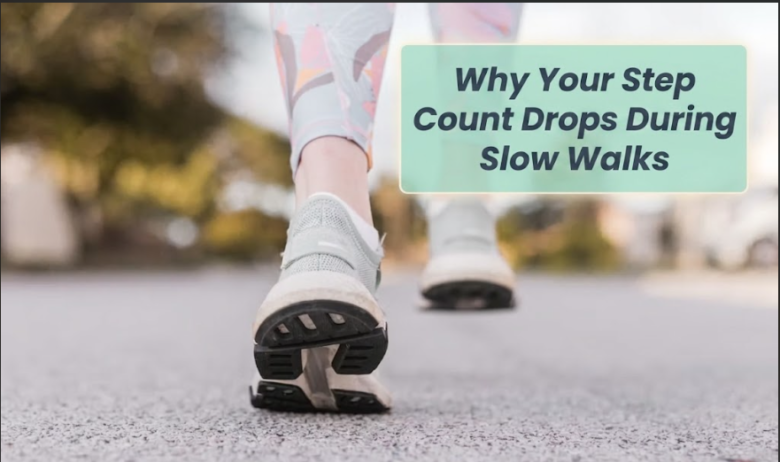
Here’s the belief that trips people up: slow walking should still register as walking, because your legs are still moving in the same pattern, just at a lower speed. That sounds reasonable. It’s also wrong, and understanding why explains a lot about how wearable step counters actually work, not just during a leisurely stroll but during rehab walks, dog walks, or anything paced well below a normal cadence.
1. What a Step Counter Is Actually Measuring
A step counter isn’t watching your legs. It’s watching acceleration. Most consumer trackers, whether built into a phone, a wrist band, or dedicated fitness hardware, use an accelerometer that samples motion dozens of times per second along three axes. Walking produces a fairly distinct signal on that sensor: a rhythmic rise and fall as your body shifts weight from one foot to the other, with each step creating a small peak in vertical acceleration.
The firmware runs that raw signal through a threshold filter. If a peak clears a certain amplitude and falls within an expected time window of the last one, it counts as a step. If it doesn’t clear that threshold, it gets ignored, treated as noise rather than movement.
That threshold is the whole story here. Fast or moderate walking produces sharp, high-amplitude peaks that clear it easily. Slow walking produces smaller, softer peaks. Your foot still strikes the ground, your body still shifts weight, but the acceleration signature is flatter. On a lot of consumer-grade sensors, especially older or budget hardware, that flatter signal falls under the detection floor and simply doesn’t register.
2. Why This Isn’t a Flaw, Exactly
It’s tempting to call this a bug. It’s more accurate to call it a design tradeoff. If the threshold were set low enough to catch every soft, slow step, it would also start picking up incidental arm swings, shifting in a chair, or vibration from a car ride, and counting those as steps. Manufacturers tune the threshold to minimize false positives, which means they accept some false negatives at the low end of walking speed as the cost of doing business.
This is where people usually go wrong when they troubleshoot a low step count. They assume the device is broken, or that firmware needs updating, when the real issue is that their walking pace fell into a range the sensor was never tuned to catch reliably in the first place.
Wrist placement makes this worse. A device on your wrist has to infer leg movement from arm swing, which is already an indirect signal. Slow walkers tend to swing their arms less too, sometimes barely at all if they’re carrying something or walking with a stroller, which compounds the undercount. Hip-worn or waist-clipped trackers, closer to your center of mass, tend to hold up better during slow-paced walking because they’re reading torso movement directly instead of inferring it from your arms.
3. What Actually Changes the Numbers
A few real-world scenarios illustrate this cleanly.
Walking a dog that stops every ten feet to sniff something produces a stop-start rhythm that confuses the step-detection window even when your actual pace between stops is normal. Physical therapy walks, often deliberately slow and controlled, frequently undercount for the same threshold reason, which matters if a patient or clinician is using step count as a recovery metric. Pushing a stroller or shopping cart changes arm swing entirely for wrist-worn devices, sometimes to zero, while your legs are doing completely normal walking.
Here’s a rough breakdown of how detection accuracy tends to shift with pace, based on how most consumer accelerometer-based trackers are tuned:
| Walking Pace | Typical Cadence | Wrist Tracker Accuracy | Hip/Waist Tracker Accuracy |
|---|---|---|---|
| Brisk | 120+ steps/min | High | High |
| Moderate | 90 to 120 steps/min | High | High |
| Slow, deliberate | 60 to 90 steps/min | Moderate, some undercount | High |
| Very slow, shuffling | Under 60 steps/min | Low, frequent undercount | Moderate |
Hip and waist placement isn’t always practical, and it’s not a universal fix. But if step accuracy actually matters to you, for a recovery plan, a doctor’s recommendation, or just personal tracking you don’t want skewed, it’s worth knowing which placement your device favors before trusting the number on the screen during a slow session.
4. When It’s Actually a Different Problem
Not every undercount is a threshold issue. Sometimes it’s genuinely a calibration problem, especially on newer devices that build a personal walking profile over the first week or two of use. If a tracker was calibrated against your normal, faster pace, it may be poorly tuned for a slower pace you don’t usually walk at, which is common for people recovering from an injury or adjusting activity for a health reason. Recalibrating, or manually logging a slow-walk session so the device has data to learn from, often improves accuracy within a week or two.
It’s also worth checking whether the device offers a dedicated mode. A growing number of platforms, including several covered in our breakdown of AR workout apps worth trying, include separate tracking profiles for rehab-paced or accessibility-focused movement, which use a lower detection threshold specifically to catch slower gait patterns.
5. What This Means If You’re Using Step Count as a Real Metric
If step count is just a rough motivational number, an undercount during a slow walk barely matters. If it’s feeding into something with actual stakes, tracking recovery progress after surgery, monitoring activity for a health condition, or following a doctor’s mobility target, the gap between what you actually did and what got logged can matter quite a bit.
In that case, don’t rely on raw step count alone. Time spent moving, logged manually or through a session timer rather than a step algorithm, tends to be a more honest number during slow-paced activity. Some platforms we’ve tested through arbodyhealth.online pair step data with duration and heart rate together specifically because step count alone becomes unreliable at low intensity, and that combination gives a much clearer picture than any single metric on its own.
None of this means the technology is bad. It means it was built around an assumption, that most walking happens at a moderate-to-brisk pace, and that assumption breaks down at the edges. Once you know where those edges are, the number on your screen stops feeling like a judgment and starts making a lot more sense.
FAQs
Should I just buy a more expensive tracker to fix this? Not necessarily. Price correlates loosely with sensor quality, but placement matters more than cost in most cases. A mid-range hip-worn tracker will often outperform an expensive wrist-worn one during slow walking specifically.
Is there a walking speed where step counting basically stops working? Below roughly 60 steps per minute, most consumer accelerometers start missing a meaningful percentage of steps, particularly on wrist-worn devices. Waist and hip placement extends that threshold lower.
Does swinging my arms more while walking slowly help? For wrist-worn trackers, yes, somewhat. Exaggerated arm swing produces a stronger acceleration signal even at a slow pace, though it’s an awkward workaround rather than a real fix.
Why does my phone’s step count differ from my watch’s step count on the same walk? They’re likely using different sensor placement and different threshold tuning. A phone in your pocket reads hip-adjacent movement, closer to a waist tracker, while a watch reads wrist movement, which explains most of the gap during slower walking.
Can I trust step count data enough to report it to a doctor or physical therapist? Use it as a general trend indicator rather than a precise figure, and mention the device and placement you used. Most clinicians are already aware of accelerometer limitations at slow paces and will weigh the number accordingly.
For more on how motion-tracking algorithms handle movement that doesn’t fit a standard pattern, our piece on how motion capture technology learned from dancers goes deeper into the sensor side of this same problem.