There’s a specific message we get more than any other at Aeryon Wellness, and it usually starts the same way: “My watch says I burned 600 calories on a walk and I don’t buy it.” People assume the problem is them, that maybe they misjudged the intensity or forgot to log something. Most of the time, the problem is the device.
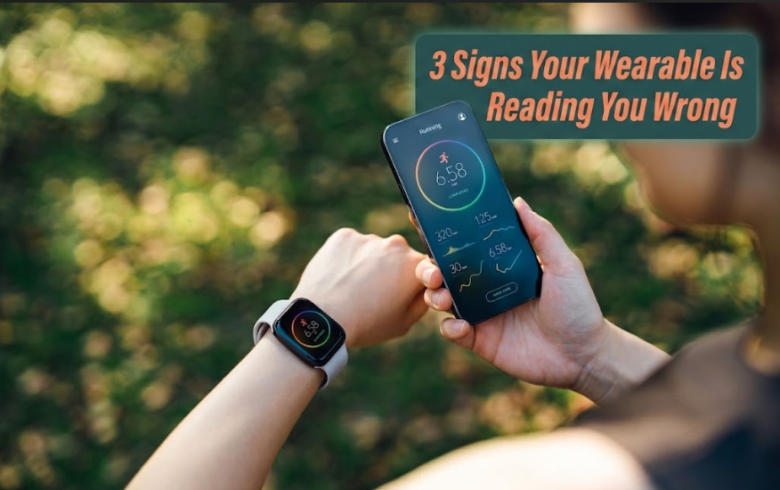
Wearables get treated like they’re infallible because they’re wearing a number on their face. A heart rate reading feels objective in a way that “I think I worked pretty hard” doesn’t. But sensors drift, algorithms guess, and skin tone, wrist position, and even tattoo ink can all throw a reading off without the device ever telling you it’s uncertain. Here are three signs your wearable might be misreading you, and what’s usually actually happening underneath.
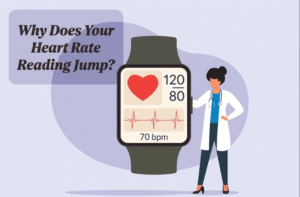
1. Your Heart Rate Spikes or Drops for No Reason You Can Explain
If you’ve ever glanced at your wrist mid-workout and seen your heart rate jump to 190 while you’re standing still adjusting your shoelace, that’s not your heart. That’s the sensor losing contact or picking up motion artifact and misreading it as a pulse.
Optical heart rate sensors work by shining light into your skin and measuring how blood flow changes the light reflected back. It’s a clever bit of engineering, and it works reasonably well at rest. Where it falls apart is during high-motion activity, wrist-heavy exercises like boxing or weightlifting, or anytime the band shifts slightly out of position. The sensor can’t tell the difference between your pulse and your arm swinging, so it sometimes just picks whichever signal is loudest.
Where people usually go wrong here: they assume a strange spike means something is medically wrong. Occasionally that’s worth checking with a doctor, especially if it happens consistently at rest. But a single odd reading during a chaotic movement is far more likely to be sensor confusion than a cardiac event. Context matters more than the number itself.
A few practical fixes actually help. Wear the band slightly tighter during high-intensity sessions, move it about an inch up from the wrist bone, and if accuracy really matters for a specific workout, consider a chest strap for that session instead. We go deeper into how motion tracking gets confused by rapid movement in our piece on how AR workouts track your form live, which covers a related but slightly different sensor problem.
2. Calorie Burn Numbers Feel Wildly Inconsistent Between Similar Workouts
This one drives more people to frustration than almost anything else. You do what feels like the same 40-minute strength session two days apart, and one day the device says 310 calories, the next day it says 480. Nothing about your effort changed that much. So what did?
Calorie estimates on wearables are built on formulas using heart rate, age, weight, and sometimes step count or movement pattern, none of which is a direct measurement of energy expenditure. Two workouts with similar heart rate zones can produce different estimates depending on how the device interpreted brief spikes, how accurately it tracked movement type, and honestly, some baked-in guesswork in the algorithm itself.
Here’s a simple way to think about it.
Quick reference: what your wearable is actually measuring vs estimating
- Heart rate: measured directly (with the accuracy caveats above)
- Steps and movement: measured directly through accelerometer data
- Calories burned: estimated using a formula, not measured
- Sleep stages: estimated using movement and heart rate patterns, not measured
- VO2 max: estimated using heart rate response to activity, not measured directly
Treat the calorie number as a rough trend indicator across weeks, not a precise daily figure. It’s genuinely useful for noticing “this week I moved more than last week.” It’s much less reliable as an exact accounting of energy burned on any single day, and using it that way tends to create frustration that has nothing to do with actual progress.
If weight loss is the goal you’re chasing and calorie tracking has been part of that plan, our article on is AR fitness effective for weight loss covers what actually moves the needle beyond the numbers on your wrist.
3. Sleep Data Contradicts How You Actually Felt That Morning
You wake up feeling genuinely rested, check the app, and it tells you your sleep score was poor. Or the reverse happens. You feel wrecked, and the app insists you got seven hours of quality deep sleep. Either way, something doesn’t line up, and it’s worth understanding why before you start trusting the score over your own body.
Sleep tracking on most consumer wearables relies on movement patterns combined with heart rate variability to guess which sleep stage you’re likely in. It’s an estimate layered on top of another estimate. Actual sleep staging, the kind used in clinical sleep studies, requires brain wave monitoring through EEG, which no wrist-worn device is doing. And yes, we probably should have led with that fact instead of burying it here, but it matters enough that it’s worth restating plainly: wearables are approximating sleep stages, not measuring them.
That doesn’t make the data useless. It’s genuinely helpful for noticing patterns over time, like whether a late workout consistently disrupts your sleep, or whether your resting heart rate creeps up the week before your cycle. It’s less helpful as a nightly verdict on how well you slept, especially since something as simple as a partner shifting in bed or a restless pet can throw off the movement data entirely.
If you’re trying to build a training schedule that actually accounts for recovery instead of just chasing a sleep score, our guide on AR fitness mistakes beginners make early touches on how overtraining often hides behind numbers that look fine on paper.
None of this means wearables aren’t worth wearing. They’re genuinely useful tools, just not the precision instruments the marketing sometimes implies. The Ar Body Health Online approach has always been to treat the data as one input among several, alongside how your body actually feels, not as the final word on your health. A device that’s off by ten percent on calories but consistent day to day still tells you something real about your trend. A device you trust blindly on every single number is the one that eventually leads you astray.
Pay attention to the pattern, not the single reading. That’s usually where the useful information actually lives.
FAQs
Should I stop trusting my wearable’s numbers entirely? No, but treat individual readings as estimates rather than exact measurements. Trends over weeks are far more reliable than any single day’s number.
Why does my heart rate look different between two different wearable brands? Different sensors, algorithms, and calibration methods produce different results, even when worn at the same time. This is normal and doesn’t mean either device is broken.
Is a chest strap actually more accurate than a wrist wearable? For heart rate specifically, yes, chest straps use electrical signals similar to an ECG and are generally more reliable during high-motion activity than optical wrist sensors.
Can tattoos or dark skin tone actually affect wearable accuracy? Yes, optical sensors rely on light reflection, and ink or higher melanin content can interfere with signal quality on some devices. This has been a documented limitation in several wearable accuracy studies and isn’t a minor or rare issue.
How often should I recalibrate or update my wearable’s profile settings? Update your weight and fitness level in the app every few months, since outdated stats feed directly into the formulas used for calorie and effort estimates.
For a closer look at how these devices track movement in real time, our piece on how motion capture tech learned from dancers is worth reading over at Ar Body Health Online.