I tried my first AR boxing session in a one bedroom apartment with a coffee table I forgot to move. Fifteen minutes in, sweating, slightly out of breath, and mildly convinced I was going to knock a lamp off the shelf, the answer to “do you need a gym for this” became pretty obvious. You don’t. But that doesn’t mean the question isn’t worth taking seriously, because the honest answer has some caveats that most headsets won’t tell you in the setup screen.
AR fitness is built around the promise of anywhere training. Strap on a headset or open an app, and suddenly your living room is a boxing ring, a dance floor, or an obstacle course. That promise is mostly true. Mostly. The gap between “mostly” and “completely” is where people either get hooked on the format or give up on it within a month, and that gap usually comes down to space, hardware, and expectations rather than fitness level.
1. What AR Workouts Actually Require From Your Space
Most AR fitness platforms are designed around a play area roughly 6.5 by 6.5 feet, sometimes a bit more for full-body cardio titles. That’s smaller than most people assume. A cleared living room corner, a garage bay, or even a spare bedroom with the bed pushed against the wall usually works. What trips people up isn’t square footage, it’s ceiling height and floor surface. Low ceilings become a problem the moment a workout calls for overhead swings or jumps, and hardwood or tile floors get slippery fast once you’re a few minutes into a cardio-heavy session.
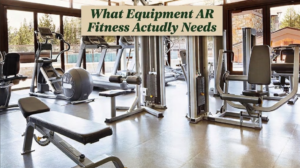
And this is where the gym-versus-home question actually starts to matter. A gym gives you rubber flooring, more vertical clearance, and nobody yelling at you to move your laundry basket. A living room gives you privacy and zero commute. Neither one is objectively better, they solve different problems.
2. The Hardware Question Nobody Talks About Enough
Here’s where people usually go wrong. They assume any headset or fitness ring works the same everywhere, then get frustrated when tracking glitches happen in a dim room or a space with mirrors. AR tracking relies on cameras or sensors reading your environment, and reflective surfaces, low light, and cluttered backgrounds all mess with that. A gym’s open floor and consistent lighting is genuinely easier on the hardware than a bedroom with a floor-length mirror and a pile of shoes in the corner.
That said, most of these issues are fixable at home with about ten minutes of setup. Move mirrors out of the tracking zone, add a lamp if the room is dim, and clear the floor. It’s not glamorous advice, but it solves probably 80 percent of the “my AR workout keeps glitching” complaints I hear.
3. Gym Versus Home Setup, Side By Side
| Factor | Home AR Setup | Gym-Based AR Setup |
|---|---|---|
| Space consistency | Depends on your room, may vary day to day | Usually consistent, dedicated area |
| Equipment access | Limited to what you own | Weighted vests, mats, resistance gear on hand |
| Privacy | High | Lower, others may watch |
| Cost over time | One-time hardware cost | Membership plus hardware |
| Convenience | No travel, available anytime | Requires commute, set hours |
| Social element | Solo unless multiplayer mode | Built-in community, classes |
Neither column wins outright. If your goal is quick, private, low-friction sessions, home wins easily. If you’re training for something more structured, like building strength alongside your AR cardio, a gym with actual equipment fills gaps that a headset alone can’t.
4. When a Gym Actually Makes the Difference
There are a few genuine cases where skipping the gym limits you. Strength-focused AR programs that pair cardio with resistance work benefit enormously from real weights, and most people don’t own a full rack of dumbbells at home. Group-based AR fitness classes, where multiplayer tracking syncs several people in the same room, also work better in a dedicated space built for that kind of setup. And if you’re someone who needs external accountability, showing up somewhere physically tends to stick better than opening an app from the couch.
But if your main goal is consistent cardio, coordination work, or just breaking up a sedentary day, home is more than enough. I’ve had readers tell me they lost more consistency going the gym route because the extra step of getting there became a reason to skip days. Small friction adds up.
5. Common Mistakes People Make Choosing Between the Two
A lot of people overbuy hardware assuming a bigger investment means a better workout. It doesn’t, particularly early on. Others assume a gym membership will force them into consistency, when in reality the AR fitness format works best when it removes barriers, not adds new ones like driving somewhere. And a smaller but real mistake, people set up their AR space once and never revisit it as their fitness improves, which means outgrowing a cramped corner without realizing that’s actually what’s holding their form back.
If you’re trying to figure out your own setup, our guide on choosing the right AR fitness headset for small spaces goes into gear-specific recommendations, and it’s worth a look before you buy anything.
Space matters more than most marketing admits, but it’s rarely the deciding factor people think it is. The real question isn’t gym or no gym. It’s whether your space, however small, gives the tracking system what it needs to actually work.
FAQs
Can I do AR workouts in a small apartment? Yes, most platforms are designed for spaces around 6.5 by 6.5 feet, which fits in a cleared living room or bedroom corner for the majority of users.
Do I need special flooring for AR fitness? Not special flooring exactly, but a stable, non-slip surface matters. Carpet or a workout mat over hardwood tends to work better than bare tile for cardio-heavy sessions.
Will a gym membership improve my AR workout results? It can, mainly by giving you access to weights and a dedicated tracking-friendly space, but it’s not required for most cardio and coordination-based AR fitness programs.
Why does my AR headset lose tracking at home but not elsewhere? Usually it’s lighting, mirrors, or clutter interfering with the sensors. Clearing the play area and improving room lighting fixes most tracking issues.
Is it worth combining home AR sessions with gym visits? For many people, yes. Home covers daily convenience while occasional gym sessions add strength equipment that most AR-only setups lack.
For more on setting up your space correctly the first time, our full AR fitness room setup checklist walks through it step by step.