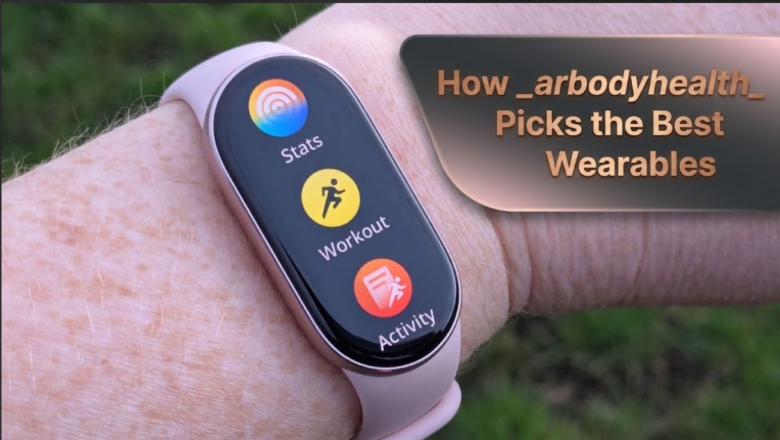
Most wearable “reviews” online are written by someone who used the device for four days and never broke a sweat in it. That’s not how we do things at arbodyhealth.online, and honestly, it’s not how I’d want to put my name on anything.
I get asked pretty often how we actually decide which wearables to recommend, especially since the market’s flooded with new trackers and headsets every quarter, half of them barely different from what came out six months earlier. So here’s the actual process, step by step, the same one I walk through with anything before it earns a spot on this site.
1. We Test in the Conditions People Actually Use AR Fitness In
The first step sounds obvious but gets skipped constantly by review sites. We don’t test wearables sitting still at a desk. We test them mid-workout, sweating, moving fast, doing the exact kind of sessions arbodyhealth.online covers, boxing circuits, dance cardio, interval training with a lot of directional changes.
A tracker that reads beautifully during a calm walk can fall apart completely during a boxing round. I’ve seen it happen more times than I can count. So this step alone eliminates a good chunk of devices before we even get to the next stage, because if it can’t hold up during real AR fitness movement, none of the other features matter much.
2. Battery Life Gets Measured Against Real Session Lengths, Not Marketing Claims
Manufacturers love quoting battery life under ideal, minimal-use conditions. We don’t care about that number. What matters is whether a device survives a genuine week of AR fitness use, meaning multiple sessions, screen-on tracking, and whatever background processing the app demands.
We run each wearable through a full week of typical use before forming any opinion on battery performance. A device that claims five days of battery but drops to one and a half under actual AR fitness conditions gets flagged clearly, not glossed over with a vague “battery life varies” disclaimer the way a lot of sites do.
3. We Check Compatibility With the AR Platforms People Actually Use
This step matters more than most people realize going in. A wearable can be excellent on paper and still be nearly useless if it doesn’t sync properly with the specific AR fitness app someone’s already using.
We cross-check compatibility against the major platforms covered on the site, and we note it clearly when a device works well with one ecosystem but lags or drops data with another. If arbodyhealth.online’s guide on what equipment AR fitness actually needs already flagged compatibility concerns for a category of gear, we factor that into wearable recommendations too, since the two pieces of equipment usually need to work together.
4. Comfort and Fit Get Evaluated Across an Actual Range of Bodies
And here’s where I’ll be honest about something the industry doesn’t talk about enough. A lot of wearables are designed and tested primarily on one body type, and comfort complaints from anyone outside that range get dismissed as edge cases.
We don’t do it that way. Fit and comfort get checked across different wrist sizes, different grip strengths for anything with a strap or controller, and different skin tones, since some optical sensors read less accurately on darker skin due to how the light-based technology interacts with melanin. This is a real, documented limitation in a lot of consumer optical sensors, not a minor footnote, and it affects the accuracy of the data these devices report.
Pros and Cons: What Our Testing Process Catches vs What It Doesn’t
Pros of this approach:
- Surfaces real-world performance issues that marketing materials never mention
- Accounts for a wider range of bodies and skin tones than most single-tester reviews
- Tests under actual AR fitness conditions, not calm baseline use
Cons of this approach, to be fair about it:
- Takes longer than a quick unboxing review, so we’re not always first to cover brand-new releases
- Can’t test every possible AR fitness platform combination, we prioritize the most widely used ones
- Individual results still vary, our testing reduces uncertainty but doesn’t eliminate it entirely
5. We Weigh Cost Against Genuine Necessity, Not Just Features
The last step is where a lot of gear gets cut even after passing everything above. Just because a wearable performs well doesn’t mean it earns a strong recommendation if a cheaper option does nearly the same job for most people’s actual needs.
I’d rather tell someone honestly that the mid-range option covers ninety percent of what they need than push the premium version because it has a slightly nicer screen. That’s genuinely how we approach the whole site, and it’s part of why arbodyhealth.online’s recommendations don’t always line up with whatever’s being heavily advertised that month.
Where Most Wearable Advice Goes Wrong
The biggest mistake other sites make is treating one good spec sheet number, battery life, sensor count, price, as the whole story. A device can look outstanding on paper and still fail during the exact kind of workout someone’s actually going to use it for. We built this process specifically because generic reviews kept sending people toward gear that didn’t hold up under AR fitness conditions, and we got tired of hearing about it after the fact.
I still second-guess a recommendation sometimes, we all do if we’re honest about it. But having a consistent process behind it means the guesswork stays small and the testing does the heavy lifting instead.
FAQs
Do you get free products from brands you review? Sometimes manufacturers send review units, but that doesn’t influence whether a device gets a positive recommendation. If something underperforms, we say so regardless of how it arrived.
How often do you retest wearables after their initial review? We revisit popular devices after major firmware updates or if enough reader feedback suggests something’s changed, since software updates can genuinely shift how a tracker performs. It’s not on a fixed schedule but it happens more than people probably assume.
Why do some of your recommendations differ from bigger tech review sites? Most general tech sites test wearables for everyday use, not specifically for AR fitness and high-movement workouts, so their conclusions come from different testing conditions entirely. Our focus is narrower, which changes what actually rises to the top.
Is a more expensive wearable always going to track AR fitness sessions better? Not necessarily. Price often reflects extra features like cellular connectivity or premium materials rather than tracking accuracy specifically, and some mid-range devices outperform pricier ones for AR fitness use.
What’s the single biggest factor you weigh when deciding on a recommendation? Whether it holds up during genuinely high-movement AR fitness sessions, since that’s the exact context most other reviews don’t test for. Everything else, battery, comfort, price, matters, but it’s secondary to whether the core tracking actually works when it counts.
If a wearable can’t survive an honest boxing circuit without losing the plot, it doesn’t make the list, no matter how good the marketing photos look.