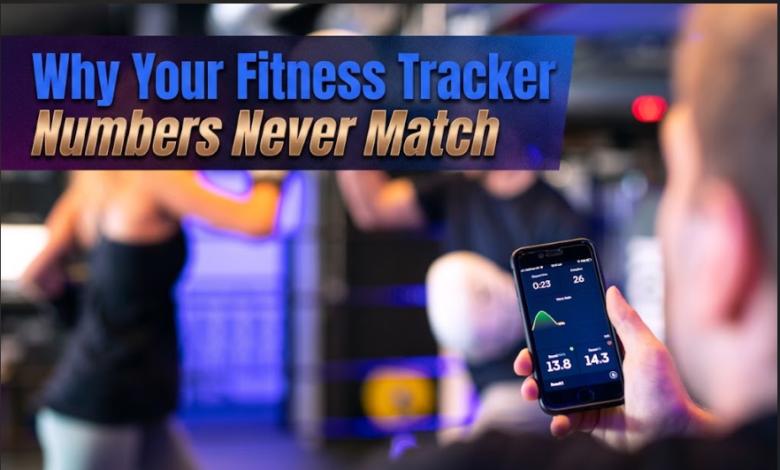
Put two fitness trackers on at the same time, one on each wrist, and run the exact same workout. Compare the numbers afterward. They won’t match. Not close, not roughly close, sometimes off by twenty percent or more on calorie burn alone. We’ve done this test with clients more than once just to make the point stick, because no amount of explaining it seems to land quite as hard as watching it happen live.
People assume their tracker is broken when this happens, or that one brand is simply better than another. Neither is usually true. The real answer is more interesting, and once you understand it, you’ll stop chasing precision these devices were never built to give you.
1. Heart Rate Sensors Are Making Educated Guesses, Not Direct Measurements
Most wrist-based trackers use a technology called photoplethysmography, which is a mouthful for something fairly simple. A light shines into your skin and a sensor reads how much of it bounces back, which changes slightly with each heartbeat as blood volume shifts in the capillaries near the surface. From that pattern of light reflection, the device estimates your heart rate.
Estimates is the key word. Skin tone, wrist hair, tattoo ink, how tight the band sits, even the temperature of your skin, all of these interfere with how accurately that light reading translates into a heart rate number. Chest strap monitors read actual electrical activity from your heart, which is a fundamentally more direct measurement, and that’s exactly why chest straps still outperform wrist sensors during high intensity intervals when your arm is moving fast and your skin is sweaty.
2. Calorie Estimates Are Built on Assumptions About You, Not Actual Measurements of You
Here’s where people usually go wrong in how they think about this feature. Your tracker does not measure how many calories you burned. It cannot do that. No consumer wearable can. What it does instead is estimate based on your heart rate data, your entered weight, height, age, sex, and a formula built from population averages.
That formula was built using data from a lot of different bodies, and yours might not resemble the average body that formula was trained on. Someone with more muscle mass burns calories differently at rest than someone with less, even at identical weights. Someone on certain medications, someone with a thyroid condition they haven’t had checked, someone who’s simply an outlier in how efficiently their body processes oxygen during exercise, all of these throw the estimate off in ways the device has no way of knowing about.
And this is important. The number isn’t wrong exactly. It’s a reasonable guess dressed up as a precise figure, and the difference between those two things matters more than people give it credit for.
3. Different Brands Use Different Formulas, Which Is Why Cross-Brand Comparisons Are Pointless
If you’ve ever switched from one brand to another and noticed your “usual” workout suddenly shows a very different calorie burn, that’s not your fitness declining or improving overnight. Each manufacturer builds its own proprietary algorithm, trained on its own dataset, weighted toward whatever that company decided mattered most in their model.
A rough sense of where the variation tends to come from:
| Variable | How It Affects the Reading |
|---|---|
| Sensor placement and fit | Loose bands read less accurately, especially during arm-heavy movement |
| Proprietary algorithm | Each brand weighs heart rate, motion, and user data differently |
| User profile accuracy | Outdated weight or missing body composition data skews every estimate downstream |
| Activity type | Steady cardio reads more accurately than stop-start or resistance training |
| Skin and wrist factors | Tone, hair, tattoos, and sweat all interfere with optical sensors |
None of this means the numbers are useless. It means they’re only useful for tracking your own trend over time on the same device, not for comparing against a friend’s different brand, or even against your old tracker if you’ve upgraded.
4. What Actually Matters More Than the Exact Number
This is the part we tell every client who gets fixated on hitting an exact calorie target their tracker displays. Consistency of trend beats precision of any single reading. If your resting heart rate on the same device is trending down over three months, that’s meaningful regardless of whether the absolute number is perfectly accurate. If your calorie estimate during the same workout is climbing week over week because your intensity is genuinely increasing, that trend is useful information even if the raw figure is a rough approximation.
If you’re newer to combining wearable data with structured training, our guide on AR fitness for beginners touches on how tracking fits into a first few weeks of sessions without becoming a source of anxiety.
Try this instead of obsessing over daily numbers. Pick one metric, resting heart rate, active minutes, whatever feels most relevant to your goal, and watch it over four to six weeks on the same device, same wrist position, roughly the same time of day. That trend line will tell you more truth than any single workout’s calorie count ever will.
A Quick Note on Sleep and Recovery Metrics Too
The same logic applies to sleep tracking, and honestly it gets even shakier there. Trackers infer sleep stages from movement and heart rate variability, not from actual brain activity the way a clinical sleep study would measure it. Treat those stage breakdowns as a loose approximation, useful for trend spotting, not as a diagnostic tool.
We’ve had a few clients get genuinely stressed over a “poor sleep score,” staying up worrying about a number generated by an algorithm making its best guess from wrist movement. That stress itself probably did more damage to their actual sleep quality than whatever the tracker flagged in the first place. Worth keeping some perspective there.
For anyone comparing how gamified training data stacks up against a straightforward run, our piece on gamified workouts vs regular cardio gets into how tracking accuracy shifts depending on the type of session you’re doing.
Numbers are a tool. They’re not a verdict on how your workout went, and they were never designed to be one.
FAQs
Why does my tracker say I burned way more calories than my friend’s tracker during the same class? Different brands use different proprietary formulas, and small differences in body data entered into each app compound the gap further. This is expected, not a sign either device is malfunctioning.
Should I trust the calorie number enough to eat back what it says I burned? Not precisely. Treat the number as a rough range rather than an exact figure, and lean toward being conservative if weight management is your goal.
Is a chest strap actually worth buying if I already have a wrist tracker? If you do a lot of high-intensity interval work or lifting with fast arm movement, yes, chest straps read heart rate more reliably in those conditions. For steady-state cardio, a wrist tracker is usually close enough.
Why did my step count change after I updated my tracker’s app? Manufacturers periodically adjust their motion-detection algorithms, which can shift how strictly the device counts a step. It’s not a sign your device is failing, just an algorithm update working differently than before.
Can I compare my tracker’s data with a friend’s if we have the same brand and model? Somewhat more reliably than across different brands, since the algorithm is identical, but individual body composition and fit still create real differences. Same model doesn’t mean identical accuracy for two different people.
Anyone building out a fuller wearable setup around this kind of tracking might find our full AR fitness platform breakdown useful for comparing how different devices and apps handle this data.