I keep seeing the same claim pop up in fitness forums: take your tracker off for two weeks and your sleep magically improves. It’s treated almost like a cleanse, as if the device itself was poisoning your recovery just by sitting on your wrist. That’s not quite what’s happening, though something real does shift when people stop checking a screen every time they wake up at 3am.
The honest version of this story has less to do with the sensor and a lot more to do with what constant measurement does to a nervous system that’s already anxious about sleep.
1. What a Wearable Detox Actually Is
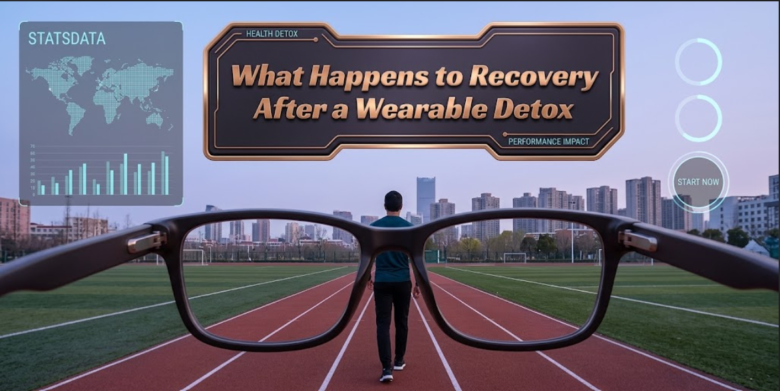
A wearable detox usually means one of two things. Either removing the device entirely for a set period, or keeping it on but hiding the data, so sleep and recovery numbers stop being visible day to day. Both versions get lumped under the same label, but they produce pretty different results, and it’s worth knowing which one you’re actually trying before deciding it “worked” or “didn’t.”
Full removal tends to appeal to people who’ve gotten into a pattern of checking their recovery score before they’ve even opened their eyes fully. Hiding the data while still wearing the device is a gentler version, useful for people who want the health tracking to continue in the background without the psychological loop of constant checking. Ar Body Health has covered a version of this loop in why more data points can make you worse at sleep, and it’s the same underlying mechanism at play here.
2. The Anxiety Loop Nobody Talks About
Here’s the part that surprises most people who try this. It’s rarely the sensor accuracy that improves during a detox. It’s the person’s relationship to their own sleep that changes.
Checking a recovery score first thing in the morning creates a strange feedback loop. A low score can trigger stress about the day ahead, which raises cortisol, which then affects the following night’s sleep, which produces another low score. Round and round it goes. Remove the immediate feedback and that loop often breaks on its own within a matter of days, not because the underlying sleep physiology changed but because the anxiety layered on top of it did.
This is not a universal experience. Some people find the data genuinely motivating and stabilizing rather than stressful, and for them a detox period does very little. The people who benefit most tend to be the ones who’ve noticed themselves refreshing the app compulsively or feeling their mood shift based on a number they saw before breakfast.
3. What The Recovery Data Actually Shows During a Break
If someone wears a device that logs quietly in the background during a “detox” (data hidden, not device removed), the pattern that shows up afterward is often a modest but real improvement in HRV and deep sleep percentage over the first ten to fourteen days. Not dramatic. Usually somewhere in the range of a small but noticeable shift, not a transformation.
| Week | Typical Pattern Observed |
|---|---|
| Days 1 to 3 | Little change, sometimes slightly worse sleep from habit disruption or anxiety about not checking |
| Days 4 to 7 | Mild improvement in sleep onset time and reduced nighttime waking |
| Days 8 to 14 | HRV trend often stabilizes upward, resting heart rate may drop slightly |
| Beyond 14 days | Gains tend to plateau, further improvement usually requires addressing sleep habits directly rather than device removal alone |
That plateau matters. A detox is not a fix on its own; it removes one stressor, and once that stressor is gone the underlying sleep habits are what determine whether the improvement holds. People who assume the break itself is doing all the work usually see the gains fade the moment they start checking the app again with the same compulsive frequency as before.
4. Where People Usually Get This Wrong
The mistake that shows up most often is treating a wearable detox as a substitute for actually fixing sleep hygiene. Removing the tracker doesn’t change a room that’s too warm, a bedtime that shifts by two hours depending on the day, or a habit of scrolling in bed until midnight. It just removes the mirror that was reflecting those problems back.
And there’s a smaller mistake worth mentioning too, one that’s easy to miss. Some people go straight from obsessive daily checking to obsessive comparison once the detox ends, pulling up two weeks of data at once and scrutinizing every fluctuation instead of the single-morning number they were fixated on before. The compulsive checking pattern just moved, it didn’t disappear.
If constant data has been part of what’s driving poor sleep in the first place, it’s worth reading through why a smart ring won’t fix bad sleep habits before assuming any device, on or off, is the actual lever here.
5. How Long a Reasonable Detox Should Run
Two weeks is a reasonable minimum to see any real signal, since the first several days are noisy and often confounded by the disruption of breaking a habit. Four weeks gives a clearer picture, particularly for HRV trends, which move slowly and get obscured by short observation windows.
Beyond that, there’s rarely much additional benefit from extending the break further unless the goal is a longer-term lifestyle shift away from tracking altogether. Most people land somewhere useful and sustainable, which is checking recovery data weekly instead of daily, keeping enough visibility to catch real problems without falling back into the anxious morning ritual. That middle ground gets discussed a bit more in most people buy the wrong fitness tracker, mostly because the wrong device for your personality tends to make this whole problem worse rather than better.
None of this means trackers are bad. It means the data is only useful when it’s serving you instead of running the show.
Frequently Asked Questions
Will taking my tracker off for a week actually improve my sleep? Sometimes, but usually because it removes morning-checking anxiety rather than changing anything physiological. If underlying sleep habits stay the same, gains from a short break tend to fade once tracking resumes.
How long should a wearable detox last to see real results? Two weeks is a reasonable minimum, with four weeks giving a clearer HRV trend since that metric moves slowly and needs a longer window to read accurately.
Is it better to remove the device completely or just hide the data? Hiding the data while still wearing the device works well for most people, since it keeps background tracking intact without the compulsive checking pattern. Full removal suits people who want a complete break from the habit entirely.
Can constant sleep tracking actually make sleep worse? For some people, yes. Checking a low score first thing in the morning can raise stress and affect the following night, creating a cycle sometimes called orthosomnia in sleep research circles.
Should I be worried if my numbers don’t improve during a detox? Not necessarily. Some people simply don’t have an anxiety-driven relationship with their tracking data, and for them a detox won’t produce much change since the stress loop wasn’t there to begin with.
Ar Body Health keeps building out honest breakdowns like this one over at arbodyhealth.online for anyone trying to figure out what their wearable data is actually worth listening to.