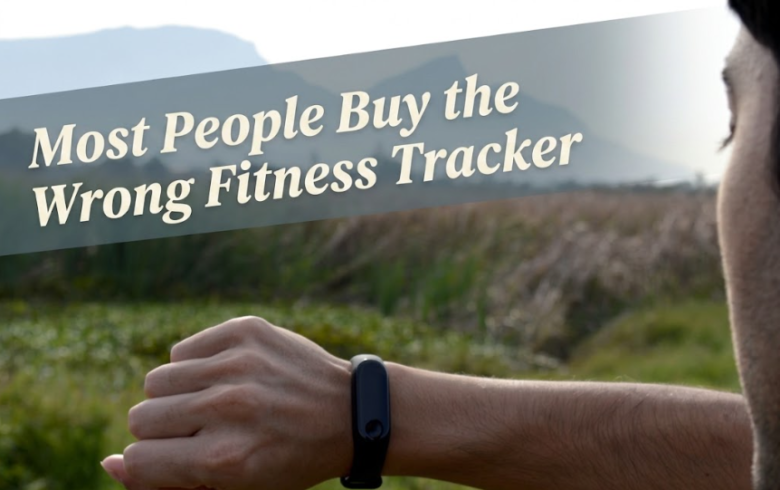
A friend of mine spent three weeks comparing fitness trackers before buying one. She read every review, watched the unboxing videos, checked the battery life charts. Two months later, it sat in a drawer. Not because it was a bad tracker. Because it was the wrong tracker for what she actually does with her time.
That story repeats itself constantly. Most people don’t fail at picking a fitness tracker because they didn’t research enough. They fail because they research the wrong questions.
1. The Real Reason Most Trackers Get Abandoned
Ask someone why they stopped wearing their tracker and you’ll usually get one of two answers: it wasn’t accurate, or it just didn’t fit their life. The accuracy complaint gets all the attention online, but the second reason is far more common and far less discussed.
A tracker built for marathon training is a poor match for someone who lifts weights three times a week and walks the dog. A device optimized for sleep staging isn’t much help to someone whose main goal is tracking HIIT intervals. People buy based on brand reputation or a friend’s recommendation, then wonder why the numbers never seem to reflect what they’re actually doing. If that sounds familiar, it’s worth reading through why your fitness tracker numbers never match what you feel during a workout, because the mismatch is often about mismatched intent, not a broken sensor.
2. What Actually Matters When Choosing One
Most buying guides lead with specs. Battery life, screen size, waterproofing depth. Those matter, but they’re not where the decision should start. Here’s a more useful order of questions:
- What’s the primary activity you want tracked well? (running, lifting, cycling, swimming, general daily movement)
- Do you care more about optical heart rate accuracy or comfort during sleep?
- Are you tracking for motivation, or for actual training data you’ll act on?
- Wrist-based or ring-based, and does that choice fit how you actually live day to day?
That last point deserves more attention than it usually gets. Wrist trackers and rings behave very differently depending on the activity, and the difference shows up most during fast-paced or irregular movement. If you’re torn between the two, the breakdown on smart ring or smartwatch, what runners need walks through the practical trade-offs instead of just listing features.
Quick Comparison
| Factor | Wrist Tracker | Smart Ring |
|---|---|---|
| Best for | Running, cycling, gym sessions | Sleep tracking, all-day comfort |
| Heart rate during HIIT | Often lags or drops out | Generally more stable |
| Screen/notifications | Yes, usually | No, phone-dependent |
| Battery life | 1-7 days typically | 4-7 days typically |
| Social/visible motivation | High, worn openly | Low, discreet |
Neither column is objectively better. It depends entirely on what a person is optimizing for, and that’s the part most buying guides skip.
3. Where People Consistently Go Wrong
The most common mistake isn’t picking a bad device. It’s picking a device based on the wrong metric and then losing trust in the whole product when that metric behaves strangely.
Calorie burn is the biggest offender. People buy a tracker specifically to monitor calories burned, then get frustrated when the number seems inflated or inconsistent between workouts. This isn’t usually a defect. Optical sensors estimate calorie burn using heart rate and movement patterns, and that estimation gets shakier during activities with a lot of upper-body movement or irregular pacing, which is exactly why fitness trackers underestimate calories in certain workout types more than others.
Step count causes a similar problem. Someone walks slowly around a store or a garden and later notices the step count looks low compared to how much ground they covered. That’s a known limitation, not a malfunction, and it’s covered in more detail in why your step count drops during slow walks. Understanding these blind spots ahead of time saves a lot of buyer’s remorse.
And a smaller but real issue: heart rate spikes that seem to come out of nowhere, especially during stress or temperature changes unrelated to exercise. That one trips up more new users than almost anything else, and it’s worth reading about separately if it’s been bothering you.
4. A Practical Way to Narrow It Down
Instead of comparing ten trackers side by side, try narrowing the field with three questions in order:
- What’s the one metric you’ll actually check daily? Not the one that sounds impressive, the one you’ll genuinely look at.
- What activity happens most often in your week? Build the decision around that, not around an occasional event like a single annual race.
- Can you tolerate a learning curve, or do you want something that works reasonably well out of the box?
People who answer these honestly tend to land on a device that actually stays on their wrist past the first month. The ones who skip this step and buy based on a sale price or a friend’s model usually end up back at square one, researching again in six months.
If you’re brand new to this kind of tracking altogether, it helps to start slower than most guides suggest. Ar Body Health Online has a longer piece on where to start with beginner-friendly setups that doesn’t assume you already know the terminology.
5. Signs You’re Already on the Wrong Track
A few patterns show up again and again among people who end up disappointed:
- The tracker was chosen mainly because it was the most expensive or most talked-about option, not because it matched their routine.
- They ignored the app experience entirely, only to find out later it’s clunky or missing the specific data view they wanted.
- They assumed more sensors automatically means more accuracy, which isn’t consistently true.
If any of that sounds familiar, it’s worth a second look before spending more money on an upgrade. Sometimes the fix isn’t a new device. It’s a different relationship with the data the current one is already collecting. There’s a good rundown on this at 3 signs your wearable is reading you wrong, which covers how to tell the difference between a device problem and a settings problem.
And to be fair, sometimes the device really is the issue. That happens too. But it’s far less common than people assume.
Frequently Asked Questions
Is a more expensive tracker automatically more accurate? No. Price often reflects extra features like GPS precision, app ecosystem, or build materials, not necessarily core sensor accuracy. Some mid-range trackers perform just as well for heart rate and step tracking as premium models.
Should I trust the calorie count on my tracker? Treat it as a directional estimate, not an exact figure. It’s useful for spotting trends over weeks, but it shouldn’t be the sole number you base nutrition decisions on.
How long should I test a tracker before deciding it’s wrong for me? Give it at least two to three weeks of consistent wear. The first few days often feel off simply because you’re adjusting to a new habit, not because the device itself is flawed.
Do smart rings work as well as wrist trackers for workouts? For steady-state activity and sleep, often yes, sometimes better. For high-intensity interval training with a lot of hand movement, wrist trackers still tend to hold heart rate data more reliably.
Can I switch trackers without losing my historical data? Depends on the ecosystem. Some apps allow data export, others lock you in. It’s worth checking this before buying if long-term trend tracking matters to you.
For more on how different wearables compare across specific workout styles, arbodyhealth.online has a growing collection of breakdowns worth browsing before your next purchase.