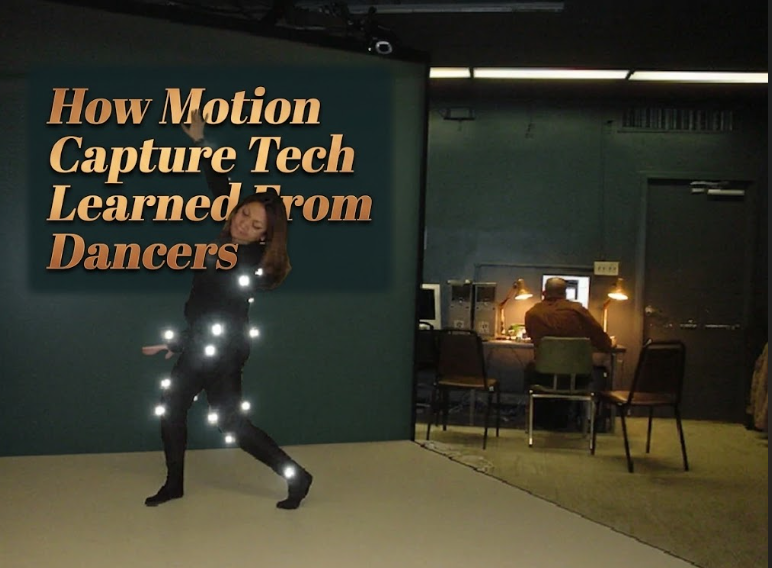
Most people assume motion capture started with movies. It didn’t. Long before anyone strapped reflective markers onto an actor for a blockbuster, choreographers and dance researchers were the ones pushing camera-based movement tracking to its limits, mostly because dancers move in ways that break every assumption a simple sensor makes about the human body.
That history matters more than it sounds like it should, because it explains why the AR fitness apps people use today, the ones tracking your form during a workout, are shaped by problems dancers surfaced decades ago.
1. The Problem Dancers Created for Engineers
Early motion capture systems, built mostly for biomechanics research and animation, were designed around fairly predictable movement. Walking. Running. Reaching for an object. These are motions with a clear start, a clear end, and joints that move roughly the way a hinge does.
Dancers wrecked that model almost immediately. A pirouette involves rotational speed that most early systems couldn’t sample fast enough to track cleanly. Contact improvisation puts two bodies in overlapping space, which confuses systems built to track one skeleton at a time. And contemporary dance in particular involves deliberately ambiguous joint positions, movements where a knee might bend in a direction a “normal” gait model would flag as an error.
Researchers working with dance companies in the 1980s and 90s, notably at institutions like Ohio State and later in partnerships with companies like Merce Cunningham’s studio, had to build systems flexible enough to handle bodies that weren’t trying to move efficiently. They were trying to move expressively. Those are different engineering problems entirely.
2. What This Has to Do With Your Fitness App
Fast forward to now, and the AR fitness apps tracking your squat depth or your punch rotation are direct descendants of that dance research, even if the marketing copy never mentions it. The core challenge is identical: track a body that isn’t moving in a textbook pattern and still produce useful, accurate feedback.
Here’s where people usually go wrong when judging these apps. They assume poor form-tracking means the technology is bad. Often it means the opposite. The system is handling a genuinely hard tracking problem, the same one dance researchers spent years refining, and it’s doing so with a phone camera or a lightweight headset sensor instead of the marker-based lab setups those early researchers used.
Ar Body Health Online has run comparisons on which fitness platforms handle fast, asymmetric movement best, and the pattern holds up. Apps built by teams with any background in dance or performance capture tend to track irregular movement noticeably better than apps built purely around gym-standard exercises like squats and presses.
3. Markerless Tracking and the Debt It Owes to Choreography
Modern AR fitness relies heavily on markerless tracking, meaning no reflective dots, no suits, just a camera and software inferring skeleton position from video. This is a much harder computational problem than marker-based tracking, and a lot of the machine learning models behind it were trained using large movement datasets, many of which include dance footage specifically because dance provides such a wide range of joint angles and movement speeds.
A system trained only on walking and lifting will fail badly the moment someone does something outside that range, like a fast lateral dodge in a boxing-style AR game. A system trained partly on dance movement handles that same dodge far more gracefully, because it’s already seen thousands of examples of joints moving through unusual angles at speed.
This is part of why some AR fitness platforms feel noticeably smoother during dynamic workouts than others. It’s not marketing. It’s dataset composition.
| Training Data Background | Handles Standard Gym Movement | Handles Fast/Irregular Movement |
|---|---|---|
| Gym-exercise datasets only | Strong | Weak, frequent tracking errors |
| Sports movement datasets | Strong | Moderate |
| Dance and performance datasets included | Strong | Strong, fewer dropped frames |
| Mixed clinical gait datasets | Moderate | Weak, not built for speed |
4. Where the Tech Still Struggles
I’ll be honest, even the better systems still lose the thread sometimes. Fast spins, movements where a limb briefly disappears behind the torso, and low-light conditions all still cause dropout or misreads on most consumer-grade AR fitness setups. Dancers dealt with this same issue for years using multiple camera angles to fill in the gaps a single view couldn’t capture, and that’s basically what better AR headsets do now, using multiple sensors instead of one.
If you’ve ever had an AR workout app suddenly freeze your avatar mid-movement or misjudge a spin as a fall, that’s the same edge case dance researchers were fighting against thirty years ago. And it’s a reasonable expectation that this keeps improving, since the underlying camera hardware in phones and headsets gets better every year, but it hasn’t been solved outright yet.
Consumers rarely get told any of this, mostly because “our tracking is built on decades of choreography research” doesn’t test well in an ad. But it’s the more accurate story than “revolutionary AI technology,” and it’s the reason some platforms genuinely perform better during dynamic content like dance cardio or boxing than others do.
Common Mistakes People Make Assuming How This Tech Works
- Assuming form-tracking errors always mean bad engineering, when they often reflect a genuinely hard movement problem
- Assuming all AR fitness apps use the same underlying tracking approach
- Ignoring lighting conditions as a factor in tracking accuracy
- Expecting headset-based and phone-camera-based tracking to perform identically
- Assuming markerless tracking is a recent invention rather than something refined over decades
A Quiet Note on Where This Is Headed
The next real leap in AR fitness tracking probably won’t come from better cameras alone. It’ll come from better training data, and dance is still one of the richest sources of complex, expressive human movement available to train these systems on. That’s a strange thing to say about a fitness app tracking your kickboxing session, but it’s true. The choreography world solved a version of this problem before anyone was thinking about home workouts at all.
For a deeper look at which wearables and AR platforms currently handle fast, non-linear movement the best, Ar Body Health Online keeps an updated comparison covering exactly this, worth checking before choosing hardware for anything beyond basic strength training.
FAQs
Why does my AR fitness app lose track of me during fast movements? Fast, irregular motion is still the hardest category for markerless tracking systems to handle cleanly, especially in lower light or when a limb briefly crosses in front of the body. It’s a known limitation, not necessarily a sign of a poorly built app.
Do dance-based AR fitness apps track movement more accurately than standard workout apps? Often yes, particularly during fast or asymmetric motion, because the underlying models were frequently trained on movement datasets that include dance, which covers a wider range of joint angles and speeds than typical gym exercises.
Is headset-based tracking more accurate than phone camera tracking? Generally, because headsets often use multiple sensors or depth cameras, which fill in gaps a single phone camera view can miss, similar to how researchers used multiple camera angles for dance capture.
Does better tracking technology mean a workout is more effective? Not directly. Tracking accuracy affects feedback quality and gameplay smoothness, but the actual fitness benefit still comes from the intensity and consistency of the movement itself.
Will AR fitness tracking accuracy keep improving? It’s reasonable to expect gradual improvement as camera hardware and training datasets expand, though fast, irregular movement will likely remain the harder category to track perfectly for some time.
A more detailed history of markerless tracking and its use across fitness platforms is available at arbodyhealth.online.