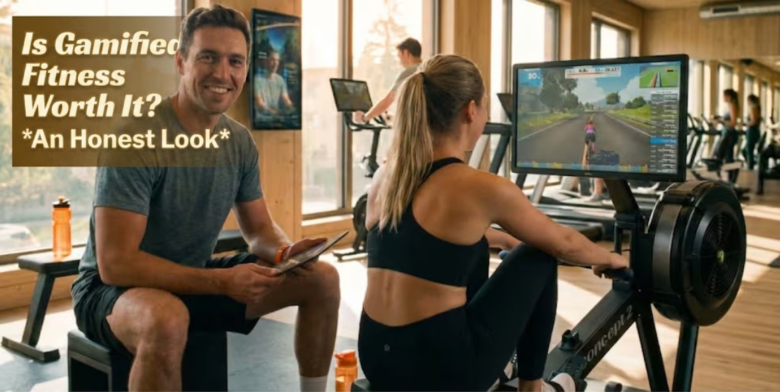
Most gamified fitness gear ends up in a closet within four months. That’s not a guess, it’s the pattern anyone who’s worked with clients trying this stuff has watched play out over and over. The question worth asking isn’t whether gamified fitness works. It clearly can. The real question is whether it’s worth it for you specifically, and that answer depends on things most reviews conveniently skip over.
Here’s an honest breakdown, no hedging, of where gamified fitness earns its keep and where it doesn’t.
1. The Actual Case For It
Gamified fitness solves a specific problem well: getting people to show up who otherwise wouldn’t. That’s not a small thing. Consistency beats almost every other variable in fitness, and if a boxing app or a rhythm-based cardio game gets someone training four times a week instead of once, the format has already done its job, regardless of how it looks on paper next to a traditional gym program.
The feedback loops are genuinely well designed in the better platforms. Points, streaks, small visible wins stacked close together. That’s not fluff, it’s a real behavioral mechanism, and for people who’ve bounced off traditional workouts because motivation ran dry by week three, it can be the difference that keeps them going into month six.
There’s also a lower barrier to entry than people expect. No gym intimidation, no waiting for equipment, no worrying about form in front of strangers. For someone who’s been putting off starting for years because the gym itself felt like the obstacle, gamified fitness at home removes that specific friction entirely.
2. Where It Falls Short
Now the part most marketing pages leave out. Gamified fitness has a novelty curve, and it’s steeper than people expect. The excitement that carries someone through the first six weeks tends to flatten once the games start repeating, and most platforms have a smaller content library than their app store screenshots suggest.
Intensity is inconsistent across the category too. Some gamified sessions genuinely push you hard. Others are closer to light movement dressed up with sound effects and a scoreboard, and it’s easy to mistake feeling entertained for feeling worked. This is where people usually go wrong when they evaluate whether it’s “working.” A fun session isn’t automatically an effective one, and a low-effort week of games can quietly replace what used to be real training volume.
And then there’s cost. Decent AR fitness hardware isn’t cheap, and unlike a pair of running shoes, it depreciates fast once a newer model comes out. If budget is tight, that’s worth naming honestly instead of glossing over with enthusiasm about how fun it all is.
3. Who Actually Benefits Most From This
The people who get the most out of gamified fitness tend to share a few traits. They’ve struggled with consistency more than intensity. They respond well to external structure and small rewards rather than pure self-discipline. And they’re not chasing a highly specific performance goal, like a race time or a strength benchmark, where the gap between gamified training and sport-specific programming actually matters.
People training for something narrow and measurable, a 10K time, a powerlifting total, tend to get less mileage out of gamified formats long term. Not because the cardiovascular or muscular benefit isn’t real. It’s more that specialized goals usually need specialized programming, and most gamified platforms are built for general engagement, not periodized training toward a specific outcome.
If you’re on the fence, our piece on AR fitness mistakes beginners make early covers a handful of expectation-setting issues worth reading before you spend money on hardware.
4. What “Worth It” Actually Depends On
Here’s a rough way to weigh it honestly, based on what tends to determine whether people stick with gamified fitness past the six-month mark.
In favor of gamified fitness:
- You’ve historically quit traditional workouts due to boredom, not injury or access
- You have the space and budget without stretching either
- You’re training for general fitness, not a narrow performance goal
- You genuinely enjoy competition, scoring, or game mechanics as motivation
Against it, or at least worth pausing on:
- You’re chasing a specific measurable goal, like a race time or a strength number
- Budget is genuinely tight and the hardware cost would strain things
- You’ve tried similar novelty fitness tools before and lost interest within months
- You live somewhere without reliable space for full-body movement sessions
Neither list is a verdict. It’s a way to be honest with yourself before spending money on something that, like most fitness tools, only works if you actually keep using it.
5. A Middle Path Worth Considering
You don’t have to pick a permanent lane. A lot of the people who’ve stuck with gamified fitness longest, in our experience working with clients through arbodyhealth.online, treat it as one tool in a rotation rather than the entire plan. Gamified sessions on days motivation is low. Traditional training on days they want something more straightforward or goal-specific. That mix tends to outlast an all-in approach in either direction.
And if weight loss specifically is the goal driving this decision, it’s worth reading our honest look at whether AR fitness actually delivers there before assuming gamified formats are either a magic fix or a gimmick. The truth sits in between, same as most things in this category.
The closet-gathering-dust outcome isn’t inevitable. It happens to people who bought the hardware expecting the novelty alone to carry them, without asking whether the format actually fit how they train. Ask that question honestly before you buy, and the odds shift considerably in your favor.
FAQs
Is gamified fitness actually as effective as a real workout? Yes, when the session intensity and duration are comparable. Effectiveness comes down to effort and consistency, not whether the format looks playful or serious.
What’s the biggest reason people abandon gamified fitness gear? Novelty wearing off combined with a smaller game library than expected. Once sessions start feeling repetitive, motivation drops fast unless there’s a backup plan for variety.
Should I buy gamified fitness gear if I’m on a tight budget? Only if you’re confident you’ll use it consistently. It’s a real financial commitment that depreciates quickly, so it’s worth trying a phone-based or lower-cost app first before investing in dedicated hardware.
Can gamified fitness replace strength training entirely? Not typically. Most gamified platforms lean cardio-focused, and progressive resistance training usually still needs dedicated equipment or programming separate from AR games.
How long does the novelty usually last before motivation dips? Somewhere around six to eight weeks for most people, based on patterns we’ve seen repeatedly. That’s the window where a lot of users either commit to rotating content or start losing interest, which is worth planning around rather than being surprised by.
For a closer look at why gamified sessions can feel shorter than they actually are, and how that plays into motivation, our piece on why gamified workouts actually feel shorter digs into the psychology behind it.