1. What Most People Get Wrong About “AR Fitness”
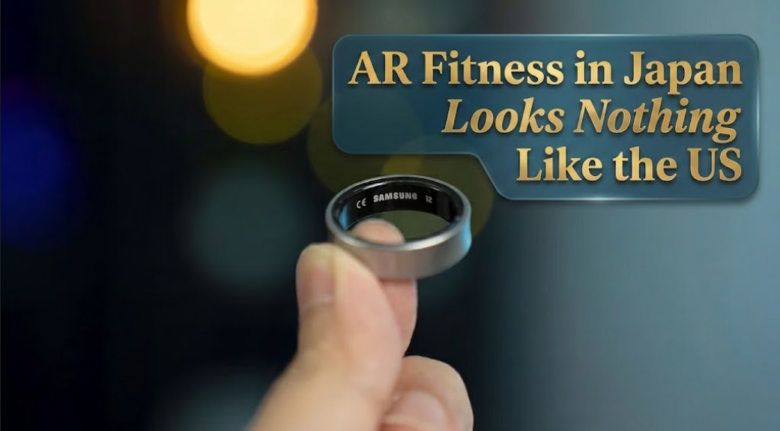
Most people picture AR fitness as one thing: a headset, a game world, someone swinging their arms in a living room. That picture is mostly American. Walk into a fitness conversation in Tokyo and the phrase means something closer to a ring sensor, a walking rhythm, and a phone that quietly checks whether you’re actually moving the way you said you would. Same term, two different countries, two different assumptions about what a workout is supposed to feel like.
The gap isn’t cosmetic. It comes from different histories, different equipment defaults, and honestly, different ideas about whether exercise should feel like a game or feel like maintenance.
2. Where the Two Markets Actually Came From
The US path to AR fitness runs through gaming. Nintendo’s Power Pad hit American shelves in the late 1980s as a floor mat that read your footsteps, but it started life in Japan as the Family Trainer, built by Bandai before Nintendo picked up the rights. That’s worth sitting with for a second: the exergaming lineage both countries now claim actually started in Japan and got Americanized later, not the other way around.
Fast forward a few decades and the split shows. In the US, the big commercial wins were things like Ring Fit Adventure and Pokémon Go, both built around narrative and reward loops, both marketed as games first and workouts second. Japan kept a foot in that world too, but the current momentum there is going somewhere quieter. Wearable devices already account for a substantial share of Japan’s fitness tracker market, and continuous, low-drama tracking is what’s pulling people in rather than boss battles or quest lines.
If you’ve spent time on arbodyhealth.online reading about <a href=”https://arbodyhealth.online/what-a-smart-ring-actually-tracks-at-night/”>what a smart ring actually tracks at night</a>, you already know where this is headed. Japan’s fitness tech culture leans hard into passive, always-on monitoring. The US market still wants a screen and a reason to show up.
3. The Walking Thing Isn’t a Trend, It’s a Worldview
Here’s where it gets specific. One of the fastest-growing fitness practices in 2026, interval-based Japanese walking, alternates three minutes of brisk walking with three minutes of slow walking, repeated for about half an hour, four or more sessions a week. <cite index=”9-1″>The method traces back to a 2007 study out of Shinshu University, and researchers found the interval group gained more muscle strength, better aerobic capacity, and a meaningful drop in blood pressure compared to people who just walked at a steady pace.</cite> It’s not flashy. There’s no headset involved. And it went viral roughly two decades after the original research, which tells you something about how these things spread.
Compare that to how AR fitness gets marketed stateside, where the pitch is almost always intensity and immersion. Bigger world, more calories burned, more dopamine per rep. <cite index=”2-1″>The broader 2026 fitness data actually cuts against that instinct everywhere, not just in Japan, showing a real shift toward low-impact, sustainable movement over high-intensity formats.</cite> Americans are catching up to what Japanese fitness culture assumed from the start: you don’t need adrenaline to make a workout count.
Here’s a mistake I see constantly among people trying AR fitness for the first time, and it applies on both sides of the Pacific. They chase the flashiest mode in the app because it looks the most like “real exercise,” then quit two weeks in because flashy doesn’t hold up to daily repetition. If you’ve read <a href=”https://arbodyhealth.online/why-ar-workouts-get-boring-after-two-weeks/”>why AR workouts get boring after two weeks</a>, this will sound familiar. Boring, in the right dose, is what sustains a habit.
4. Hardware Priorities Are Genuinely Different
| Category | Typical US Approach | Typical Japan Approach |
|---|---|---|
| Primary device | Headset or console-based motion sensor | Smart ring or slim wristband |
| Core appeal | Game narrative, competitive scoring | Passive tracking, sleep and recovery data |
| Session style | Scheduled “workout” blocks | Woven into daily routine (commute, walking) |
| Market growth driver | Home fitness equipment sales | Aging population, wearable integration, corporate wellness |
| Feedback loop | Points, levels, unlocks | Trend graphs, biometric consistency |
This isn’t a value judgment on either approach. It’s a market difference. <cite index=”6-1″>Japan’s fitness app growth is being pulled along by rising health awareness, strong wearable adoption, and a preference for flexible at-home training, with employers increasingly buying subscription platforms to support workforce health.</cite> That’s a corporate and demographic story as much as a fitness one. Meanwhile <cite index=”8-1″>Japan’s home gym equipment market is leaning into VR and AR integration specifically to create immersive, gamified challenges that keep people motivated</cite>, so the two approaches aren’t fully separate, they’re just weighted differently depending on who’s buying.
If you’re trying to figure out whether your own setup leans more toward one camp or the other, the comparison in <a href=”https://arbodyhealth.online/smart-ring-or-smartwatch-what-runners-need/”>smart ring or smartwatch, what runners actually need</a> covers the hardware trade-offs in more depth than I can fit here.
5. The Motivation Problem Nobody Talks About Enough
And this is the part that gets glossed over in most coverage of this topic. American AR fitness leans on extrinsic motivation, badges, streaks, in-game currency, because the assumption is that people won’t stick with a workout unless something outside the workout is rewarding them for it. It works, for a while. Then the novelty wears off and the streak becomes the whole point, which isn’t the same as fitness. Readers who’ve gone through <a href=”https://arbodyhealth.online/why-your-ar-workout-streak-keeps-breaking/”>why your AR workout streak keeps breaking</a> know exactly what I mean.
Japan’s model assumes something almost the opposite: that consistency comes from low friction, not high reward. A smart ring doesn’t gamify your sleep, it just shows it to you. A walking interval doesn’t unlock a boss fight, it just quietly does something measurable to your blood pressure. Sustainability comes from the workout being small enough to repeat, not exciting enough to chase.
Neither model is objectively correct. Some people genuinely need the game layer to show up at all, and there’s nothing wrong with that. But it’s worth being honest with yourself about which camp you actually fall into before you buy hardware built for the other one.
Common Mistakes Worth Naming Directly
People assume AR fitness means the same product category everywhere. It doesn’t. Buying a headset because “AR fitness is huge in Japan” misreads the market almost entirely, since the growth there is concentrated in wearables and app-based coaching, not headset gaming. On the flip side, assuming a smart ring alone will replicate the motivation of a full game-based system ignores that some people simply need the narrative hook to stay engaged past week three.
The other recurring mistake: treating step count or ring data as a scoreboard instead of a mirror. The whole point of low-friction tracking is that it removes the pressure of chasing a number. Turn it back into a competition and you’ve recreated the exact burnout problem it was designed to avoid.
At Ar Body Health Online, we’ve watched enough of these product cycles to say this plainly: the tech isn’t the strategy. It’s a delivery method for whatever your actual habit needs to be, whether that’s a headset that makes movement feel like play or a ring that just tells you the truth about your recovery.
I’ll be honest, I went into this expecting Japan to be the more “advanced” market and the US to be catching up. That’s not quite right either. They’re solving different problems. Japan is building fitness tech for an aging, health-conscious population that wants low-impact consistency. The US is still largely building it for people who need a reason to move at all. Both are legitimate problems. They just don’t call for the same tool.
FAQs
Is AR fitness actually popular in Japan, or is that overstated? It’s popular, but not in the headset-and-game-world sense most Americans picture. Growth is concentrated in wearables and AR-integrated home equipment rather than standalone VR/AR fitness gaming.
Why does Japan focus so much on walking instead of AR games? Cultural preference for low-impact, sustainable movement, plus strong research backing (like the interval walking studies) that predates the current wearable boom by nearly two decades.
Should I buy a smart ring or a fitness headset if I want to try the “Japanese approach”? A smart ring or slim wearable fits that model better. Headsets and motion-sensor games are closer to the American exergaming tradition and work best for people motivated by game mechanics.
Do AR fitness apps actually work for weight loss, or is that marketing? They can support weight loss the same way any consistent movement habit can, but the AR or gamified layer isn’t what drives the result. Consistency does. The tech just makes consistency easier or harder depending on the person.
Is one of these markets going to “win” and become the global standard? Unlikely. The demographic and cultural drivers are different enough that both approaches will probably keep coexisting, and most companies are already blending elements of both.