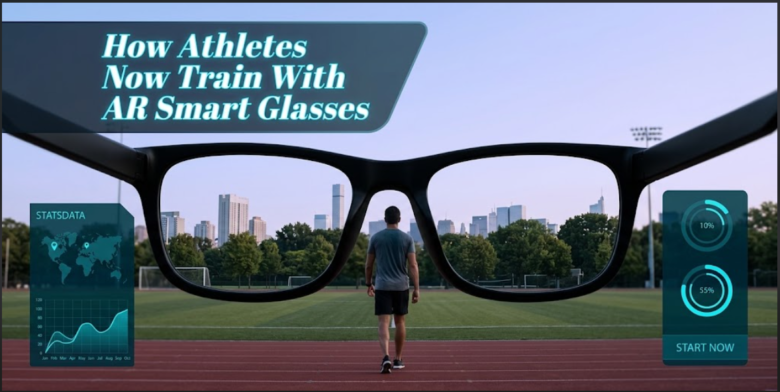
Most people assume AR training gear means a bulky headset and a cleared-out living room. That assumption is already out of date. A growing number of athletes, from amateur sprinters to semi-pro cyclists, have moved to something much smaller: AR smart glasses, worn during actual outdoor training, not just simulated indoor sessions.
That shift is worth unpacking, because it changes what “AR fitness” even means.
1. What Smart Glasses Actually Do That Headsets Don’t
A full AR headset creates an enclosed experience. You’re in a room, the system maps that room, and everything you see is generated within its boundaries. Smart glasses work differently. They overlay data onto your actual field of vision while you move through real space, meaning a runner can see pace, heart rate, and route guidance without looking down at a watch, and a cyclist can get turn-by-turn navigation without pulling out a phone mid-ride.
The distinction matters more than it sounds. Headset-based AR fitness is built for a fixed indoor footprint. Smart glasses are built for outdoor, unpredictable, real-world training, which is a category headsets were never really designed to serve. If you’ve read our comparison of gamified workouts versus regular cardio, you’ll recognize this as the same underlying tension between simulated environments and real ones, just applied to a different device category.
2. Where This Actually Gets Used
Track athletes have adopted this faster than almost any other group. Interval training benefits enormously from real-time pace overlays, since a runner doesn’t have to break stride or glance at a wrist device to know whether they’re ahead or behind target splits. A few college programs have started testing glasses that flash a subtle visual cue at goal pace, essentially a heads-up display for effort level, without needing a coach shouting splits from the infield.
Cyclists use a similar setup for road and gravel routes, layering elevation data and hazard alerts directly into their sightline. And climbers, somewhat unexpectedly, have started using AR glasses paired with route-mapping apps that highlight hold sequences before an attempt. That one surprised us the first time we saw it demonstrated. It’s a genuinely different use case from the fitness-gaming space most AR Body Health Online coverage focuses on, but it belongs in the same conversation because the underlying sensor and display tech overlaps heavily.
3. Here’s Where People Usually Get the Comparison Wrong
A common misconception, and we hear this constantly, is that smart glasses are just a smaller, lighter version of an AR fitness headset doing the same job. They’re not. Headsets are built around spatial mapping of an enclosed area. Glasses are built around lightweight data overlay during movement through open space. Trying to use fitness glasses the way you’d use a headset, expecting full environmental interaction or gamified obstacle courses, leads to disappointment, because that’s simply not the category they’re in.
The confusion is understandable. Marketing across the wearable space tends to blur these distinctions because “AR fitness” sells as a single category even though the hardware serves genuinely different training goals. Our breakdown of what equipment AR fitness actually needs draws this line more clearly if you’re trying to figure out which category fits your training style before spending money on either.
4. Battery Life and Data Accuracy Are Still the Weak Points
None of this is flawless yet. Battery life on most AR training glasses tops out around three to five hours of continuous overlay use, which is fine for a training run but tight for anything resembling a long training day, back-to-back sessions, or an actual endurance event. Heat also becomes an issue during summer outdoor sessions, since the display components sit close to the skin and don’t dissipate warmth especially well.
Data accuracy has its own quirks too. GPS-based pace overlays can lag by a few seconds on tight turns or under tree cover, which matters if you’re trying to hit exact splits. This is a similar accuracy gap to what we’ve covered regarding why fitness trackers underestimate calories, the sensors are good, not perfect, and treating any single number as gospel tends to set people up for frustration.
Pros and cons, stacked plainly:
Pros: real-time data without breaking form or stride, works in genuinely outdoor and unpredictable environments, lighter and less socially awkward to wear in public than a full headset, useful across a wider range of sports than gaming-focused fitness headsets.
Cons: shorter battery life than dedicated fitness watches, heat buildup during long outdoor sessions, GPS lag under certain conditions, and a price point that’s still steep enough to price out casual users.
5. Who This Actually Makes Sense For Right Now
This gear isn’t for everyone yet, and it’s worth being honest about that rather than pretending it’s a universal upgrade. Athletes training for a specific event with pace or route precision as a real constraint get the most out of it. Casual walkers or beginners easing into fitness generally don’t need the added complexity, and a simpler wearable does the job with far less friction and cost. We’ve written before about how most people end up buying the wrong fitness tracker for their actual needs, and the same logic applies here, just at a higher price tier.
If you’re coaching a team or training seriously for a specific race, the case gets stronger fast. If you’re trying to build a basic movement habit, it’s probably overkill, and a smart ring or simpler tracker will serve you better while you figure out what you actually want from your training data.
Where This Is Probably Headed
Hardware in this category moves fast, faster than most fitness tech categories we track. What’s on the market now will likely look clunky in two years. But the underlying shift, from enclosed simulated environments toward lightweight real-world data overlay, seems like the direction serious athletic training is heading, separate from the gamified fitness space entirely. Worth keeping an eye on if you train outdoors regularly, even if you’re not ready to buy in yet.
FAQs
Can AR smart glasses replace a running watch entirely? Not yet, mostly due to battery life. Most serious runners still pair glasses with a watch for longer sessions and rely on the glasses specifically for real-time pace or route overlay during shorter, focused training blocks.
Are these glasses safe to use while cycling in traffic? Reputable models are designed to keep the overlay in peripheral vision rather than blocking your central sightline, but this varies significantly by manufacturer. Test any new device on a closed path before using it in traffic.
Do AR training glasses work for indoor gym workouts? Some do, though they’re generally optimized for outdoor, GPS-dependent training rather than enclosed gym environments. A full AR headset setup tends to serve indoor gamified workouts better.
How is this different from just using a smartwatch with a heads-up app? The core difference is where your eyes stay. A smartwatch still requires glancing down and breaking form momentarily, while glasses keep data in your line of sight without that interruption, which matters more than people expect once they’ve tried both.
Is this worth it for a recreational runner who just wants to stay consistent? Probably not yet, given the cost and battery limitations relative to a simpler tracker. It makes more sense once training gets structured around specific pace or performance goals rather than general consistency.
Our full walkthrough of AR fitness for beginners is a better starting point if you’re newer to any of this and trying to figure out where to actually begin.