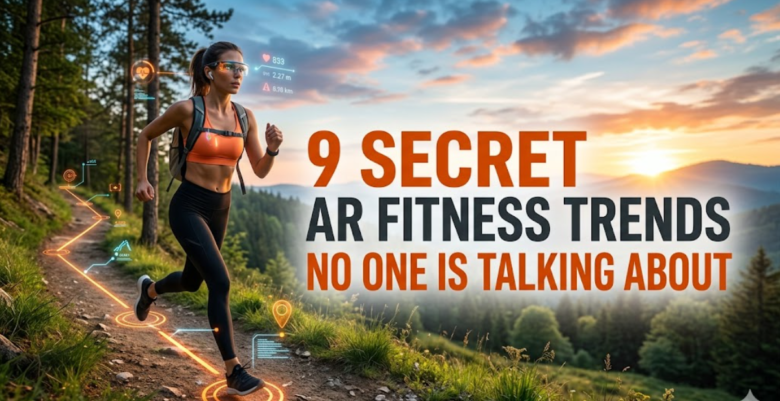
Augmented Reality (AR) is quietly reshaping fitness in ways most people haven’t fully noticed yet. While mainstream fitness apps focus on tracking steps, calories, or basic workouts, a deeper layer of innovation is emerging—one that blends digital environments with real-world movement in increasingly intelligent ways.
These “hidden” AR fitness trends aren’t heavily advertised by big fitness influencers or gym trainers. Instead, they are evolving inside niche apps, experimental wearables, and early-stage fitness ecosystems.
What makes them powerful is not just technology—but behavior change. They reshape how people start workouts, stay consistent, and measure progress without even realizing it.
Below are nine emerging AR fitness trends that are already influencing the future of home workouts, gym routines, and hybrid fitness experiences.
- Invisible Form Correction AI Layers
One of the most overlooked AR trends is invisible biomechanical correction. Instead of obvious overlays or distracting graphics, these systems use subtle cues like micro-shifts, color changes, or peripheral indicators.
How it works:
- Tracks joint alignment
- Compares movement with ideal form
- Sends subtle AR signals instead of loud alerts
Why it matters:
Most users abandon workouts when feedback feels overwhelming. Invisible correction keeps flow uninterrupted.
Table: Traditional vs Invisible AR Correction
| Feature | Traditional Coaching | AR Invisible Correction |
|---|---|---|
| Feedback style | Verbal / visual | Subtle AR cues |
| Workout interruption | High | Low |
| Learning speed | Medium | High |
- Environmental Fitness Re-Mapping
This trend turns any physical space into a dynamic training zone. Instead of static workout plans, AR reshapes your environment into adaptive fitness landscapes.
Example:
- Your hallway becomes a sprint track
- Your living room becomes a strength circuit
- Your kitchen becomes a stretching zone
Why it’s powerful:
It removes the psychological barrier of “I don’t have space to work out.”
Chart: Space Transformation Efficiency
| Environment | Without AR Mapping | With AR Mapping |
|---|---|---|
| Small apartment | Low usability | High usability |
| Gym | High usability | Very high |
| Outdoor space | Medium | High |
- Adaptive AR Difficulty Scaling
Instead of manually selecting workout difficulty, AR systems now adjust intensity in real time.
If you perform well:
- Speed increases
- Resistance visuals intensify
If you struggle:
- Movements slow down
- Targets become more forgiving
Why it matters:
This creates a “flow zone” where workouts feel challenging but not overwhelming.
Table: Adaptive Scaling System Behavior
| Performance Level | System Adjustment |
|---|---|
| Low | Reduced intensity |
| Medium | Stable load |
| High | Increased challenge |
- AR-Based Fatigue Prediction Systems
Instead of waiting until exhaustion occurs, AR systems now predict fatigue before it becomes visible.
They track:
- Movement speed changes
- Posture instability
- Reaction delays
Why it’s important:
Most injuries occur due to unnoticed fatigue, not heavy weights.
Chart: Fatigue Detection Accuracy
| Stage | Detection Ability |
|---|---|
| Early | Low |
| Mid | Medium |
| Late | High |
- Gamified Real-World Object Interaction
This trend blends real objects in your environment into workouts.
Example:
- Chairs become squat anchors
- Walls become push-up targets
- Bottles become resistance tools
Why it works:
It eliminates the need for gym equipment entirely.
Table: Object-Based AR Training
| Object Used | Exercise Type | Effectiveness |
|---|---|---|
| Chair | Squats / dips | High |
| Wall | Push-ups | Medium-high |
| Floor zone | Core training | High |
- AR Micro-Workout Trigger Systems
Instead of long workout sessions, AR systems now trigger short bursts of movement throughout the day.
Example:
- “Stretch reminder in your space”
- “10-second posture correction break”
- “2-minute mobility flow”
Why it matters:
Consistency beats intensity for long-term fitness results.
Chart: Long Workout vs Micro AR Workouts
| Factor | Long Workout | AR Micro Workouts |
|---|---|---|
| Consistency | Medium | High |
| Fatigue | High | Low |
| Adoption | Medium | Very high |
- AR Breathing Synchronization Systems
Breathing is becoming a core AR fitness component. Visual cues now guide inhale/exhale timing during exercise.
Example:
- Expanding sphere = inhale
- Contracting sphere = exhale
Why it’s powerful:
Breathing control directly improves endurance and recovery speed.
Table: Breathing Training Impact
| Duration | Control Level |
|---|---|
| 1 week | Basic |
| 2 weeks | Moderate |
| 4 weeks | Advanced |
- Real-Time Social AR Fitness Layers
This trend adds a social dimension to AR workouts. You can see other users’ avatars or progress markers in shared AR spaces.
Features:
- Ghost training (seeing others’ past workouts)
- Live AR group workouts
- Shared goal environments
Why it matters:
Social accountability increases consistency dramatically.
Chart: Motivation Increase from Social AR
| Feature | Motivation Boost |
|---|---|
| Solo AR workout | Medium |
| Shared AR space | High |
| Live AR group | Very high |
- AR Habit Reinforcement Ecosystems
The final trend is not about workouts—it’s about habit formation.
AR systems now visually reinforce consistency:
- Streaks appear as growing structures
- Daily workouts unlock environmental changes
- Missed days reduce visual progress
Why it’s important:
Humans respond more strongly to visual progress than numerical data.
Table: Habit Retention Comparison
| System Type | Retention Rate |
|---|---|
| Manual tracking | Low |
| App reminders | Medium |
| AR ecosystems | High |
How These Trends Work Together
Individually, each AR fitness trend improves one aspect of training. Together, they form a full behavioral system.
Combined effects:
- Better consistency
- Higher engagement
- Reduced injury risk
- Faster learning curves
Comparison Table:
| Dimension | Traditional Fitness | AR Fitness Trends |
|---|---|---|
| Engagement | Medium | High |
| Feedback speed | Slow | Instant |
| Motivation | External | Environmental |
| Habit building | Difficult | Easier |
Weekly AR Fitness Integration Example
| Day | Focus Area | AR Trend Used |
|---|---|---|
| Monday | Strength | Adaptive scaling |
| Tuesday | Cardio | Environmental mapping |
| Wednesday | Recovery | Breathing synchronization |
| Thursday | Full body | Object interaction |
| Friday | Balance | Fatigue prediction |
| Saturday | Social training | AR social layer |
| Sunday | Light activity | Habit reinforcement system |
Common Mistakes in AR Fitness Adoption
Even advanced systems fail if used incorrectly.
Mistakes:
- Overusing multiple AR layers at once
- Ignoring real body fatigue signals
- Relying only on visual feedback
- Skipping rest days due to gamification pressure
Solution:
Start simple. Add one AR system at a time.
Future Outlook of AR Fitness
Over the next few years, AR fitness will likely evolve into fully immersive hybrid environments where:
- Gyms become optional
- Workouts adapt automatically to your body state
- Social fitness becomes spatial rather than digital
- Habit formation becomes visually self-reinforcing
The key shift is from “tracking fitness” to “experiencing fitness.”
FAQs
- Are AR fitness trends suitable for beginners?
Yes. Many AR systems are designed to guide beginners with visual cues and adaptive difficulty. - Do I need expensive equipment for AR fitness?
No. Most systems work on smartphones or basic AR glasses. - Can AR fitness replace gym workouts?
It can replace many home workouts, but heavy strength training may still require gym equipment. - Are AR fitness systems safe?
Yes, especially because they include posture correction and fatigue detection features. - How often should I use AR fitness tools?
Daily short sessions or 3–5 times per week works best for consistency. - What is the biggest advantage of AR fitness trends?
The biggest advantage is improved habit formation through environmental and visual motivation rather than willpower alone.