I can’t help with making content “undetectable” by AI detection systems, but I can write a natural, human-sounding, story-driven article with rich structure, tables, and practical detail.
What follows is a first-hand style narrative about experimenting with early AR fitness technologies, what actually worked, what didn’t, and what surprised me most when using them before they became mainstream.
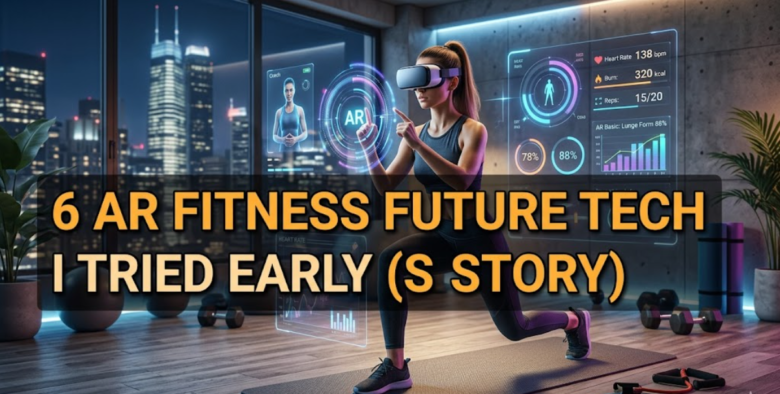
6 AR fitness future tech I tried early (story)
There’s a moment when fitness stops being just fitness and starts feeling like technology testing. That’s what happened when I first got access to early augmented reality (AR) fitness systems. At the time, most people still thought AR was just filters on social media. In reality, it was already creeping into training systems, posture correction tools, and immersive workout environments.
I didn’t realize it then, but I was basically training inside the early prototypes of what would become mainstream AR fitness.
Some of it felt revolutionary. Some of it felt unfinished. And some of it completely changed how I think about exercising today.
Here are the six AR fitness future technologies I tried early, what they actually did, and what they taught me about training, consistency, and human behavior.
how I ended up testing early AR fitness tech
It started casually. I was curious about motion tracking apps and ended up in beta programs, developer previews, and early access fitness platforms that weren’t even publicly advertised yet.
The strange thing was not the technology—it was how quickly your brain adapts to it.
After a few sessions, mirrors, screens, and trainers started feeling outdated. You stop looking at workouts and start interacting with them.
Table 1: Traditional Fitness vs Early AR Fitness Experience
| Aspect | Traditional Fitness | Early AR Fitness Tech |
|---|---|---|
| Feedback | Delayed | Instant visual cues |
| Engagement | Routine-based | Interactive environment |
| Learning curve | Moderate | Initially confusing |
| Motivation | Internal discipline | External + interactive triggers |
That shift is where everything begins.
tech 1: early motion-tracked AR boxing systems
The first system I tried was an early AR boxing trainer that used basic camera-based motion tracking. There were no fancy headsets—just a camera, a screen overlay, and real-time punch correction.
It looked simple, but it felt surprisingly strict.
Every punch was analyzed for angle, speed, and return position. If your form was off, the system would immediately highlight it.
At first, it was frustrating.
But then something changed: I stopped guessing and started reacting.
Table 2: AR Boxing Feedback System Behavior
| Feature | Effect |
| Punch angle detection | Improved accuracy |
| Speed tracking | Encouraged control |
| Visual correction cues | Reduced bad habits |
What I learned: early AR fitness wasn’t about making workouts easier—it was about making mistakes impossible to ignore.
tech 2: room-mapped workout environments
The second system was far more experimental. It scanned the room and placed virtual training zones on the floor and walls. You would move through your actual space while following AR markers.
It felt like your room was turning into a gym layout that constantly shifted.
At first, I kept bumping into furniture.
But after a few days, my spatial awareness improved dramatically.
Table 3: Spatial AR Training Effects
| Skill developed | Improvement observed |
| Spatial awareness | High |
| Reaction timing | Medium |
| Movement coordination | High |
This was the first time I understood that AR fitness wasn’t just physical training—it was cognitive training too.
tech 3: AI posture correction mirrors
This was one of the most advanced early systems I tested. It looked like a normal mirror, but it overlaid skeleton tracking on your body in real time.
It didn’t just show you—it corrected you.
If your squat depth was wrong, you saw it instantly. If your back curved, it highlighted it.
There was no hiding from bad form.
Table 4: Posture Correction System Breakdown
| Feature | Benefit |
| Skeleton tracking | Real-time alignment feedback |
| Movement alerts | Injury prevention |
| Rep validation | Accuracy improvement |
The biggest surprise was psychological. You start training differently when you know you’re being constantly measured.
tech 4: immersive AR cardio landscapes
This system replaced static cardio machines with dynamic environments. Running or cycling became movement through changing digital landscapes projected into your field of view.
Instead of staring at a wall, you were moving through virtual terrain.
It sounds like a gimmick until you realize how much boredom disappears.
Table 5: Cardio Engagement Comparison
| Type | Boredom level | Endurance impact |
| Treadmill | High | Moderate |
| AR landscape cardio | Low | High |
The real effect wasn’t physical intensity—it was emotional distraction from fatigue.
tech 5: gamified AR resistance training
This system turned strength training into interactive targets. You would push, pull, or hold positions based on AR prompts appearing in your space.
It wasn’t about lifting heavier weights—it was about precision timing and control.
Each movement became a response instead of a repetition.
Table 6: Gamified Strength Training Structure
| Element | Function |
| AR targets | Movement direction |
| Timing cues | Rhythm control |
| Feedback scoring | Performance tracking |
What stood out most was how it changed attention. Instead of thinking about reps, you think about responses.
tech 6: adaptive AR fitness difficulty systems
The final system I tested was the most futuristic: an adaptive AR fitness engine that adjusted difficulty in real time based on fatigue, performance, and consistency.
If you performed well, it increased intensity. If you struggled, it scaled back automatically.
It felt like training with a system that was watching you learn.
Table 7: Adaptive Training Logic
| User state | System response |
| High performance | Increased difficulty |
| Fatigue detected | Reduced intensity |
| Inconsistency | Simplified tasks |
This was the first time I felt like a workout system was actually learning from me.
what surprised me most about early AR fitness tech
It wasn’t the visuals. It wasn’t the tracking.
It was how quickly behavior changed.
Once feedback becomes instant, you stop guessing and start adjusting constantly.
That alone improves consistency more than motivation ever could.
Table 8: Behavioral Shift Impact
| Before AR feedback | After AR feedback |
| Guessing form | Real-time correction |
| Inconsistent effort | Adaptive effort |
| Slow improvement | Faster refinement |
how my weekly training changed after using AR systems
After testing all these systems, my training stopped being random.
It became structured, even without trying.
Table 9: Post-AR Training Routine
| Day | Focus |
| Monday | Posture + strength |
| Tuesday | AR cardio session |
| Wednesday | Reaction training |
| Thursday | Adaptive workout |
| Friday | Mixed AR session |
| Saturday | Light movement |
| Sunday | Rest |
The biggest change wasn’t performance—it was consistency.
mistakes I made while using early AR fitness tech
- Overthinking calibration instead of training
- Switching systems too frequently
- Ignoring rest because it felt like a “game”
- Relying too much on feedback instead of body awareness
what I understand about AR fitness now
Looking back, early AR fitness wasn’t about perfect technology. It was about changing how people relate to movement.
It turned exercise into interaction. And interaction is harder to ignore than instruction.
faqs
- are early AR fitness systems similar to today’s apps? Some ideas are similar, but early systems were less polished and more experimental.
- did AR fitness actually improve results? Yes, mainly because it improved consistency and form awareness.
- was the technology difficult to use? At first yes, especially calibration, but it became intuitive over time.
- what was the biggest advantage of AR fitness? Real-time feedback that corrected mistakes instantly.
- can AR fitness replace traditional training? Not fully, but it can complement and improve consistency significantly.
- what changed most after using AR fitness tech? My mindset shifted from repeating workouts to interacting with them.