Fitness used to be repetitive. You’d count reps, watch timers, or follow static videos on a screen. But in 2026, that experience has quietly shifted into something far more immersive.
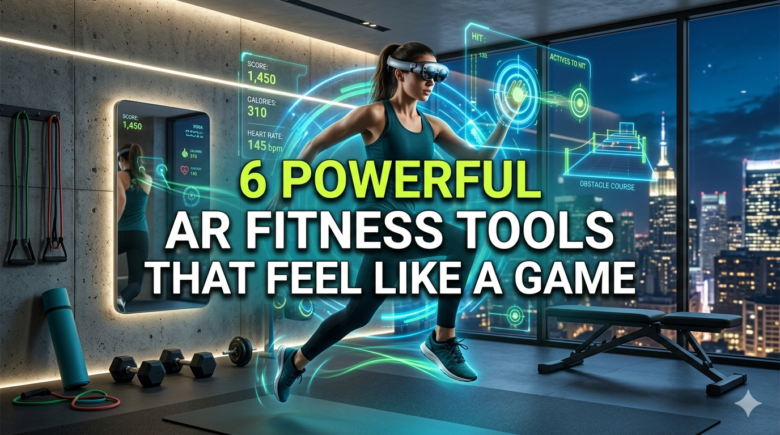
Augmented reality (AR) fitness tools now turn living rooms, parks, and even sidewalks into interactive game environments. Instead of “working out,” users are dodging virtual obstacles, chasing digital targets, or leveling up like characters in a game.
What makes this shift important is not just entertainment—it’s adherence. People don’t stick to boring workouts, but they do stick to games.
This article explores six of the most powerful AR fitness tools that successfully merge exercise with gameplay mechanics in a way that actually keeps users moving.
how AR fitness games change behavior
Before listing tools, it’s worth understanding why AR fitness works so well compared to traditional apps.
Core psychological drivers:
- instant feedback loop (you see results immediately)
- gamification (points, levels, missions)
- embodied interaction (your body is the controller)
- narrative engagement (story or challenge-based progression)
- environmental integration (real-world movement becomes gameplay)
A simplified behavior model looks like this:
| Trigger | Action | Reward |
|---|---|---|
| AR visual cue | Movement (jump/run/squat) | Score, progress, unlock |
| Game mission | Exercise session | Story advancement |
| Competition | Faster/better performance | Ranking or rewards |
This loop is what makes AR fitness feel less like discipline—and more like play.
comparison of top AR fitness tools
| Tool | Type of Experience | Equipment Needed | Fitness Focus | Game Style |
|---|---|---|---|---|
| Zombies, Run! | Story-based AR audio | Phone only | Running/cardio | Survival narrative |
| Active Arcade | Motion tracking games | Phone camera | Full-body movement | Arcade mini-games |
| Ghost Pacer | AR pacing trainer | Phone + headset optional | Running speed | Virtual racing |
| Pokémon GO | Location AR | Phone only | Walking/steps | Exploration + collection |
| AR Fitclub | Virtual trainer overlay | Phone/tablet | Strength training | Coaching simulation |
| Kayyo | Combat training AR | Phone camera | Boxing/MMA | Skill-based progression |
Each tool targets a different psychological motivation: fear, competition, curiosity, mastery, or social play.
- Zombies, Run! — survival storytelling that makes running addictive
This is one of the earliest and most successful AR fitness experiences. Instead of simply jogging, you become part of a survival story where zombies chase you and missions unfold through audio storytelling.
How it works:
- audio missions guide your run
- story progresses as you move
- sprint intervals triggered by “zombie chases”
Why it feels like a game:
- immersive narrative replaces boredom
- unpredictable pacing increases adrenaline
- collection mechanics (supplies, upgrades)
Key effect: users naturally extend workout duration because they want to finish the mission.
- Active Arcade — your body becomes the controller
Active Arcade transforms your smartphone into a motion-tracking gaming console. Using your camera, it detects your full-body movement and converts it into gameplay.
Example experiences:
- dodge falling objects
- hit virtual targets
- jump through timed gates
- compete in reaction-based mini-games
Why it works:
- zero learning curve
- instant gratification
- full-body activation
A quick breakdown of its workout intensity:
| Game Type | Movement Level | Calories Burn |
|---|---|---|
| Reaction games | Medium | Moderate |
| Jump challenges | High | High |
| Target hitting | Medium | Moderate |
| Balance games | Low–Medium | Light |
The biggest strength is accessibility—any room becomes a gym.
- Ghost Pacer — racing your past self
Ghost Pacer turns running into a competitive AR experience where you race a virtual version of yourself or others projected in real time.
Core features:
- AR ghost runner appears in your environment
- real-time pace comparison
- performance tracking overlays
Why it feels like gaming:
- constant competition with a visible opponent
- pacing becomes strategic, not random
- immediate feedback loop on speed
It’s especially effective for intermediate runners who struggle with consistency.
Performance impact table:
| Metric | Traditional Running | Ghost Pacer |
|---|---|---|
| Motivation | Medium | High |
| Speed improvement | Slow | Faster |
| Engagement | Low | High |
| Consistency | Medium | High |
- Pokémon GO — the accidental fitness revolution
Although not designed purely for fitness, Pokémon GO remains one of the most successful AR movement systems ever created.
It works through:
- location-based AR exploration
- walking to capture creatures
- reward systems tied to distance traveled
Why it still dominates in 2026:
- social competition (gyms, raids)
- collectible-driven motivation
- continuous content updates
- low entry barrier
It’s not a workout app—but it accidentally gets millions of people walking daily.
Behavioral effect chart:
| User Type | Average Daily Steps Increase |
|---|---|
| Casual players | +1,500 to +3,000 |
| Active players | +4,000 to +7,000 |
| Competitive players | +8,000+ |
- AR Fitclub — virtual trainer in your space
AR Fitclub projects a digital trainer into your environment who demonstrates exercises and corrects form.
Key features:
- live posture guidance
- guided workout routines
- adaptive difficulty progression
- real-time corrections
Why it feels like a game:
- trainer acts like a “character” guiding progression
- workouts are structured like levels
- performance unlocks harder routines
It essentially turns your room into a private fitness studio.
Workout comparison:
| Training Style | Traditional Video | AR Fitclub |
|---|---|---|
| Feedback | None | Real-time |
| Engagement | Medium | High |
| Injury prevention | Low | High |
| Motivation | Variable | Stable |
- Kayyo — AR combat training with progression systems
Kayyo brings martial arts training into AR space. It tracks punches, movement, and combinations while giving instant feedback.
Features:
- AR shadowboxing
- AI movement correction
- structured skill progression
- combat-style challenges
Why it feels like a game:
- skill tree progression (like RPG leveling)
- combo-based scoring system
- timed challenges and “missions”
Instead of repetitive drills, users feel like they are leveling up a fighting character.
Skill progression structure:
| Level | Focus | Challenge Type |
|---|---|---|
| Beginner | Form accuracy | Slow drills |
| Intermediate | Speed | Combo chains |
| Advanced | Power + reaction | Timed sparring |
| Elite | Strategy | Adaptive AI opponent |
how AR fitness tools improve consistency
One of the biggest advantages of AR fitness is not intensity—it’s consistency.
Traditional workouts fail because:
- they feel repetitive
- feedback is delayed
- motivation drops quickly
AR tools solve this with:
- immediate reward loops
- visual stimulation
- interactive progression systems
- emotional engagement
Consistency comparison:
| Method | Weekly Dropout Rate |
|---|---|
| Traditional gym routines | High |
| Video workouts | Medium |
| AR fitness games | Low |
why these tools feel like games (psychology breakdown)
All six tools share core game mechanics:
- progression systems (levels, XP, difficulty scaling)
- real-time feedback (visual/audio cues)
- challenge loops (missions or targets)
- reward systems (points, unlocks, achievements)
- embodied interaction (your body is the input device)
This creates what psychologists call “flow state”—a balance between challenge and ability where users lose track of time.
future of AR fitness tools
The next wave of AR fitness is already forming:
- wearable-free full-body tracking
- AI-driven adaptive workouts
- multiplayer AR fitness battles
- real-world hybrid gyms using AR glasses
- persistent fitness avatars across apps
In simple terms: fitness is becoming playable.
FAQs
- Are AR fitness tools effective for weight loss?
Yes, especially because they increase movement frequency and workout consistency, which are key factors in weight loss. - Do AR fitness apps require expensive equipment?
Most only require a smartphone. Some advanced tools may use wearables, but they are optional. - Can beginners use AR fitness games safely?
Yes. Many apps are designed with beginner-friendly modes and adaptive difficulty levels. - Are AR fitness games better than gym workouts?
Not necessarily better—but often more consistent, which leads to better long-term results for many users. - Do AR fitness tools really track movement accurately?
Modern tools use camera tracking and AI models, which are fairly accurate for general fitness but not medical-grade. - Why do AR fitness apps feel more motivating?
Because they combine exercise with game mechanics like rewards, progression, and storytelling, which increases engagement.