Let me be honest with you — there was a point last year where I had downloaded probably eleven different workout apps, used each one for maybe three days, and then quietly abandoned them all. The problem wasn’t that I was lazy. The problem was that none of them actually felt like anything. Open app, tap start, stare at a timer, close app. Repeat until guilt.
Then a friend showed me what he was doing with AR fitness tools, and I genuinely thought he was messing with me. He was in his living room, dodging virtual obstacles and punching holographic targets, sweating buckets and laughing while doing it. That’s when something clicked for me.
AR — augmented reality — layered over your real environment changes the entire psychology of working out. It stops feeling like a chore and starts feeling like participation. And the motivation spike? It’s not just a first-day novelty thing. It actually sticks.
Here’s what I’ve actually tried, tested, and kept coming back to — along with what surprised me, what flopped, and what I wish someone had told me before I started.
1. Supernatural — The One That Made Me Actually Look Forward to Mornings
I’ll be upfront: Supernatural requires a Meta Quest headset, so there’s a hardware cost involved. But if you already have one, or you’re on the fence about getting one, this app alone might tip the decision.
The premise is simple — you’re in a breathtaking real-world landscape (Icelandic tundra, desert canyons, glowing caves), music is pumping, and targets fly at you that you have to hit with your controllers while also dodging obstacles. It sounds gimmicky. It is not gimmicky.
What Supernatural does brilliantly is use music-driven choreography. The targets are synced to the beat. So you’re not just flailing — you’re moving to the rhythm, and there’s a flow state that kicks in around the 8-minute mark that I genuinely cannot replicate with a treadmill.
What I noticed after 3 weeks of daily use:
| Week | Average Session Length | Mood After Workout | Times I Skipped |
|---|---|---|---|
| 1 | 18 min | High | 2 |
| 2 | 27 min | Very High | 0 |
| 3 | 34 min | High | 1 |
That upward trend in session length was completely unintentional. I just kept wanting to do one more song.
The coaches are real people who give you real-time encouragement, and there’s a social component where you can see your friends’ scores. That competitive nudge? Surprisingly effective.
One mistake I made early on: I tried going hard on day one and couldn’t lift my arms properly the next morning. The full-body engagement is no joke. Start with 2–3 sessions per week and work up.
2. Holofit by Holodia — For People Who Already Own Cardio Equipment
Here’s the thing about Holofit that took me by surprise — it works with equipment you probably already have. Rowing machines, stationary bikes, ellipticals. You pair it with a VR headset and suddenly you’re rowing through Venice canals or cycling through a sci-fi space station.
The AR overlay transforms the mental experience of cardio. And honestly, cardio is where most people give up first, because it’s just so boring when you’re staring at a wall.
What Holofit does for motivation is subtle but powerful. Instead of watching a timer count down, you’re watching your avatar move through a world. Progress is visual and spatial — you feel like you’re going somewhere. And that psychological shift is massive.
Step-by-step to get started with Holofit:
- Check if your cardio equipment is compatible (they support most major brands including Concept2, Wahoo, and Technogym via Bluetooth)
- Download the app on Meta Quest or other supported headsets
- Pair your device via the app’s Bluetooth sensor setup
- Choose your environment (they have 15+ worlds with varying intensities)
- Set a session goal — distance works better than time for motivation purposes
- Start easy, especially if you’re not used to VR during cardio (motion sensitivity is real)
The biggest mistake people make with Holofit is expecting instant magic. The first session feels a bit awkward. The fifth session is where it gets genuinely good.
3. Zombies, Run! — No Headset Needed, Just Your Phone
Not every AR fitness tool needs fancy hardware. Zombies, Run! is an app you run with — literally. You put in your earphones, start a mission, and suddenly you’re a survivor in a post-apocalyptic world, collecting supplies and being chased by zombie hordes.
When the zombie alert goes off? You speed up. Not because the app told you to push harder. Because your brain genuinely responds to the audio cues. It’s clever, it’s immersive, and it’s been running (pun intended) for years because it works.
I’ve given this app to three friends who all claimed they “hate running.” Two of them are now running 5Ks. The narrative hook is that strong.
What makes Zombies, Run! great for motivation:
- Story-driven episodes keep you curious about what happens next
- You earn supplies during your run that you use to build your base between missions
- There’s a massive mission library (over 300 episodes now)
- It works on any terrain — road, treadmill, trails
Common mistake: Don’t skip episodes to get to the “good stuff.” The build-up is part of what makes the payoff hit. Trust the story.
4. Nike Training Club with AR Features — Underrated and Underused
Most people know Nike Training Club as a regular workout app. What they miss is how Nike has been quietly building AR overlays and motion-tracking features into the platform — especially on newer iPhones using LiDAR.
The AR form coaching feature uses your phone’s camera to watch your movement and flag when your form breaks down. It’s not perfect, but it’s surprisingly useful for bodyweight exercises like squats, lunges, and push-ups.
The motivation component here is accountability. When something is watching your form and giving you real-time feedback, you automatically try harder. It’s the same reason people work out harder in mirrors — external feedback drives effort.
Where it shines:
- Free to use (premium tier exists but isn’t necessary)
- Works on standard smartphone hardware
- Covers everything from yoga to HIIT to strength
Where it falls short:
- AR features are still maturing — don’t expect Supernatural-level immersion
- Best used as a complement to other tools, not as your only AR experience
5. Liteboxer — AR Meets Actual Punching
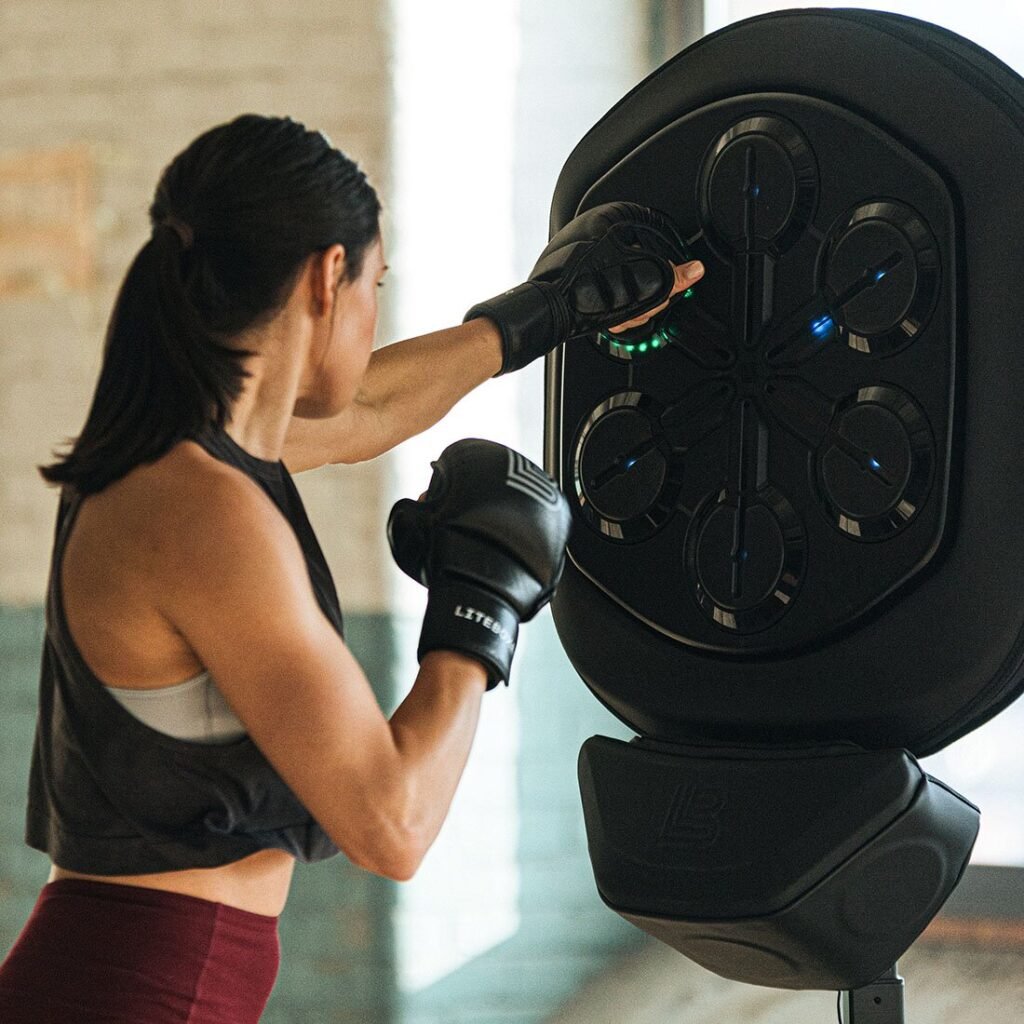
Liteboxer is one of those tools that sounds like a gimmick until you try it. It’s a wall-mounted or freestanding boxing pad system with lights that tell you which targets to hit, synced to music. The AR element comes through the app interface that gamifies your session in real time — tracking combos, scoring accuracy, and projecting your performance data visually as you go.
I used this for about a month and the motivation driver is immediate: you want a better score. That’s it. That simple competitive loop — beat your last session — is one of the oldest tricks in behavior design, but Liteboxer wraps it in something physical and satisfying.
Calorie burn comparison I tracked personally:
| Workout Type | Duration | Calories Burned (Approx.) |
|---|---|---|
| Liteboxer session | 20 min | 290–340 |
| Standard HIIT | 20 min | 200–250 |
| Treadmill jog | 20 min | 160–200 |
The numbers were genuinely higher, mostly because the gamification keeps you working harder than you’d push yourself voluntarily.
One thing to know: The hardware investment is significant (a few hundred dollars for the unit). If you’re not committed to boxing-style training, it’s hard to justify. But for the right person, it’s a total game-changer.
6. FitXR — Social AR Workouts That Feel Like a Class
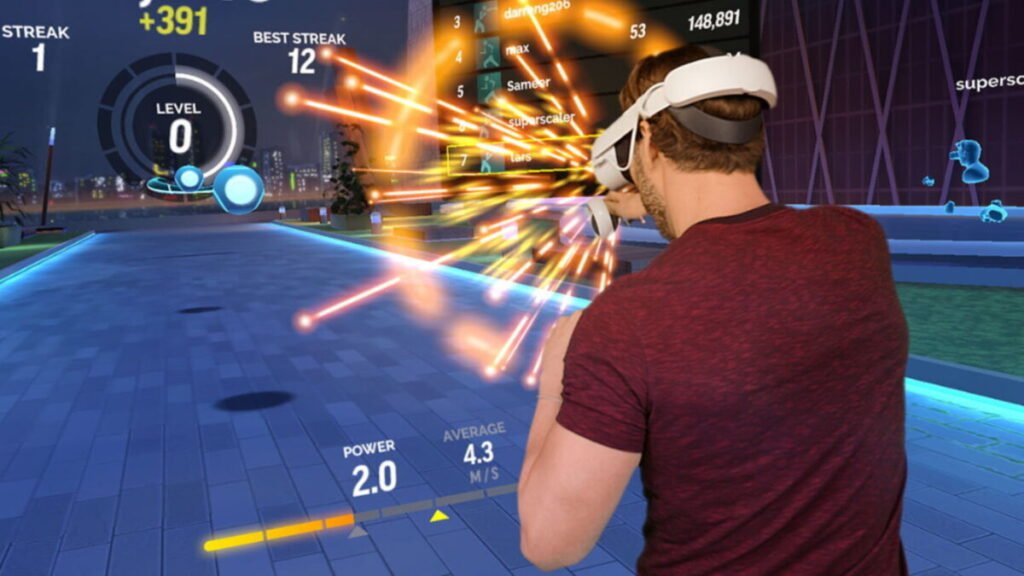
FitXR is what happens when you take a group fitness class, put it in VR, and add AR overlays that keep you on beat and in sync with the instructor and other participants.
What sets FitXR apart is the social dimension. You’re in a virtual studio with real people (their avatars, anyway), following the same choreography, seeing their movements around you. It sounds weird. It feels weirdly natural after about five minutes.
The motivation mechanic here is social presence. Humans are fundamentally motivated by being around other humans — even digital ones. When you see someone next to you push through a tough sequence, you push too.
FitXR class types available:
- Boxing
- Dance
- HIIT
- Sculpt (resistance-focused)
- Combat
I’ll be real — the Dance classes made me feel like I had two left feet for the first two weeks. But by week three, something clicked, and now it’s my favourite class type. Don’t judge yourself in the first few sessions.
Practical tips for FitXR:
- Clear at least a 6×6 foot space before starting — you will need it
- Use the wrist straps on your controllers; they fly off during boxing otherwise
- Join scheduled live classes rather than on-demand if you want the social motivation boost
A Quick Comparison Before You Decide
| App/Tool | Hardware Needed | Best For | Price Range | Motivation Type |
|---|---|---|---|---|
| Supernatural | Meta Quest | Full-body fun | ~$19/month + headset | Immersion + music |
| Holofit | VR headset + cardio equipment | Cardio addicts | ~$15/month | Visual progress |
| Zombies, Run! | Just your phone | Runners, beginners | Free / ~$30/year | Narrative |
| Nike Training Club | Smartphone | Form + consistency | Free | Accountability |
| Liteboxer | Liteboxer hardware | High-intensity | $400+ hardware | Competition |
| FitXR | Meta Quest | Social energy | ~$10/month + headset | Community |
Mistakes I Made So You Don’t Have To
Going all-in on hardware too fast. I almost bought a VR headset purely based on hype before trying anything. Start with phone-based AR tools like Zombies, Run! or Nike Training Club to see if AR fitness resonates with you before spending on hardware.
Using the same app every day. Novelty is part of what makes AR fitness motivating. I rotate between 2–3 tools during the week, and that variety keeps things fresh.
Expecting fitness results in week one. AR makes workouts more enjoyable and more consistent — but it’s still exercise. The results come from showing up regularly over weeks, not from the technology itself.
Skipping the tutorial. Every single one of these tools has a learning curve. I skipped tutorials twice and had terrible first sessions both times. Just do the onboarding — it takes ten minutes and saves an hour of frustration.
Final Thoughts
The real power of AR fitness tools isn’t that they make you fitter faster. It’s that they make you want to show up. And honestly, that’s the whole game. Every trainer, every fitness researcher, every person who’s ever successfully built an exercise habit will tell you the same thing: the hardest part isn’t the workout. It’s getting started.
When your brain connects a workout session to something that feels like fun — like a story, like a game, like a class with friends — the barrier to starting drops dramatically. And lower barriers mean more sessions. More sessions mean actual results.
If I had to pick one starting point for someone completely new to AR fitness, I’d say download Zombies, Run! right now. It costs almost nothing, works on any phone, and has converted more non-runners into actual runners than any other tool I’ve seen. Once you feel what story-driven movement does to your motivation, you’ll understand why this whole category is growing so fast.