Augmented reality (AR) fitness gear has quietly moved from experimental tech into something people actually use daily. In 2026, it is no longer about “cool gadgets”—it is about tools that genuinely improve movement, consistency, and workout motivation.
But here’s the problem: the market is flooded with flashy devices that promise immersive fitness but deliver very little real-world value.
So instead of hype, this guide focuses on AR fitness gear that actually works in practice—based on usability, tracking accuracy, comfort, and long-term engagement.
We will break down ten of the most trusted AR fitness tools and gear categories, explain how they work, and show where they truly fit into real training routines.
what counts as AR fitness gear in 2026
AR fitness gear is no longer just headsets. It now includes:
- smart AR glasses
- AI motion-tracking cameras
- interactive fitness mirrors
- wearable sensors linked to AR systems
- hybrid smart gym equipment
core functions of AR fitness gear:
| Function | Description |
|---|---|
| Motion tracking | Detects body movement in real time |
| Visual overlays | Adds digital elements into real space |
| Feedback systems | Corrects posture or performance |
| Game integration | Turns workouts into interactive challenges |
The key difference from traditional fitness equipment is interaction—not just measurement.
comparison of AR fitness gear categories
| Gear Type | Example Use | Cost Range | Difficulty |
|---|---|---|---|
| AR glasses | Immersive workouts | High | Medium |
| Smart cameras | Home tracking | Medium | Low |
| Fitness mirrors | Guided training | High | Low |
| Wearable sensors | Motion accuracy | Low–medium | Low |
| Smart gym machines | Resistance training | Very high | Medium |
- smart AR glasses for fitness immersion
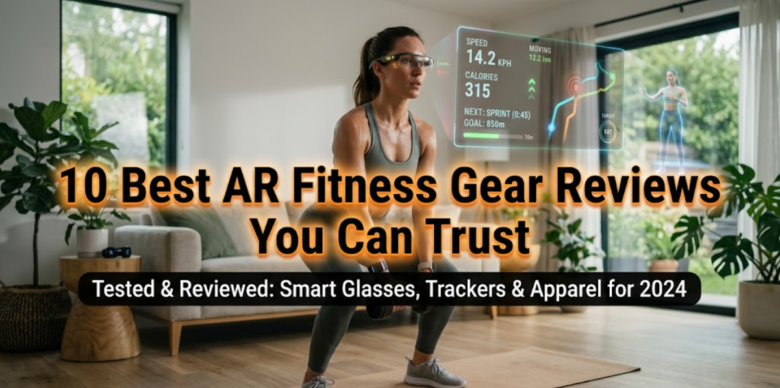
AR glasses are becoming one of the most exciting fitness tools. Instead of looking at a screen, you see digital overlays in your real environment.
Key features:
- floating workout instructions
- real-time performance metrics
- virtual trainers in your space
- gamified movement challenges
recent AR glasses systems are becoming lighter and more practical for movement-based activities .
pros:
- hands-free experience
- high immersion
- outdoor-friendly
cons:
- still expensive
- limited battery life
best for:
- running
- cycling
- interactive outdoor workouts
- AI-powered smart fitness mirrors
Fitness mirrors transform a wall into a full AR training interface. You see your reflection alongside a virtual trainer correcting your form.
Key capabilities:
- posture correction
- guided workouts
- live feedback overlays
- class-style training sessions
These systems are part of the broader smart fitness revolution where equipment acts like a coach instead of just a tool .
comparison:
| Feature | Smart Mirror | Video Workout |
|---|---|---|
| Feedback | Real-time | None |
| Engagement | High | Medium |
| Space use | Minimal | Minimal |
| Personalization | High | Low |
best for:
- home gym setups
- yoga
- strength training
- AR motion-tracking cameras (no wearables needed)
One of the biggest breakthroughs is camera-based AR fitness tracking. These systems use AI to detect body movement without any wearable device.
how it works:
- camera captures movement
- AI maps joints and posture
- system overlays corrections or game elements
benefits:
- no extra devices required
- instant setup
- affordable entry point
limitations:
- lighting-sensitive
- accuracy drops in complex movements
best for:
- beginners
- bodyweight workouts
- casual fitness gaming
- smart resistance training machines with AR feedback
Modern smart gym equipment now integrates AR-style feedback into resistance training.
features:
- automatic weight adjustment
- real-time rep counting
- form correction
- adaptive resistance curves
AI systems now actively modify workout intensity based on performance in real time .
comparison:
| Feature | Traditional Gym | Smart AR Gym |
|---|---|---|
| Feedback | None | Live AI feedback |
| Weight control | Manual | Automatic |
| Progress tracking | Basic | Advanced |
| Motivation | Medium | High |
best for:
- strength training
- muscle building
- performance athletes
- AR fitness smart watches and rings
Wearables now play a supporting role in AR fitness ecosystems. They track biometric data that feeds into AR systems.
features:
- heart rate tracking
- sleep monitoring
- calorie estimation
- recovery analysis
smart rings and wearables are increasingly popular for discreet health tracking .
comparison:
| Device | Visibility | Accuracy | Battery |
|---|---|---|---|
| Smartwatch | Medium | High | Medium |
| Smart ring | Low | Medium | High |
| Chest strap | High accuracy | Very high | Low convenience |
best for:
- recovery tracking
- performance monitoring
- daily activity optimization
- AR treadmill and cycling systems
Smart cardio machines now integrate AR environments that simulate real-world routes or game-based experiences.
features:
- virtual landscapes
- interactive pacing systems
- adaptive incline/resistance
- multiplayer racing modes
modern smart fitness equipment focuses heavily on real-time adjustment and immersive feedback .
comparison:
| Feature | Traditional Treadmill | AR Treadmill |
|---|---|---|
| Engagement | Low | High |
| Motivation | Medium | Very high |
| Feedback | Basic | Real-time |
| Experience | Static | Immersive |
best for:
- cardio training
- endurance building
- indoor runners
- AR combat fitness trainers
This category includes boxing, martial arts, and combat-style AR training systems.
features:
- punch tracking
- reaction speed games
- virtual sparring opponents
- combo scoring systems
why it works:
- high intensity
- competitive gameplay
- instant feedback loops
best for:
- boxing training
- cardio conditioning
- reaction improvement
- AR yoga and mobility systems
These systems overlay posture guides during stretching and mobility training.
features:
- body alignment correction
- guided flow sequences
- breathing rhythm indicators
- injury prevention cues
benefits:
- improves flexibility
- reduces injury risk
- enhances mindfulness
best for:
- beginners
- recovery days
- flexibility training
- AR cycling and outdoor navigation gear
Cyclists now use AR overlays to display navigation, speed, and performance metrics directly in their field of view.
features:
- route mapping overlays
- hazard alerts
- real-time speed tracking
- group ride coordination
benefits:
- safer navigation
- improved pacing
- enhanced group training
best for:
- cycling enthusiasts
- outdoor athletes
- endurance training
- hybrid AR fitness ecosystems (all-in-one systems)
The most advanced category is full ecosystem integration.
These systems combine:
- wearables
- AR glasses
- smart gym machines
- AI coaching platforms
ecosystem structure:
User → Wearable data → AI engine → AR feedback → Equipment adjustment → Progress tracking
benefits:
- fully personalized training
- adaptive workouts
- seamless experience across devices
best for:
- serious athletes
- long-term fitness tracking
- high-performance training
summary comparison of all AR fitness gear
| Gear Type | Immersion | Cost | Ease of Use | Best Strength |
|---|---|---|---|---|
| AR glasses | Very high | High | Medium | Immersion |
| Smart mirrors | High | High | Easy | Coaching |
| Cameras | Medium | Low | Very easy | Accessibility |
| Smart gym machines | Medium | Very high | Medium | Strength training |
| Wearables | Low | Low–medium | Very easy | Tracking |
| AR cardio systems | High | High | Medium | Motivation |
why AR fitness gear actually works
The success of AR fitness gear is not about technology—it’s about psychology.
It works because it combines:
- immediate feedback
- visual engagement
- gamification
- real-world movement
This creates higher consistency than traditional workout systems.
limitations to consider
Despite progress, AR fitness gear still has challenges:
- high cost for premium systems
- dependence on stable lighting and space
- battery limitations in wearables
- accuracy variations across devices
However, these issues are improving rapidly with AI and hardware advances.
future of AR fitness gear
The next evolution will likely include:
- lightweight AR glasses replacing phones
- fully adaptive AI gyms
- real-world fitness metaverse environments
- emotion-aware workout systems
Fitness will become less about “going to train” and more about “living inside training environments.”
FAQs
- What is AR fitness gear?
AR fitness gear includes devices that blend physical exercise with augmented reality, such as smart glasses, cameras, mirrors, and AI gym machines. - Is AR fitness gear worth buying?
Yes, if you value motivation and consistency. It is especially useful for home workouts and cardio training. - Do I need expensive equipment for AR fitness?
Not necessarily. Many AR fitness systems work with just a smartphone camera. - Can AR fitness gear replace a gym?
It can replace many workouts, especially cardio and bodyweight training, but advanced strength training may still benefit from traditional gyms. - Is AR fitness accurate for tracking movement?
Modern systems are fairly accurate for general fitness but not perfect for medical or professional athletic analysis. - What is the biggest benefit of AR fitness gear?
The biggest benefit is increased motivation and consistency due to gamification and real-time feedback.