Okay, real talk — I used to dread cardio. Like, genuinely dread it. I’d set my alarm for 6 AM, lace up my shoes, and then somehow end up scrolling through my phone for 40 minutes before convincing myself “I’ll do it tomorrow.” Sound familiar?
Then a friend of mine showed me what he’d been doing on his Meta Quest 3. I thought he was just gaming. Turns out he’d lost 11 pounds in two months — doing cardio. In his living room. While having an absolute blast.
That was my entry point into AR fitness, and honestly? I haven’t skipped a cardio session in over three months now. Not because I became some kind of disciplined athlete overnight — but because the workouts stopped feeling like work.
So let me walk you through the four AR fitness workouts that genuinely made cardio fun for me, and how you can get started with them today.
1. Beat-Synced Boxing — When You’re Punching to the Beat, You Forget You’re Doing Cardio
The first time I tried Supernatural on the Meta Quest, I missed half the targets because I was too busy looking around at the scenery. You’re standing at the edge of some breathtaking virtual landscape — Patagonia, Machu Picchu, Iceland — and orbs are flying at you in rhythm with whatever song is playing.
You punch, duck, and dodge. Rinse and repeat for 20 minutes.
By the end, I’d burned around 280 calories (my Apple Watch confirmed this) and my heart rate had peaked at 162 BPM. That’s serious cardio zone territory. But the wild thing was — I didn’t check the clock once. Not once.
Why It Works for Cardio:
Beat-synced boxing works because the music pacing naturally dictates your intensity intervals. Fast song = faster punching = higher heart rate. Slower breakdown = active recovery. It’s like HIIT, but your brain doesn’t register it as HIIT because you’re too focused on not missing the targets.
What You Need:
- Meta Quest 2 or 3 (Quest 3 gives better mixed reality, but 2 works great)
- Supernatural subscription (~$19.99/month)
- Some wrist weights if you want to level up intensity
Step-by-Step to Get Started:
- Download Supernatural from the Meta Quest store
- Start with a “Flow” workout on your first session — it’s gentler than “Boxing”
- Once comfortable, switch to the boxing modes
- Add 1–2 pound wrist weights after Week 2 for extra resistance
Mistake I Made: I jumped straight into the hardest difficulty on Day 1 and could barely lift my arms the next morning. Start at beginner level. Seriously.
2. AR Running Challenges — Turning a Treadmill Into a Passport Stamp Collection

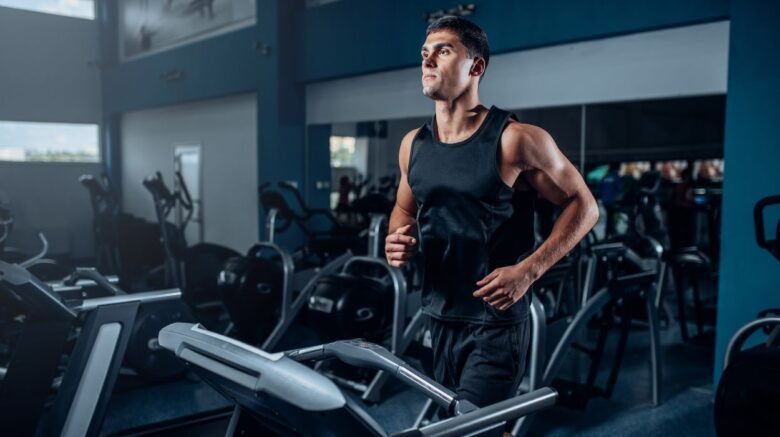
Treadmills are soul-crushing. You know it, I know it, the guy at the gym who’s been staring at the same wall for 45 minutes definitely knows it.
But AR running apps have quietly changed that equation. Apps like Zwift (which started for cyclists but expanded), Holofit, and VirZoom overlay virtual environments onto your physical movement. You’re literally running through ancient Rome or a neon-lit cyberpunk city while your body does the actual cardio work.
I started using Holofit with my cardio equipment at home. The app connects via Bluetooth to most treadmills, bikes, and rowing machines. As you increase pace, your avatar speeds up in the virtual world. There’s something weirdly motivating about not wanting your virtual character to fall behind.
If you’re looking to explore the broader world of AR fitness tools and apps, this category has exploded in the past two years — there are options for every budget now.
Cardio Stats I Tracked (Personal, 4-Week Average):
| Week | Avg. Session Length | Avg. Calories Burned | Avg. Heart Rate |
|---|---|---|---|
| 1 | 18 min | 165 kcal | 128 BPM |
| 2 | 24 min | 210 kcal | 134 BPM |
| 3 | 31 min | 267 kcal | 141 BPM |
| 4 | 38 min | 318 kcal | 147 BPM |
The sessions got longer naturally — not because I forced it, but because I didn’t want to stop mid-route. That’s the thing with AR running. Quitting feels like leaving a movie halfway through.
Step-by-Step to Try AR Running:
- Download Holofit (free trial available) or VirZoom on your VR headset
- Connect your treadmill or stationary bike via Bluetooth
- Pick a world (I always start with “Nordic Forest” — calming but motivating)
- Set a distance goal, not a time goal — you’ll push further that way
- Track your stats after every session and compare week-over-week
Common Mistake: A lot of people use VR headsets on a treadmill without a safety harness clip. Don’t skip the treadmill safety tether. If you lose balance adjusting your headset, that’s a bad day.
3. AR Dance Workouts — The One That Made My Neighbors Think I Was Having a Party
I’ll be honest — I was skeptical about dance-based fitness. I’m not a dancer. I have the coordination of someone assembling IKEA furniture for the first time. But Dance Central on Meta Quest and FitXR’s Dance Mode completely broke down my resistance (pun intended).
Here’s what surprised me: you don’t need rhythm. The game tells you exactly what move to make and when. Your body just follows along. Within three sessions, I was stringing together full choreography without thinking about it. My heart rate data told me the truth though — I was averaging 145–158 BPM during dance sessions. That’s the same zone as a moderate outdoor jog.
The difference? I was laughing while doing it.
Calories Burned Comparison: Dance vs. Traditional Cardio (30 Minutes)
| Activity | Est. Calories Burned (30 min) | Fun Factor (Personal Rating) |
|---|---|---|
| Treadmill jogging | 280–320 kcal | 3/10 |
| Cycling (stationary) | 250–300 kcal | 4/10 |
| AR Dance (FitXR) | 240–290 kcal | 9/10 |
| AR Boxing (Supernatural) | 270–310 kcal | 9/10 |
The calories are comparable. But one option makes you want to come back tomorrow.
For beginners specifically, there are some beginner AR body health secrets worth exploring — especially if you’re just easing into this world and aren’t sure where to start with intensity levels.
Step-by-Step to Start AR Dance Cardio:
- Try FitXR (available on Meta Quest) — they have a free trial
- Start with “Beginner” tagged classes — don’t let pride get in the way
- Do 2–3 sessions before judging — it clicks after the third time
- Set a weekly goal: 3 dance sessions per week for one month
- Track your resting heart rate each morning — you’ll see it drop within 3 weeks
What I Got Wrong: I wore regular socks on a hardwood floor during my first session. I slid mid-lunge and nearly took out my coffee table. Wear proper shoes with grip. Learn from my embarrassment.
4. Mixed Reality Obstacle Courses — Full-Body Cardio That Feels Like a Video Game

This one is newer, and it’s genuinely the future of AR fitness. Mixed reality (MR) workouts — specifically designed for devices like the Meta Quest 3 — blend real-world environments with digital obstacles.
Apps like Spatial Ops and Resolution Games’ fitness experiences have you physically moving through your actual living space while virtual elements react to your real movements. You’re leaping over virtual hurdles that appear on your actual floor, ducking under beams that overlay your real ceiling, and sprinting between real-world points marked by virtual targets.
The first time I tried a proper MR obstacle session, my wife walked in mid-workout. From her perspective, I was jumping, crouching, spinning, and flailing around the living room with a headset on. From my perspective, I was navigating a burning obstacle course with about 15 seconds to clear each section.
My Garmin logged it as “High Intensity Interval Training” automatically. That’s when I knew this was legit cardio.
What Makes MR Obstacle Courses Different:
Unlike pure VR workouts where you stand mostly in place, MR obstacle courses use your actual room dimensions. This means:
- More varied movement patterns (lateral, forward, crouching)
- More muscle groups engaged per session
- Better spatial awareness and coordination over time
- Genuinely unpredictable workouts — no two sessions feel identical
Typical MR Obstacle Workout Structure:
| Phase | Duration | Intensity | What’s Happening |
|---|---|---|---|
| Warm-up navigation | 3–5 min | Low | Slow-paced spatial calibration |
| First obstacle wave | 6–8 min | Moderate-High | Jump, duck, sprint patterns |
| Rest phase | 1–2 min | Recovery | Breathing, light movement |
| Second obstacle wave | 8–10 min | High | Increased speed, complexity |
| Cool-down phase | 3 min | Low | Slow movement, guided breathing |
Gear You’ll Want:
- Meta Quest 3 (the mixed reality passthrough is essential for this)
- Clear floor space — at least 6×6 feet minimum, 8×8 preferred
- Padded mat for landing zones
- Good ventilation — you will sweat
Step-by-Step to Get Started:
- First, use the Meta Quest 3 Guardian System to accurately map your room
- Download Spatial Ops or browse the Quest store for “mixed reality fitness”
- Start with a 15-minute beginner course — the room-scale movement is disorienting at first
- Do NOT rearrange your furniture mid-session (learned this the hard way after my shin met a chair)
- Progress to longer courses as your spatial confidence grows
If you want to pair this with some solid gear choices, there’s a helpful breakdown of AR fitness wearables that are transforming workouts — especially useful if you want to track biometrics while doing MR obstacle sessions.
Common Mistakes People Make When Starting AR Fitness Cardio
Since I’ve gone through most of these myself, let me save you some bruises (literal and figurative):
Mistake 1: Skipping the Safety Setup Every VR/MR device has a guardian or safety boundary system. Set it up properly every single session. Your TV doesn’t forgive flying controllers.
Mistake 2: Treating It Like a Game, Not a Workout It IS fun — that’s the point. But don’t forget to hydrate, warm up, and cool down. I pulled my shoulder in week two because I launched into a boxing session cold.
Mistake 3: Ignoring the Learning Curve The first 1–2 sessions will feel awkward. Your brain needs time to adjust to the spatial cues. Push through it. By session 3, it clicks.
Mistake 4: Going Too Hard Too Soon AR fitness can be sneaky — because it’s fun, you don’t feel the effort in real time. Check your heart rate data after sessions. I once ran a 55-minute Supernatural session thinking I’d done “maybe 25 minutes.” My legs disagreed for three days.
Mistake 5: Buying Expensive Gear Before Trying Most of these apps have free trials. Test before you invest. A budget Quest 2 and a free trial month costs way less than a headset you’ll abandon after two weeks.
Comparing the 4 Workouts: Which One’s Right for You?
| Workout Type | Best For | Equipment Needed | Difficulty to Start | Cardio Intensity |
|---|---|---|---|---|
| Beat-Synced Boxing | Stress relief + cardio | VR headset | Easy | High |
| AR Running | Treadmill haters | VR headset + cardio machine | Easy-Medium | Moderate-High |
| AR Dance | People who hate “exercise” | VR headset | Easy | Moderate |
| MR Obstacle Courses | Full-body, game lovers | Quest 3 + clear space | Medium | Very High |
Final Thoughts
I didn’t think I’d ever become someone who actually looks forward to cardio. But here I am, three months in, genuinely annoyed on days when I can’t fit in a session.
The secret isn’t willpower. It’s just finding a format that doesn’t feel like punishment. AR fitness does that in a way that gym machines and outdoor jogs never really did for me.
You don’t need to be a gamer. You don’t need fancy gear. You just need to try one session and see if it clicks. For most people, it does — usually somewhere around the third or fourth workout.
Start with what sounds the least intimidating. For me, that was dance. For you, it might be boxing. Either way, once you’ve done your first AR cardio session and checked your heart rate data afterward, you’ll understand why people are making this switch.