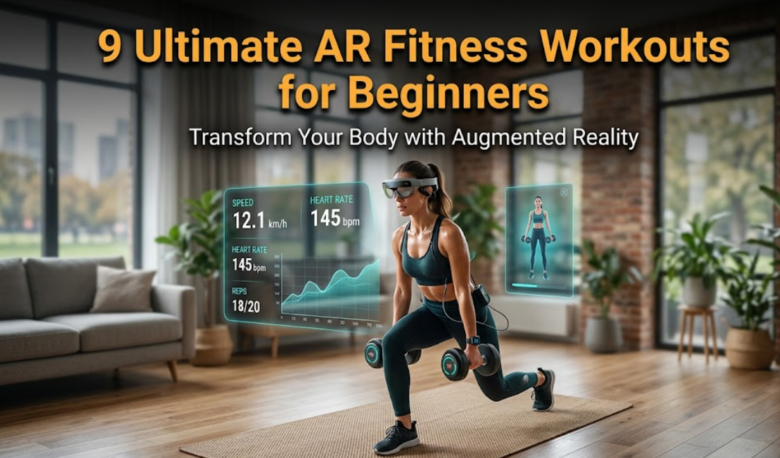
Augmented Reality (AR) fitness is changing how beginners approach exercise. Instead of following static workout videos or confusing gym routines, AR workouts place digital guidance directly into your real environment. This means your living room, bedroom, or even a small office space can transform into a guided fitness studio.
For beginners, this removes one of the biggest barriers in fitness: uncertainty. You no longer have to wonder if your form is correct, if your pace is right, or if you’re doing enough reps. AR systems guide you visually, in real time.
This article breaks down nine beginner-friendly AR fitness workouts that are practical, engaging, and designed to build consistency.
Understanding AR Fitness Workouts
Before diving into the workouts, it’s important to understand what makes AR fitness different.
AR fitness workouts combine:
- Real-world movement
- Digital overlays
- Real-time feedback
- Interactive environments
Unlike traditional workouts, AR fitness focuses heavily on visual learning and guided movement correction.
Table: Traditional vs AR Fitness Workouts
| Feature | Traditional Workouts | AR Fitness Workouts |
|---|---|---|
| Instruction style | Video/text | Visual overlays |
| Feedback speed | Delayed | Real-time |
| Beginner difficulty | Medium-high | Low |
| Engagement level | Medium | High |
- AR Full-Body Warm-Up Flow
The AR full-body warm-up is designed to prepare your body before any workout session. It uses visual cues that guide your joints through movement patterns.
How it works:
- AR indicators show stretching direction
- Movement speed is guided visually
- Body alignment is corrected in real time
Why it’s great for beginners:
It removes confusion about how to warm up properly.
Example sequence:
- Neck rolls with guided arcs
- Shoulder rotations with visual circles
- Hip mobility tracking lines
Chart: Warm-Up Effectiveness Over Time
| Week | Flexibility Improvement |
|---|---|
| 1 | Low |
| 2 | Moderate |
| 3 | High |
| 4+ | Very high |
- AR Guided Squat Training
Squats are one of the most common beginner exercises, but also one of the most commonly done incorrectly. AR squats solve this by projecting alignment guides.
How it works:
- Virtual line shows spine alignment
- Knee tracking indicators appear
- Depth markers guide squat range
Why it matters:
Proper squat form prevents knee and lower back strain.
Table: Squat Form Comparison
| Aspect | Without AR | With AR Guidance |
|---|---|---|
| Knee alignment | Inconsistent | Accurate |
| Depth control | Variable | Consistent |
| Injury risk | Medium | Low |
- AR Cardio Step Training
This workout turns your space into a guided step-based cardio zone.
How it works:
- AR markers appear on the floor
- You step on targets in rhythm
- Speed adjusts dynamically
Why beginners love it:
It feels like a game rather than a workout.
Benefits:
- Improves coordination
- Boosts heart rate safely
- Easy to follow
Chart: Cardio Intensity Progression
| Minute | Heart Rate Level |
|---|---|
| 1–2 | Low |
| 3–5 | Moderate |
| 6–10 | High |
- AR Core Stability Workout
Core training is often misunderstood by beginners. AR makes it visual and interactive.
How it works:
- Floating shapes guide balance positions
- Movement stability is tracked
- Core engagement zones appear visually
Exercises included:
- Plank alignment
- Leg raises with motion tracking
- Controlled twists
Table: Core Stability Gains
| Week | Balance Control |
|---|---|
| 1 | Low |
| 2 | Medium |
| 3 | High |
| 4+ | Stable |
- AR Shadow Boxing Workout
Shadow boxing becomes much more structured with AR overlays showing targets and movement paths.
How it works:
- Virtual opponent appears
- Punch trajectories are guided
- Timing feedback is provided
Why it’s effective:
It turns cardio into a reaction-based workout.
Benefits:
- Improves coordination
- Burns calories fast
- Builds reflexes
Chart: Calorie Burn Estimate
| Duration | Calories Burned |
|---|---|
| 10 min | Medium |
| 20 min | High |
| 30 min | Very high |
- AR Bodyweight Strength Circuit
This workout turns your home into a full-body training circuit.
How it works:
- AR stations appear in your space
- Each station represents an exercise
- Progress is visually tracked
Example circuit:
- Push-ups zone
- Squat zone
- Plank zone
- Lunge zone
Table: Circuit Efficiency
| Factor | Traditional | AR Circuit |
|---|---|---|
| Motivation | Medium | High |
| Flow state | Low | High |
| Learning curve | Medium | Low |
- AR Balance Training Workout
Balance is a key fitness foundation often ignored by beginners. AR introduces instability visually.
How it works:
- Virtual shifting platforms appear
- Movement stability is measured
- Posture adjustments are guided
Exercises:
- Single-leg stands
- Controlled weight shifts
- Slow-motion squats
Chart: Balance Improvement
| Week | Stability Level |
|---|---|
| 1 | Low |
| 2 | Moderate |
| 3 | High |
| 4+ | Strong |
- AR Stretch and Recovery Routine
Recovery is just as important as training. AR stretching guides body positioning precisely.
How it works:
- Animated stretch guides appear
- Joint angles are shown visually
- Breathing rhythm is included
Benefits:
- Faster recovery
- Reduced soreness
- Better flexibility
Table: Recovery Comparison
| Method | Effectiveness |
|---|---|
| Manual stretching | Medium |
| Video-based | High |
| AR-guided | Very high |
- AR Daily Movement Habit Builder
This is not a workout but a habit-building system that encourages movement throughout the day.
How it works:
- AR reminders appear in your space
- Short movement tasks are triggered
- Progress streaks are visualized
Examples:
- 10 squats every 2 hours
- 1-minute stretch breaks
- Posture correction prompts
Chart: Habit Consistency Growth
| Week | Consistency Rate |
|---|---|
| 1 | Low |
| 2 | Medium |
| 3 | High |
| 4+ | Very high |
How These AR Workouts Work Together
When combined, these workouts create a full beginner-friendly ecosystem:
- Warm-up prepares the body
- Strength builds muscle
- Cardio improves endurance
- Balance enhances stability
- Recovery prevents injury
- Habit builder ensures consistency
Table: Full System Overview
| Category | Benefit |
|---|---|
| Strength | Muscle development |
| Cardio | Fat loss |
| Balance | Stability |
| Recovery | Flexibility |
| Habit | Consistency |
Weekly Beginner AR Fitness Plan
| Day | Workout Type |
|---|---|
| Monday | Squat + strength |
| Tuesday | Cardio step training |
| Wednesday | Recovery stretching |
| Thursday | Shadow boxing |
| Friday | Core stability |
| Saturday | Balance training |
| Sunday | Habit builder flow |
Common Mistakes Beginners Make
Mistakes:
- Skipping warm-ups
- Overtraining early
- Ignoring AR feedback
- Using too many workouts at once
Solution:
Start with 2–3 AR workouts and gradually increase.
Future of AR Fitness Workouts
AR fitness is moving toward:
- Fully immersive home gyms
- AI-driven personalized workouts
- Real-time biomechanical correction
- Adaptive environments that evolve with your progress
The biggest shift is from instruction-based fitness to environment-based fitness.
FAQs
- Are AR fitness workouts good for beginners?
Yes, they are designed to simplify learning and reduce confusion in exercise form. - Do I need special equipment for AR workouts?
Many AR workouts only require a smartphone or basic AR device. - Can AR fitness help with weight loss?
Yes, by improving consistency and making workouts more engaging. - Are AR workouts safe for joints?
Yes, especially because they include form correction and guided movement. - How often should beginners do AR workouts?
3–5 times per week is ideal for steady progress. - What is the biggest advantage of AR fitness workouts?
The biggest advantage is real-time visual guidance, which helps beginners learn faster and stay consistent.