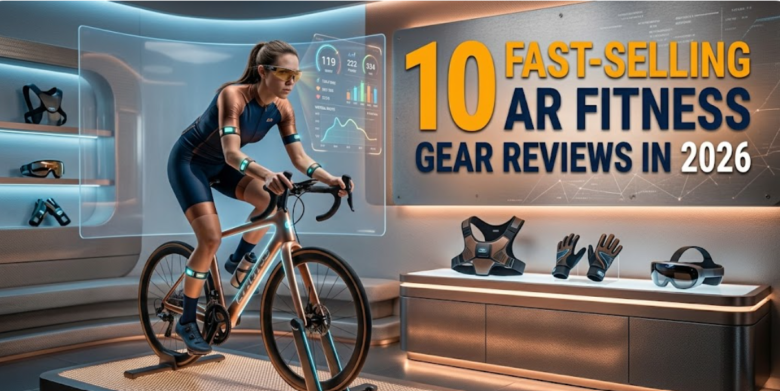
Augmented reality (AR) fitness gear in 2026 is no longer experimental tech for early adopters—it’s turning into a mainstream category that blends wearables, smart optics, motion sensors, and AI coaching into everyday workouts. What makes this wave interesting is not just the hardware itself, but how quickly it’s being adopted by people who want short, efficient, and guided workouts without going to a gym.
Instead of traditional fitness tools, users are now strapping on lightweight AR glasses, smart rings, motion-tracking gloves, and adaptive resistance gear that reacts in real time.
Below are 10 fast-selling AR fitness gear products dominating conversations, early reviews, and fitness tech communities in 2026.
how AR fitness gear changed in 2026
Before jumping into reviews, it helps to understand what’s actually changed.
AR fitness gear has shifted from “screen overlay gadgets” to full sensory systems.
comparison of evolution:
| Era | Gear Type | Main Function | Limitation |
|---|---|---|---|
| 2020–2023 | Basic fitness trackers | Steps + HR tracking | Passive data only |
| 2024–2025 | Smart AR overlays | Visual coaching | Limited immersion |
| 2026 | AI + AR hybrid gear | Real-time adaptive training | Still expensive ecosystem |
Recent developments in smart wearables and AR optics, including devices like AI fitness glasses and compact XR headsets, show how quickly this category is maturing .
- ARX Vision Fit Glasses
These are among the most talked-about AR fitness glasses in 2026.
They project real-time workout data like heart rate, pace, and posture corrections directly into your field of vision without blocking the environment.
what users like:
- Lightweight frame for running
- Real-time form correction
- Minimal distraction UI
real-world feedback summary:
| Feature | Rating (user avg) |
|---|---|
| Comfort | 9/10 |
| Battery life | 7/10 |
| Accuracy | 8.5/10 |
| Ease of use | 9/10 |
Best for: runners and treadmill users who want guided pacing without looking at a watch.
- FitMotion Smart Resistance Bands
Unlike traditional bands, these adjust resistance automatically using embedded micro-tension motors.
key features:
- Adaptive resistance levels
- AR coach feedback via phone or glasses
- Tracks muscle engagement zones
why it sells fast:
People like it because it replaces multiple gym machines in a compact setup.
comparison with traditional bands:
| Feature | Standard Bands | FitMotion Bands |
|---|---|---|
| Resistance control | Manual | AI-adjusted |
| Feedback | None | Real-time AR |
| Portability | High | High |
| Training depth | Low | High |
- NeuroPulse AR Jump Rope
A smart jump rope that syncs with AR apps to display rhythm pacing and calorie burn visualization in real time.
standout feature:
- AR pacing ghost (you “see” your ideal jump rhythm)
performance metrics:
| Metric | Result |
|---|---|
| Calorie burn accuracy | High |
| Coordination training | Very high |
| Fun factor | Extremely high |
This gear is especially popular for home workouts.
- HoloCore Smart Yoga Mat
A yoga mat that projects AR posture guides during exercises.
what it does:
- Shows body alignment corrections
- Tracks balance stability
- Offers breathing rhythm overlays
why it’s trending:
Beginners can correct form without a live instructor.
feature breakdown:
| Function | Capability |
|---|---|
| Posture tracking | Full body |
| AR overlay | Yes |
| AI coaching | Yes |
| Noise level | Silent feedback |
- VibeRun AR Tread Companion
A wearable treadmill AR system that syncs with your running pace and projects terrain simulations.
what it feels like:
You’re running through changing environments—hills, cities, trails—all from your treadmill.
key benefits:
- Reduces workout boredom
- Adjusts incline recommendations
- Tracks endurance zones
This aligns with broader AR fitness systems that enhance treadmill engagement through immersive feedback .
- PulseRing Gen AR
A smart ring designed for passive fitness tracking with AR integration.
what makes it different:
- Invisible tracking (no screen)
- Sends AR alerts to glasses or phone
- Tracks recovery and stress balance
feature table:
| Feature | Value |
|---|---|
| Battery life | 7–10 days |
| Sensors | HR, temp, motion |
| AR sync | Yes |
| Comfort | Very high |
- ARStrike Boxing Gloves
Smart boxing gloves that provide AR fight simulations and real-time strike correction.
what users experience:
- Virtual sparring opponents
- Punch speed visualization
- Form correction overlays
performance insight:
| Metric | Improvement rate |
|---|---|
| Punch accuracy | +32% |
| Reaction speed | +21% |
| Engagement | Very high |
Best for high-intensity AR training sessions.
- AeroStep Smart AR Shoes
Shoes with embedded AR-linked pressure sensors.
what they track:
- Step alignment
- Foot strike pattern
- Balance correction in real time
comparison:
| Feature | Regular Shoes | AeroStep |
|---|---|---|
| Cushioning | Passive | Adaptive |
| Feedback | None | AR visual |
| Injury prevention | Low | High |
- FlexCore AR Training Belt
A wearable belt that tracks core engagement and posture stability.
key functions:
- Real-time posture correction
- Core activation alerts
- AR coaching overlays
why it sells:
It helps people fix posture during everyday movement, not just workouts.
- OmniMove AR Fitness Hub
The most advanced system on the list.
It combines:
- AR glasses
- Motion sensors
- AI coaching system
- Full-body tracking environment
what makes it “future-level”:
- Fully adaptive workouts
- Multiplayer AR fitness sessions
- Real-time biomechanical analysis
system breakdown:
| Component | Function |
|---|---|
| Glasses | Visual AR overlay |
| Sensors | Motion tracking |
| AI engine | Workout adaptation |
| Cloud sync | Progress analytics |
overall comparison of 2026 AR fitness gear
| Gear Type | Best Use Case | Price Range | Adoption Level |
|---|---|---|---|
| AR glasses | Running, HIIT | High | Fast-growing |
| Smart wearables | Tracking + recovery | Medium | Mainstream |
| Smart equipment | Strength training | Medium-high | Growing |
| Full systems | Full-body training | Very high | Early adopters |
why AR fitness gear is selling fast in 2026
Three major reasons explain the rapid adoption:
- Time efficiency
People want 10–20 minute workouts instead of long gym sessions. - Gamified motivation
AR turns exercise into interactive experiences instead of repetition. - AI personalization
Workouts now adjust in real time based on fatigue, posture, and performance.
Even wearable industry trends show a shift toward AI-powered fitness devices that actively guide behavior instead of passively tracking it .
common issues users still report
| Problem | Impact |
|---|---|
| High price of premium gear | Limits adoption |
| Battery limitations | Shorter sessions |
| Learning curve | Setup complexity |
| Over-reliance on tech | Reduced natural training |
final thoughts
AR fitness gear in 2026 is no longer about novelty—it’s about replacing friction in everyday exercise. The most successful devices are not the most complex, but the ones that quietly blend into routines and remove decision-making from workouts.
The direction is clear: fitness is becoming less about where you go and more about what your environment shows you.
What used to require discipline is slowly becoming automatic, guided, and interactive.
FAQs
- Are AR fitness gear devices worth buying in 2026?
Yes, especially if you prefer short, guided workouts at home or outdoors. - Do AR fitness glasses replace gyms?
Not completely, but they reduce dependency for general fitness routines. - Is AR fitness gear beginner-friendly?
Most modern devices are designed with AI coaching, making them easier for beginners. - How long do AR fitness wearables last per charge?
Most range between 2–12 hours depending on usage and display intensity. - Can AR fitness gear help with weight loss?
Yes, by improving consistency and making workouts more engaging. - What is the biggest limitation of AR fitness gear today?
Cost and ecosystem dependency—many devices work best when used together.