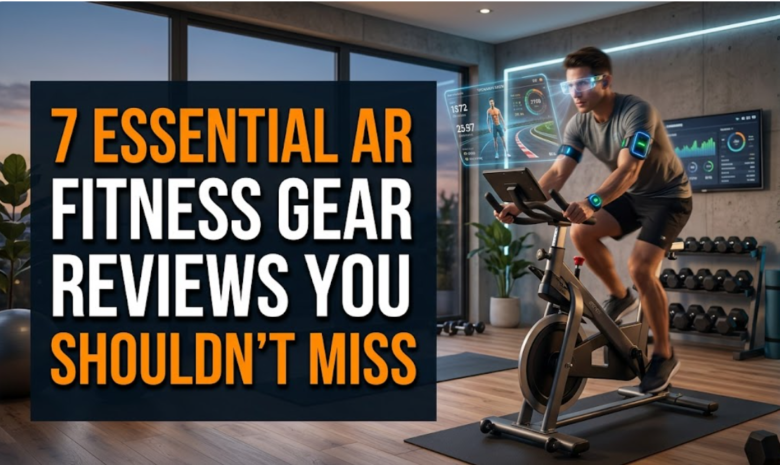
Augmented Reality (AR) is no longer a futuristic idea sitting in tech labs. It is slowly becoming part of everyday fitness routines—especially in home workouts where people want more engagement, better feedback, and less boredom. Instead of staring at a wall or following flat workout videos, AR gear turns your room into an interactive training space.
But here’s the problem: most people jump into AR fitness without understanding what gear actually matters. Some devices are powerful but unnecessary. Others look impressive but deliver little real fitness value. And a few quietly transform home workouts in ways traditional equipment never could.
This guide breaks down 7 essential AR fitness gear categories you should know about, how they work, where they fit into home training, and what actually makes them useful. It also includes comparison tables and structured insights so you can clearly see what’s worth attention.
what AR fitness gear really means today
AR fitness gear is not just one device. It is a mix of hardware and software that overlays digital coaching, feedback, or challenges onto your physical space.
This includes:
- Smart AR glasses
- Interactive mirrors
- Motion tracking cameras
- AI-powered fitness mats
- Wearable sensors
- Smart resistance equipment
- Hybrid AR fitness apps with hardware integration
In simple terms, AR fitness gear turns your environment into a responsive workout system instead of a passive space.
gear category 1: AR fitness smart glasses
Smart glasses are the most immersive form of AR fitness gear. They project visuals directly into your field of vision while you move.
what they do:
- Show workout instructions in real time
- Overlay movement targets
- Track motion and posture
- Create immersive fitness environments
real-world use case:
You’re doing squats in your living room, and virtual guides show your knee alignment while a digital coach counts reps beside you.
key advantages:
| Feature | Benefit |
|---|---|
| Hands-free training | No phone dependency |
| Real-time feedback | Instant correction |
| Immersive visuals | Better engagement |
| Outdoor compatibility | Works beyond home |
limitations:
- Still expensive for mass adoption
- Battery life can limit long sessions
- Some models feel heavy for high-intensity workouts
AR glasses are expected to become the “central hub” of future fitness ecosystems as hardware becomes lighter and more affordable.
gear category 2: AR smart fitness mirrors
Smart mirrors are one of the most popular home AR fitness tools right now. They look like regular mirrors but transform into interactive screens when activated.
how they work:
- Display live or recorded workout classes
- Track movement using cameras
- Provide feedback on form
- Adjust difficulty based on performance
comparison with traditional mirrors:
| Feature | Regular Mirror | Smart AR Mirror |
|---|---|---|
| Feedback | None | Real-time |
| Classes | None | Built-in |
| Tracking | No | Yes |
| Interactivity | Passive | Active |
why people like them:
They blend naturally into home environments. When off, they look like a normal mirror. When on, they become a virtual gym.
AR mirrors are especially useful for beginners who need structured guidance without a personal trainer.
gear category 3: motion tracking camera systems
These are often the invisible backbone of AR fitness setups. They track body movement and convert it into data for AR overlays or coaching feedback.
what they measure:
- Joint angles
- Movement speed
- Range of motion
- Balance and stability
why they matter:
Without accurate tracking, AR fitness cannot function properly. These systems ensure that virtual feedback aligns with real movement.
performance table:
| Metric | Basic Camera | Advanced AR System |
|---|---|---|
| Accuracy | Medium | High |
| Feedback speed | Delayed | Real-time |
| Exercise detection | Limited | Full-body tracking |
some advanced systems use pose estimation models that track up to 33 body joints for precision correction.
gear category 4: AR fitness mats and floor sensors
This is one of the most underrated AR fitness tools.
Instead of focusing on screens, these mats turn the floor into an interactive training surface.
features:
- Step detection zones
- Jump accuracy tracking
- Balance feedback
- Movement path guidance
example use:
A virtual agility course appears on your floor, and you must follow patterns without stepping outside highlighted zones.
why it works well:
It removes visual distraction and focuses purely on movement.
comparison:
| Aspect | Normal Workout Mat | AR Fitness Mat |
|---|---|---|
| Guidance | None | Visual + sensor-based |
| Engagement | Low | High |
| Feedback | Post-workout | Real-time |
gear category 5: wearable AR fitness sensors
Wearables connect your body to the AR system. These include bands, rings, or clips that track physiological and motion data.
what they track:
- Heart rate
- Muscle activation
- Step count
- Calories burned
- Fatigue level
why they matter:
They allow AR systems to adapt workouts dynamically based on your physical state.
example scenario:
If your heart rate spikes too high, the AR system automatically reduces intensity or switches exercise type.
data comparison:
| Metric | Without Wearable | With Wearable |
|---|---|---|
| Personalization | Low | High |
| Safety feedback | Delayed | Instant |
| Training adaptation | Static | Dynamic |
gear category 6: AR-integrated smart resistance equipment
This includes smart weights, resistance bands, and machines that adjust difficulty digitally.
how it works:
- Sensors detect force output
- AI adjusts resistance levels
- AR displays performance metrics in real time
benefits:
- Removes guesswork in weight selection
- Helps prevent injury
- Ensures consistent progression
real impact:
Instead of manually increasing weights, the system adjusts automatically based on fatigue and performance trends.
modern fitness research shows that adaptive equipment is becoming a core trend in 2026 fitness ecosystems.
gear category 7: AR fitness app ecosystems (hardware-linked)
Not all AR fitness gear is physical. Some of the most powerful systems are app ecosystems that connect multiple devices together.
features:
- Sync across wearables, cameras, and mirrors
- Gamified workout environments
- Real-time coaching overlays
- Social and multiplayer fitness modes
why they matter:
They unify all hardware into a single training experience instead of separate tools.
example structure:
| Component | Role |
|---|---|
| AR glasses | Visual overlay |
| Wearable | Body data |
| Camera system | Movement tracking |
| App platform | Control center |
this ecosystem approach is what turns AR fitness into a full training environment rather than a set of tools.
comparison of all AR fitness gear types
| Gear Type | Primary Function | Best For | Difficulty Level |
|---|---|---|---|
| AR smart glasses | Immersive guidance | Advanced users | Medium |
| Smart mirrors | Coaching + classes | Beginners | Low |
| Tracking cameras | Motion analysis | All users | Medium |
| Fitness mats | Movement control | Home workouts | Low |
| Wearables | Body monitoring | Precision training | Low |
| Resistance gear | Strength training | Fitness progression | Medium |
| App ecosystems | Integration | Full system users | High |
how AR gear changes home workouts
The biggest shift is not just technology—it’s behavior.
AR fitness gear changes:
- Motivation (from passive to interactive)
- Feedback (from delayed to instant)
- Engagement (from repetitive to dynamic)
- Progress tracking (from basic to adaptive)
It essentially turns home workouts into responsive training systems.
common mistakes when using AR fitness gear
Many users don’t get results because of avoidable issues:
| Mistake | Impact |
|---|---|
| Poor space setup | Tracking errors |
| Ignoring calibration | Incorrect feedback |
| Mixing incompatible gear | System lag |
| Overreliance on visuals | Reduced form awareness |
Fixing these alone dramatically improves performance.
future of AR fitness gear
The next stage of AR fitness gear is full environmental integration.
expected developments:
- AI-driven workout environments
- Fully wireless AR glasses
- Haptic feedback clothing
- Real-time biometric adaptation
- Shared virtual gyms across homes
The long-term direction is clear: fitness gear will stop being separate devices and become a unified intelligent system.
final thoughts
AR fitness gear is not about replacing traditional workouts—it’s about enhancing them. Each category plays a specific role, from tracking movement to creating immersive environments to guiding real-time performance.
The real advantage comes when these tools work together, turning a simple room into a fully interactive training ecosystem.
For home fitness users, understanding these 7 essential gear categories is the difference between using AR as a gimmick and using it as a real training advantage.
FAQs
- Do I need all AR fitness gear types to get started?
No. Most people begin with just one device like a smart mirror or AR app and gradually expand their setup. - Are AR fitness glasses necessary for home workouts?
Not necessary, but they offer the most immersive experience if you want real-time visual coaching. - Can AR fitness gear replace a gym?
It can replace many workout functions, but some strength training setups still benefit from physical gym equipment. - Is AR fitness gear expensive?
Some devices are high-end, but entry-level options like apps and basic sensors are affordable. - Does AR fitness gear work without internet?
Most systems require at least partial connectivity for updates and tracking synchronization. - What is the most important AR fitness gear for beginners?
Smart mirrors or basic AR fitness apps are the easiest and most effective starting points.