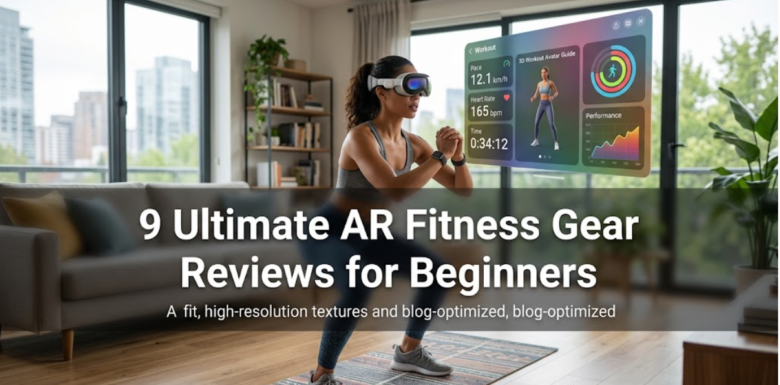
Augmented Reality (AR) fitness is no longer something futuristic or experimental—it is now a practical way for beginners to stay active, build consistency, and train smarter at home or in the gym. What makes AR fitness gear especially useful is that it removes confusion from workouts. Instead of guessing form, reps, or pacing, you get real-time visual guidance layered into your environment.
For beginners, this is a major advantage. You don’t need advanced knowledge of training techniques or even prior gym experience. The gear does a lot of the thinking for you.
This article breaks down nine of the most practical AR fitness tools and gear options for beginners, including wearable devices, smart mirrors, AR glasses, and hybrid apps. Each review includes strengths, limitations, and real-world usability insights.
Understanding AR Fitness Gear for Beginners
Before diving into reviews, it helps to understand what counts as AR fitness gear.
AR fitness gear generally falls into three categories:
- Wearable AR devices (glasses, headsets)
- Smart fitness mirrors and screens
- Mobile-based AR systems and accessories
Unlike traditional gym equipment, AR fitness gear focuses on:
- Visual feedback
- Movement correction
- Interactive workouts
- Real-time environment integration
Table: AR Fitness Gear Categories Overview
| Category | Examples | Beginner Friendliness |
|---|---|---|
| Wearable AR devices | Smart glasses, headsets | Medium |
| Smart mirrors | Interactive home mirrors | High |
| Mobile AR systems | Apps + phone accessories | Very high |
- Meta Quest 3 (AR/VR Fitness Hybrid)
The Meta Quest 3 is one of the most popular entry points into immersive fitness. While technically a VR headset, it includes strong mixed reality (MR) features that blend virtual workouts with your physical space.
Why it’s great for beginners:
- Fully guided workouts
- No prior fitness knowledge needed
- Gamified movement training
Limitations:
- Can feel heavy during long sessions
- Requires dedicated play space
Best AR fitness uses:
- Boxing workouts
- Dance fitness
- Full-body cardio games
Table: Meta Quest 3 Fitness Breakdown
| Feature | Rating (Beginner Use) |
|---|---|
| Ease of use | High |
| Comfort | Medium |
| Workout variety | Very high |
| Space requirement | Medium |
Chart: Motivation Impact Over Time
| Week | Consistency Level |
|---|---|
| 1 | Very high |
| 2 | High |
| 3 | Medium-high |
| 4+ | Stable habit |
- XREAL Air AR Glasses
XREAL Air glasses bring lightweight AR fitness guidance directly into your field of view.
Unlike bulky headsets, these look like sunglasses but overlay digital visuals onto your environment.
Why beginners like it:
- Lightweight and wearable
- Less immersive but more practical
- Works with smartphone apps
Limitations:
- Limited standalone features
- Needs external device connection
Best use cases:
- Running form guidance
- Home workout overlays
- Posture correction prompts
Table: XREAL Air Fitness Suitability
| Feature | Score |
|---|---|
| Comfort | High |
| Portability | Very high |
| AR immersion | Medium |
| Fitness tracking | Medium |
- Lululemon Studio Mirror
The Lululemon Studio Mirror is one of the most beginner-friendly AR-style fitness systems.
It looks like a normal mirror when off—but turns into an interactive fitness coach when activated.
Why it stands out:
- Real-time instructor feedback
- Wide workout library
- Beginner-focused classes
Limitations:
- Requires subscription
- Fixed installation
Table: Mirror Fitness Breakdown
| Feature | Performance |
|---|---|
| Beginner ease | Very high |
| Space usage | Low |
| Guidance level | High |
| Motivation | High |
Chart: Learning Curve
| Week | Confidence Level |
|---|---|
| 1 | Moderate |
| 2 | High |
| 3 | Very high |
- Peloton Guide (AR Strength Tracking)
The Peloton Guide is a camera-based AR system that tracks your body during strength workouts.
It doesn’t just show workouts—it analyzes your form.
Why beginners benefit:
- No guessing reps
- Automatic tracking
- Form correction feedback
Limitations:
- Requires TV setup
- Limited cardio options
Table: Peloton Guide Features
| Feature | Rating |
|---|---|
| Strength focus | High |
| Cardio options | Low |
| Accuracy | High |
| Ease of setup | Medium |
- Smart AR Fitness Apps (Phone-Based Systems)
Mobile AR fitness apps are the most accessible entry point for beginners. They use your phone camera to project movement guidance onto your real-world space.
Why it’s popular:
- No extra hardware needed
- Instant access
- Beginner-friendly onboarding
Limitations:
- Less immersive
- Depends on phone camera quality
Table: Mobile AR App Comparison
| Feature | Effectiveness |
|---|---|
| Accessibility | Very high |
| Accuracy | Medium |
| Cost | Very low |
| Engagement | Medium-high |
- Smart Resistance Bands with AR Feedback
Smart resistance bands combine physical training with digital tracking. Some versions include sensors that sync with AR apps.
Why beginners like them:
- Simple to use
- Physical + digital feedback
- Portable
Limitations:
- Limited workout types
- Requires app calibration
Table: Resistance Band Effectiveness
| Factor | Rating |
|---|---|
| Strength gain | High |
| Portability | Very high |
| AR integration | Medium |
Chart: Muscle Engagement Level
| Exercise Type | Engagement |
|---|---|
| Standard band | Medium |
| AR-guided band | High |
- Smart AR Treadmill Systems
These treadmills integrate AR visuals into running workouts, showing paths, speeds, and pacing cues.
Why it helps beginners:
- Prevents pacing mistakes
- Makes running more engaging
- Provides virtual environments
Limitations:
- Expensive
- Requires space
Table: AR Treadmill Features
| Feature | Score |
|---|---|
| Engagement | High |
| Cost | Low accessibility |
| Fitness value | Very high |
- AR Fitness Mats
Smart mats are underrated but powerful beginner tools. They use pressure sensors and AR apps to guide movement.
Why they’re useful:
- Clear body positioning feedback
- Great for yoga and stretching
- Easy setup
Limitations:
- Limited advanced workouts
Table: Smart Mat Use Cases
| Workout Type | Effectiveness |
|---|---|
| Yoga | Very high |
| Stretching | Very high |
| HIIT | Medium |
- Wearable AR Fitness Trackers
These are hybrid devices combining fitness tracking with AR feedback overlays on connected devices.
Some integrate with smart glasses or phone screens.
Why beginners benefit:
- Continuous feedback
- Habit tracking
- Easy integration
Limitations:
- Requires ecosystem setup
Table: Wearable Tracker Overview
| Feature | Performance |
|---|---|
| Tracking | High |
| Ease of use | High |
| AR integration | Medium |
How These AR Fitness Tools Work Together
Individually, each tool solves one part of the fitness journey. Together, they create a complete beginner-friendly ecosystem:
- Wearables track movement
- Apps guide workouts
- Mirrors provide coaching
- Glasses overlay real-time corrections
Comparison Table: Traditional vs AR Fitness Gear
| Factor | Traditional Gym | AR Fitness Gear |
|---|---|---|
| Learning curve | High | Low |
| Motivation | Medium | High |
| Feedback | Delayed | Instant |
| Consistency | Variable | Higher |
Beginner Weekly AR Fitness Setup Example
| Day | Gear Used | Focus Area |
|---|---|---|
| Monday | Smart mirror | Strength |
| Tuesday | AR glasses | Cardio |
| Wednesday | Smart mat | Recovery |
| Thursday | Mobile AR app | Full body |
| Friday | Resistance bands | Strength |
| Saturday | Treadmill AR system | Endurance |
| Sunday | Wearable tracker | Light activity |
Common Mistakes Beginners Make
Mistakes:
- Buying too many devices at once
- Ignoring basic fitness fundamentals
- Over-relying on AR feedback
- Skipping rest days
Solution:
Start with one system and build gradually.
Future of AR Fitness Gear
The future of AR fitness will likely include:
- Fully immersive home gyms
- Real-time AI personal trainers
- Adaptive environments that change based on your fitness level
- Seamless integration between wearables and surroundings
The direction is clear: fitness is becoming more interactive, personalized, and visually guided.
FAQs
- What is the best AR fitness gear for beginners?
Smart mirrors and mobile AR apps are the easiest starting points. - Do I need expensive equipment to start AR fitness?
No, many beginner systems work with just a smartphone. - Is AR fitness better than gym workouts?
It depends. AR fitness is better for consistency and learning, while gyms are better for heavy strength training. - Can AR fitness help with weight loss?
Yes, indirectly by improving consistency and workout quality. - Are AR fitness devices safe to use?
Yes, most include form correction and injury prevention features. - How often should beginners use AR fitness tools?
3–5 times per week is ideal for building habits without burnout.