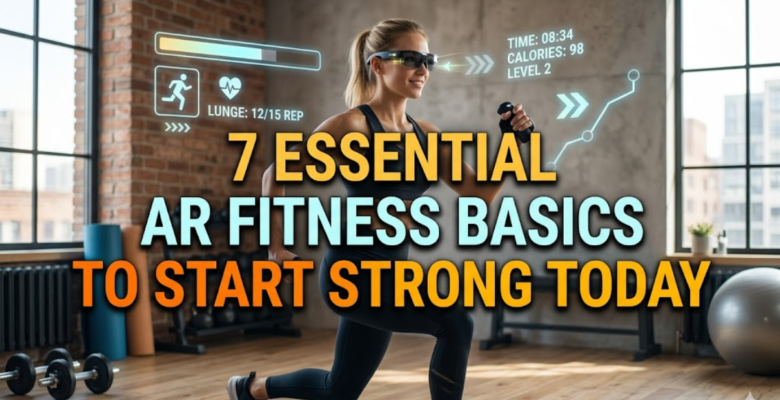
Augmented Reality (AR) fitness is no longer a futuristic concept—it is already reshaping how people train at home, in gyms, and even outdoors. Instead of relying only on static videos or traditional workout apps, AR fitness layers digital coaching, real-time feedback, and interactive visuals directly into your physical space. The result is a more engaging and responsive training experience that helps users stay consistent.
At its core, AR fitness is about merging movement with digital intelligence. It turns your environment into a guided workout zone where instructions appear in real time, posture is corrected instantly, and progress is tracked visually. Studies on immersive training systems suggest that interactive feedback loops significantly improve exercise adherence and performance compared to traditional methods.
This article breaks down 7 essential AR fitness basics so you can start strong, avoid common mistakes, and build a sustainable routine using this emerging technology.
- Understanding How AR Fitness Actually Works
Before using any AR fitness tool, it’s important to understand the foundation. AR fitness works by combining your device’s camera (or sensors) with computer-generated overlays that interact with your real environment.
These overlays can include:
- Virtual trainers
- Motion guidelines
- Real-time posture correction
- Game-like targets or challenges
The system continuously analyzes your body movement and compares it to ideal form models.
Informational Table: AR Fitness System Flow
| Step | Process | Outcome |
|---|---|---|
| 1 | Camera captures movement | Body is mapped digitally |
| 2 | AI processes posture | Movement is analyzed |
| 3 | AR overlay is generated | Instructions appear on screen |
| 4 | User adjusts movement | Form improves in real time |
Unlike traditional fitness videos, AR fitness is interactive rather than passive. You don’t just watch—you respond.
- Choosing the Right AR Fitness Device
AR fitness experiences depend heavily on the device you use. Not all setups offer the same level of immersion or accuracy.
The most common AR fitness devices include:
- Smartphones (entry-level AR fitness)
- Tablets (larger viewing experience)
- Smart mirrors (high-end home systems)
- AR glasses (advanced immersive training)
Chart: Device Capability Comparison
| Device Type | Immersion Level | Cost | Accuracy |
|---|---|---|---|
| Smartphone | Medium | Low | Medium |
| Tablet | Medium | Low | Medium |
| Smart Mirror | High | High | High |
| AR Glasses | Very High | Very High | High |
Smartphones are ideal for beginners, while smart mirrors and AR glasses offer more immersive experiences for advanced users.
- Setting Up Your Workout Space Correctly
AR fitness relies heavily on spatial awareness. Your device needs enough room to track your movements accurately.
A proper setup ensures:
- Fewer tracking errors
- Safer movement execution
- Better AR overlay alignment
Informational Table: Ideal Workout Space Setup
| Factor | Recommendation |
|---|---|
| Floor space | At least 6×6 feet |
| Lighting | Bright, even lighting |
| Background clutter | Minimal objects |
| Camera position | Chest to eye level |
If your space is too cluttered or poorly lit, AR tracking accuracy drops significantly.
A simple rule: if you wouldn’t comfortably stretch in the space, AR tracking will struggle too.
- Learning Basic Movement Tracking
Movement tracking is the core of AR fitness. Most systems break down your body into key points such as shoulders, elbows, hips, and knees.
Once tracked, the system evaluates:
- Joint alignment
- Range of motion
- Speed of movement
- Balance stability
Chart: Body Tracking Focus Areas
| Body Part | What It Tracks | Importance |
|---|---|---|
| Shoulders | Alignment during lifts | High |
| Hips | Stability and posture | High |
| Knees | Movement safety | Critical |
| Spine | Posture correction | Critical |
Understanding how tracking works helps you trust the system’s feedback and adjust more effectively.
- Starting with Beginner-Friendly AR Workouts
One common mistake beginners make is jumping into advanced AR workouts too quickly. AR fitness is adaptive, but your body still needs gradual conditioning.
Beginner-friendly AR workouts typically include:
- Low-impact cardio games
- Guided stretching routines
- Basic bodyweight exercises
- Light rhythm-based movement challenges
Informational Table: Workout Progression
| Level | Workout Type | Duration |
|---|---|---|
| Beginner | Stretching + light cardio | 10–15 min |
| Intermediate | Strength + AR challenges | 20–30 min |
| Advanced | High-intensity AR training | 30–45 min |
Starting slow reduces injury risk and improves long-term consistency.
- Using AR Feedback for Better Form
One of the biggest advantages of AR fitness is instant correction. Instead of waiting for a trainer or reviewing a video later, you receive feedback in real time.
Feedback can include:
- “Raise your arms higher”
- “Keep your back straight”
- “Slow down your movement”
- Visual overlays showing correct posture
Chart: Feedback Effectiveness
| Feedback Type | Correction Speed | Learning Impact |
|---|---|---|
| Traditional coaching | Delayed | Medium |
| Video tutorials | No feedback | Low |
| AR real-time feedback | Instant | High |
This immediate correction loop helps build muscle memory faster than traditional methods.
- Building Consistency with AR Gamification
The final essential basic is consistency. AR fitness is most effective when it feels engaging enough to keep you coming back.
Gamification plays a major role in this. Many AR fitness systems include:
- Points and rewards
- Daily challenges
- Level progression
- Virtual competitions
Informational Table: Motivation Drivers
| Feature | Psychological Effect |
|---|---|
| Rewards system | Increases dopamine response |
| Challenges | Encourages repetition |
| Leaderboards | Creates competition |
| Progress tracking | Builds habit formation |
Gamification transforms exercise from a task into a structured experience that feels more like a game.
How All 7 Basics Work Together
These seven basics are not separate steps—they function as a system. When combined, they create a complete AR fitness foundation:
- Understanding the system builds awareness
- Choosing the right device ensures accuracy
- Proper setup improves tracking
- Movement tracking enables feedback
- Beginner workouts build strength
- Real-time correction improves form
- Gamification ensures consistency
Without one of these elements, the system becomes less effective.
Chart: AR Fitness Learning Curve
| Stage | Focus | Result |
|---|---|---|
| Setup stage | Device + space | Technical readiness |
| Learning stage | Movement tracking | Awareness |
| Training stage | Workouts + feedback | Skill improvement |
| Habit stage | Gamification | Long-term consistency |
Common Mistakes Beginners Make
Even with good tools, beginners often struggle due to avoidable mistakes:
- Using too small a workout space
- Ignoring AR feedback
- Starting with advanced routines
- Poor lighting setup
- Inconsistent practice schedule
Avoiding these mistakes significantly improves results.
Benefits of Starting AR Fitness the Right Way
When you follow the basics correctly, AR fitness becomes more than just a workout tool—it becomes a structured training system.
Key benefits include:
- Faster learning of proper form
- Higher workout consistency
- Reduced injury risk
- Increased motivation through interaction
- Better long-term fitness adherence
Future of AR Fitness Foundations
As AR technology evolves, these basics will become even more important. Future systems may include:
- Full-body 3D scanning without cameras
- AI trainers that adapt automatically
- Voice-controlled workout adjustments
- Fully immersive holographic training spaces
The foundation you build today will align with these future systems.
FAQs
- What is AR fitness in simple terms?
AR fitness uses augmented reality to overlay digital instructions, trainers, or challenges onto your real-world workout space. - Do I need expensive equipment to start AR fitness?
No, many AR fitness apps work on smartphones, making it easy for beginners to start without high costs. - Is AR fitness good for beginners?
Yes, especially because it provides real-time feedback and guided instructions that help you learn proper form. - How much space do I need for AR workouts?
A clear space of around 6×6 feet is usually enough for most AR fitness apps. - Can AR fitness replace a gym?
It can replace many home workout needs, but some people still prefer gyms for heavy equipment training. - Is AR fitness safe for daily use?
Yes, as long as you maintain proper space, follow instructions, and avoid overtraining.