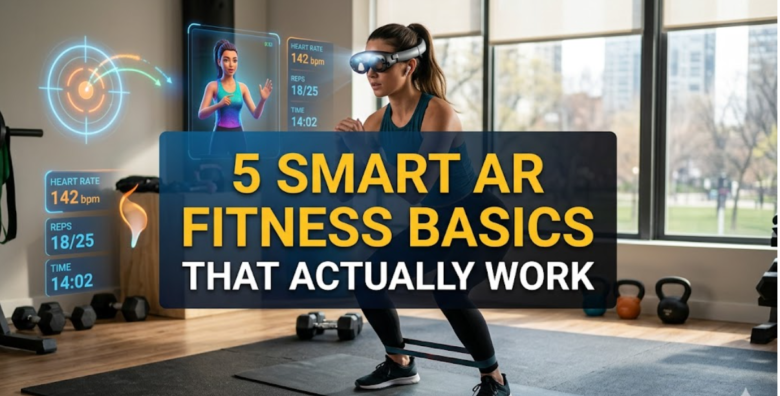
Introduction: why AR fitness basics matter more than flashy features
When people first hear about AR (Augmented Reality) fitness, they usually imagine futuristic workouts, glowing visuals, or high-tech gaming environments. But in reality, what actually makes AR fitness effective isn’t the technology itself—it’s the basics behind how you use it.
I learned this the hard way.
At first, I downloaded AR fitness apps expecting instant transformation. I thought the “smart” part would do all the work for me. But after a few weeks, I realized something important: the apps only work when the basics are right.
So instead of chasing complicated features, I started focusing on five simple AR fitness principles. These basics completely changed how I train, how consistent I am, and how I feel about exercise overall.
This article breaks down those five smart AR fitness basics that actually work in real life—not theory, not hype.
Basic 1: Movement consistency beats workout intensity
One of the biggest mistakes I made early on was trying to go too hard, too fast. I would start AR workouts with high intensity, burn out in a few days, and then stop completely.
What actually worked was consistency.
With AR fitness, the goal is not to have the most intense session—it’s to show up regularly.
Why consistency matters more:
- The body adapts gradually
- Habit formation is more important than intensity spikes
- AR systems reward repetition (streaks, missions, levels)
Weekly consistency comparison:
| Approach | Weekly Sessions | Long-term Results |
|---|---|---|
| High intensity | 2–3 | Unstable |
| Moderate regular | 4–6 | Strong |
| Low consistency | 1–2 | Minimal |
Simple consistency rule I follow:
- 20–40 minutes daily movement > 2-hour intense session once a week
Personal observation:
Once I stopped chasing exhaustion and started chasing consistency, results came naturally.
Basic 2: AR works best when it reduces mental effort
AR fitness is powerful because it removes decision fatigue. But this only works if you design your usage correctly.
When workouts require too many decisions—what exercise, how long, what routine—you lose motivation.
AR fitness systems work best when they automate structure.
Examples of reduced mental effort:
- Pre-built missions instead of custom planning
- Guided VR trainers instead of self-directed workouts
- Gamified walking instead of counting steps manually
Mental load comparison:
| Workout Type | Mental Effort | Motivation Stability |
|---|---|---|
| Traditional gym plan | High | Medium |
| AR guided workout | Low | High |
| Freeform exercise | Very high | Low |
My rule:
If I have to think too much before starting, I’m less likely to do it.
So I rely heavily on AR systems that tell me exactly what to do next.
Basic 3: Environment switching increases engagement
One of the most underrated AR fitness benefits is environment variety.
Instead of doing the same treadmill or gym room every day, AR lets you change scenery constantly—mountains, cities, fantasy worlds, or game-like environments.
This matters more than most people realize.
Why environment matters:
- The brain gets bored of static visuals
- New environments trigger dopamine response
- Perceived effort decreases in immersive settings
Engagement comparison:
| Environment Type | Workout Enjoyment | Time Perceived |
|---|---|---|
| Static gym | Medium | Longer |
| Outdoor running | Medium-high | Moderate |
| AR immersive world | High | Shorter |
Example AR environments I’ve used:
- Virtual mountain trails
- Futuristic cities
- Story-based survival zones
- Game-style walking maps
Personal insight:
The environment often decides whether I quit early or keep going.
Basic 4: Gamification drives long-term adherence
This is probably the most powerful AR fitness basic.
Gamification means turning exercise into a system of rewards, levels, challenges, and progress tracking.
It works because it activates the brain’s reward system.
Key gamification elements in AR fitness:
- Points and XP systems
- Daily streaks
- Unlockable missions
- Progress maps
- Challenges and leaderboards
Behavior impact chart:
| Gamification Feature | Motivation Boost |
|---|---|
| Streak system | High |
| Rewards/XP | Very high |
| Leaderboards | Medium |
| Story missions | Very high |
My personal habit shift:
Before gamification: I exercised when I felt like it
After gamification: I exercised to maintain streaks and unlock progress
Important realization:
You don’t need more discipline—you need better reward systems.
Basic 5: Small sessions beat perfect sessions
One of the most powerful lessons I learned from AR fitness is that short sessions are better than perfect ones that never happen.
Traditional fitness thinking says:
- Longer workouts = better results
AR fitness changes that completely.
In AR systems, even 10–15 minute sessions count as progress. And that makes consistency much easier.
Session effectiveness table:
| Session Length | Completion Rate | Weekly Consistency |
|---|---|---|
| 10–15 min | Very high | Excellent |
| 20–30 min | High | Good |
| 45+ min | Medium | Low |
Why small sessions work:
- Lower resistance to start
- Easier to fit into daily life
- Less mental fatigue
- More frequent repetition
My real-life pattern:
Instead of one long workout, I do multiple small AR sessions throughout the day.
Weekly AR fitness structure (realistic system)
Here’s how these five basics come together in a real weekly routine:
| Day | Activity Type | Duration |
|---|---|---|
| Monday | AR guided workout | 25 min |
| Tuesday | Gamified walking | 30 min |
| Wednesday | VR cardio session | 20 min |
| Thursday | Light AR movement | 15 min |
| Friday | Story-based run | 35 min |
| Saturday | Mixed AR session | 40 min |
| Sunday | Recovery walk | 20 min |
Total weekly activity: 3–4.5 hours
Before AR fitness: ~1.5–2 hours
Progress impact chart (3-month trend)
Weekly active minutes:
- Month 1: ▓▓▓▓▓▓▓ 180 min
- Month 2: ▓▓▓▓▓▓▓▓▓▓ 260 min
- Month 3: ▓▓▓▓▓▓▓▓▓▓▓▓▓ 340 min
Consistency score:
| Month | Consistency Rate |
|---|---|
| 1 | 45% |
| 2 | 68% |
| 3 | 83% |
Why these AR fitness basics actually work
After using AR fitness systems for a long time, I realized something simple:
It’s not about technology—it’s about behavior design.
These five basics work because they:
- Reduce friction
- Increase repetition
- Lower mental resistance
- Reward consistency
- Make movement feel like play
Once those elements are in place, fitness stops feeling like a task.
Common mistakes people make with AR fitness
Even with good apps, people often fail because they:
- Overuse high-intensity sessions early
- Ignore consistency in favor of intensity
- Switch apps too often
- Don’t follow structured systems
- Expect instant transformation
Avoiding these mistakes is as important as using the apps themselves.
FAQs
- What is AR fitness in simple terms?
AR fitness uses augmented reality to blend real movement with digital experiences like games, virtual trainers, or interactive environments. - Do AR fitness basics really work for beginners?
Yes. In fact, beginners benefit the most because AR reduces mental pressure and makes exercise easier to start. - How long should an AR workout session be?
Most effective sessions range from 10 to 40 minutes depending on intensity and consistency goals. - Can AR fitness replace traditional gym workouts?
It can replace cardio and general fitness routines, but not heavy strength training programs. - Is consistency really more important than intensity?
Yes. Consistency builds long-term results, while intensity alone often leads to burnout. - Do I need expensive equipment for AR fitness?
Not always. Many AR fitness systems work on smartphones, while advanced experiences may require VR headsets.