The idea of working out at home used to mean repeating the same routines with minimal feedback. Today, augmented reality (AR) is quietly reshaping that experience. Instead of staring at a timer or a static video, you can now interact with virtual trainers, track form in real time, and even gamify your workouts in your own living room.
AR blends digital elements with your real-world environment, making fitness more immersive and engaging. It allows users to visualize exercises, receive instant corrections, and stay motivated through interactive challenges. According to industry insights, AR can transform workouts by creating immersive environments and gamified fitness experiences that feel more like play than exercise .
This article explores seven powerful AR fitness tools that can genuinely upgrade your home workouts. Along the way, you’ll find practical insights, comparison tables, and structured charts to help you understand how each tool fits into your routine.
- Smart AR Fitness Mirrors
Smart mirrors are among the most recognizable AR fitness tools. These full-length mirrors display a virtual trainer and overlay workout instructions directly onto your reflection. The effect is subtle but powerful—you’re not watching a workout; you’re inside it.
These mirrors use motion sensors and cameras to track your body alignment. When you perform an exercise incorrectly, the system highlights the issue in real time. Some systems even project target zones, guiding where your hands or feet should go.
What makes them particularly effective is the feedback loop. Unlike traditional videos, where mistakes go unnoticed, AR mirrors correct your posture instantly. Over time, this reduces injury risk and improves technique.
Informational Table: Smart Mirror Capabilities
| Feature | Benefit | Impact Level |
|---|---|---|
| Real-time form correction | Prevents injury | High |
| Interactive trainer overlay | Enhances engagement | High |
| Personalized workouts | Tailored fitness plans | Medium |
| Progress tracking | Measurable results | High |
Smart mirrors are ideal for people who prefer structured workouts without hiring a personal trainer. They bring coaching into your home without requiring extra space beyond a wall.
- AR Fitness Mobile Apps
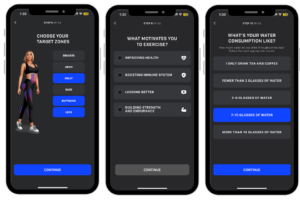
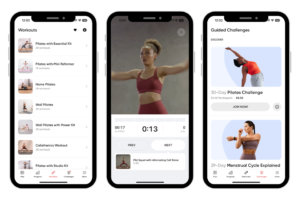
If you’re not ready to invest in hardware, AR fitness apps are a great starting point. Apps like the DHZ Fitness AR demonstrate how smartphones can turn any room into a workout zone.
These apps use your phone’s camera to scan your surroundings and overlay virtual fitness elements. You might see a digital dumbbell rack in your room or follow a virtual trainer guiding your reps.
The accessibility of mobile AR is its biggest strength. You don’t need special equipment—just a smartphone. This makes it an excellent entry point for beginners.
Chart: AR App Usage vs Traditional Fitness Apps
| Metric | AR Fitness Apps | Traditional Apps |
|---|---|---|
| Engagement level | High | Medium |
| Real-time interaction | Yes | Limited |
| Equipment needed | Minimal | Minimal |
| Immersion | High | Low |
AR apps are especially useful for quick workouts or when traveling. They turn any environment into a functional training space.
- AR Smart Glasses for Workouts
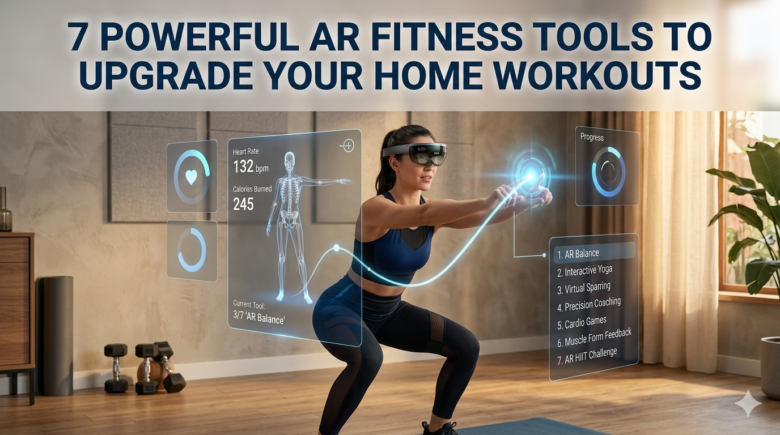
AR smart glasses take immersion to another level. Instead of looking at a screen, the workout appears directly in your field of vision. Imagine doing squats while a virtual trainer stands in front of you, guiding your movements.
These glasses allow hands-free interaction, which is crucial during workouts. They also provide contextual feedback, such as counting reps or showing your heart rate.
One of the most exciting aspects is spatial awareness. AR glasses understand your environment, ensuring that virtual elements align with real-world space. This makes workouts safer and more intuitive.
Informational Table: AR Glasses Features
| Feature | Description | Use Case |
|---|---|---|
| Hands-free display | No need to hold devices | Strength training |
| Real-time metrics | Shows reps, calories | Cardio workouts |
| Spatial mapping | Aligns with environment | Functional training |
While still evolving, AR glasses represent the future of home fitness. They combine convenience with advanced tracking.
- AR-Enabled Fitness Equipment
Traditional gym equipment is becoming smarter with AR integration. Some modern machines now include AR overlays that guide your workouts directly on the equipment interface.
For example, treadmills and bikes can simulate outdoor environments, making indoor cardio less monotonous. Instead of staring at a wall, you might feel like you’re running through mountains or cycling along a coastline.
This aligns with the broader trend of interactive home fitness systems, where equipment adapts to user behavior and preferences.
Chart: Equipment Evolution
| Generation | Features | Experience Level |
|---|---|---|
| Traditional | Manual settings | Low |
| Smart Equipment | App integration | Medium |
| AR Equipment | Immersive environments | High |
AR-enabled equipment is ideal for people who enjoy cardio but struggle with motivation. The immersive environments make workouts feel less repetitive.
- AR Personal Trainer Platforms
Hiring a personal trainer can be expensive. AR platforms offer a compelling alternative by delivering personalized coaching at a fraction of the cost.
These systems analyze your movements and provide tailored feedback. Some even adapt workouts in real time based on your performance.
The key advantage is scalability. You get expert-level guidance without scheduling sessions or commuting to a gym.
Informational Table: AR Trainer vs Human Trainer
| Aspect | AR Trainer | Human Trainer |
|---|---|---|
| Cost | Low | High |
| Availability | 24/7 | Limited |
| Personalization | High (AI-based) | High |
| Interaction | Digital | Physical |
AR trainers are particularly useful for beginners who need guidance but want flexibility.
- AR Gamified Fitness Systems
Gamification is one of the most exciting applications of AR in fitness. Instead of doing repetitive exercises, you engage in interactive challenges—like dodging virtual obstacles or hitting targets.
This approach transforms workouts into games. You’re not just exercising; you’re competing, exploring, and achieving milestones.
Gamified fitness systems are especially effective for maintaining consistency. When workouts feel like entertainment, people are more likely to stick with them.
Chart: Motivation Levels
| Workout Type | Motivation Level |
|---|---|
| Traditional workouts | Medium |
| Video workouts | Medium-High |
| AR gamified workouts | High |
Gamification taps into psychological triggers like rewards and competition, making it easier to build habits.
- AR Body Tracking and Analytics Tools
Tracking progress is essential for fitness success. AR tools provide advanced analytics by mapping your body movements in 3D.
These systems can measure posture, balance, and even muscle engagement. Over time, they generate detailed reports showing your improvement.
This data-driven approach helps users make informed decisions about their workouts. Instead of guessing what works, you rely on measurable insights.
Informational Table: Analytics Metrics
| Metric | Purpose | Benefit |
|---|---|---|
| Posture tracking | Correct form | Injury prevention |
| Movement analysis | Improve technique | Efficiency |
| Progress reports | Track improvement | Motivation |
AR analytics tools are ideal for people who enjoy tracking and optimizing their performance.
How AR Fitness Tools Work Together
One of the most interesting aspects of AR fitness is how these tools complement each other. You don’t need to choose just one. A typical setup might include:
- A smart mirror for guided workouts
- A mobile app for quick sessions
- AR glasses for immersive training
- Analytics tools for progress tracking
This combination creates a holistic fitness ecosystem at home.
Benefits of AR Fitness for Home Workouts
AR fitness tools offer several advantages over traditional methods:
- Increased engagement through interactive experiences
- Real-time feedback for better performance
- Flexibility to work out anytime
- Reduced need for expensive gym memberships
They also address one of the biggest challenges in home fitness: consistency. By making workouts more enjoyable, AR helps users stick to their routines.
Challenges and Considerations
Despite their benefits, AR fitness tools are not without limitations:
- Initial cost for hardware can be high
- Learning curve for new users
- Dependence on technology
However, as technology advances, these barriers are gradually decreasing.
Future of AR in Home Fitness
The future of AR fitness looks promising. With advancements in hardware and software, we can expect:
- More affordable devices
- Improved motion tracking
- Enhanced realism in virtual environments
AR is likely to become a standard feature in home fitness, much like smartphones have become essential in daily life.
FAQs
- What is AR fitness?
AR fitness uses augmented reality to overlay digital elements onto real-world workouts, enhancing engagement and feedback. - Do I need expensive equipment for AR workouts?
Not necessarily. Many AR fitness apps work on smartphones, making them accessible without high costs. - Are AR workouts effective?
Yes, especially because they provide real-time feedback and increase motivation, which improves consistency. - Can beginners use AR fitness tools?
Absolutely. Many AR systems are designed with guided instructions, making them beginner-friendly. - Is AR better than traditional workouts?
It depends on personal preference, but AR offers more interactivity and engagement compared to traditional methods. - Are AR fitness tools safe?
Yes, as long as they are used correctly. In fact, real-time form correction can reduce injury risk.
Final Thoughts
AR fitness tools are not just a trend—they represent a shift in how we approach exercise at home. By combining technology with physical activity, they make workouts more engaging, efficient, and personalized.
Whether you start with a simple mobile app or invest in advanced equipment, AR has the potential to transform your fitness journey. The key is to choose tools that align with your goals and gradually build a system that works for you.