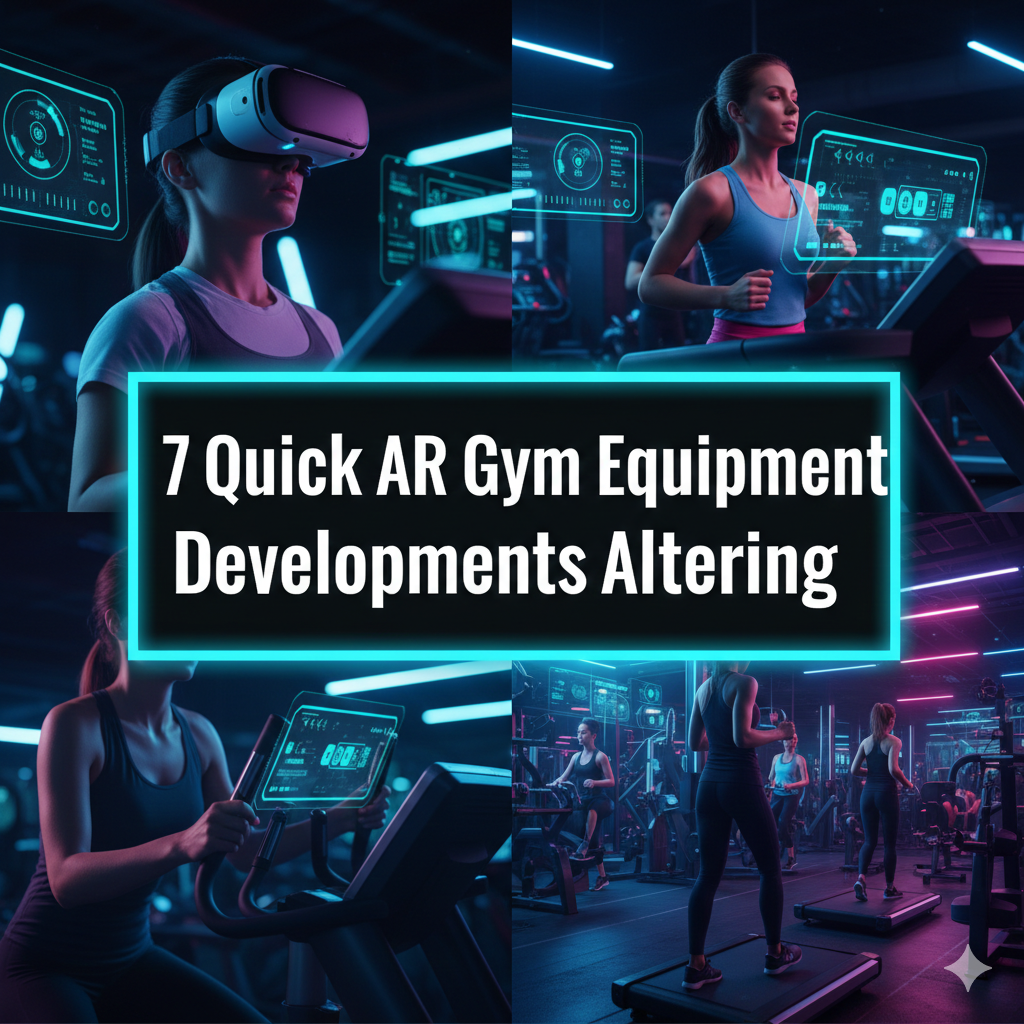
Fitness is more than sweat and willpower these days. Now, it’s technology that speaks back to you. AR fitness gear — as in Augmented Reality fitness gear — is about to make ordinary pump sessions into interactive, data-centered experiences that feel more like a video game and less like a barrelload of gym grunting.
If you ever wished your workout would tell you precisely what you’re doing wrong, root for you live-and-in-person, or drop you into a virtual boxing ring without leaving your living room — AR fitness gear is already making that happen.
And it’s growing fast.
The global market for AR fitness could exceed $6.8 billion by 2027, according to analysts. More people are abandoning the old gym set-up for smart glasses, motion-tracking suits, and AI-powered mirrors that guide them through every rep.
This article breaks down 7 of the fastest-growing AR fitness gear trends you need to know about — whether you’re a gym rat, casual walker, or someone who just wants to make working out feel more like fun and less like a chore.
Why AR Fitness Gear Is Having a Big Moment — and Will Only Get Bigger
Before getting into the trends, it helps to understand why AR fitness gear is exploding at this moment.
Touted as fitness’ biggest boom since the advent of smartphones, three things have driven it: better hardware, faster internet (hi there, 5G), and a post-pandemic world in which people still want flexible options to work out at home.
AR fitness gear layers the real world with digital enhancements. You are still moving your real body, but the gear around you adds information, coaching, or entertainment that makes everything feel sharper and more impactful.
It’s not replacing the gym. It’s upgrading it.
Trend #1: Gym-Friendly Smart AR Glasses
Your Coach On Your Nose
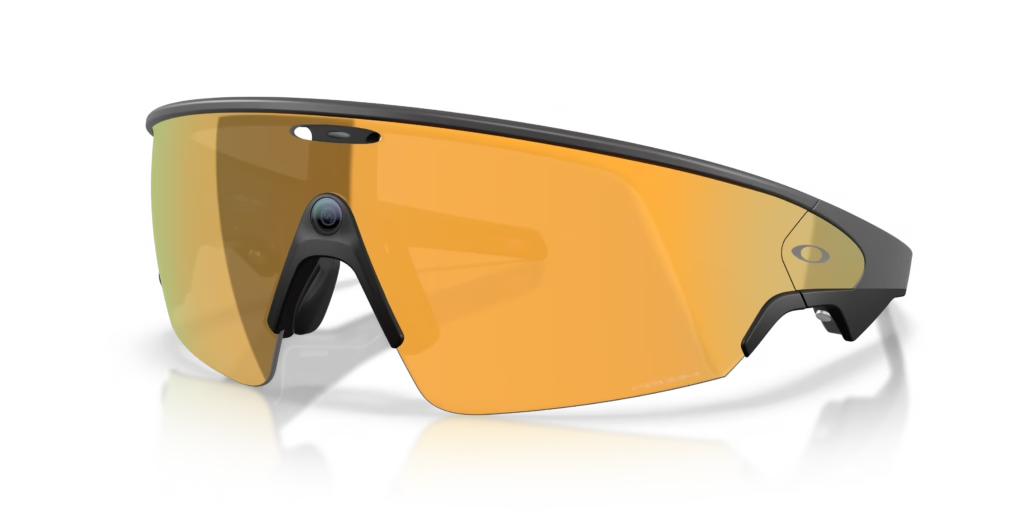
One of the hottest pieces of AR fitness equipment right now is smart AR glasses built for fitness. These high-tech, lightweight glasses display real-time workout data right in your field of view.
Imagine running down a trail and seeing your pace, heart rate, distance, and calorie burn floating in front of you — never once looking down at your wrist.
Companies like Vuzix and Engo are already making headway with sport-specific AR glasses. Cyclists wear them to measure cadence. Runners use them to achieve pace goals. Gym-goers wear them to keep track of reps and maintain form.
So What Are the Differences Between Them and Regular Smartwatches?
Smartwatches force you to stop what you’re doing. AR glasses keep your eyes precisely where they should be — on your body, on your form, and in the space around you.
That hands-free, eyes-up benefit is a game-changer, especially for sports that require constant visual engagement like basketball, tennis, or trail running.
| Feature | Smartwatch | AR Fitness Glasses |
|---|---|---|
| Hands-free display | No | Yes |
| Real-time coaching | Limited | Advanced |
| Form correction | No | Yes (with AI) |
| Battery life | 1–2 days | 4–8 hours (improving) |
| Price range | $200–$500 | $300–$800 |
Battery life remains a work in progress, but the technology is evolving quickly. Expect AR fitness glasses to be as ubiquitous as earbuds within a few years.
Trend #2: AR-Powered Fitness Mirrors
The Mirror That Coaches You Back
AR fitness mirrors are some of the hottest AR fitness gear for home workouts right now. Products like the Lululemon Studio Mirror and Tempo have transformed an ordinary reflective surface into a bona fide personal trainer.
You see yourself working out. But you also see an instructor, your workout statistics, and real-time feedback about your form — all layered on the same screen.
It’s as if you have a gym class in your bedroom.
Why People Are Obsessed with Them
The appeal is simple. You have the motivation of a live class without leaving your house. The mirror uses built-in cameras and AI to monitor your movements, then tells you when you’re squatting too shallow or your back isn’t straight.
That immediate feedback used to be the province of expensive personal trainers only. Now it’s embedded in the mirror hanging on your wall.
Most AR fitness mirrors include:
- Hundreds of on-demand classes
- Live group sessions with real instructors
- Progress tracking over time
- Personalized workout recommendations
The only caveat is the monthly subscription fee (typically $30–$50). But compare that to a gym membership plus a personal trainer, and the value becomes apparent fast.
Trend #3: Motion-Capture Workout Suits
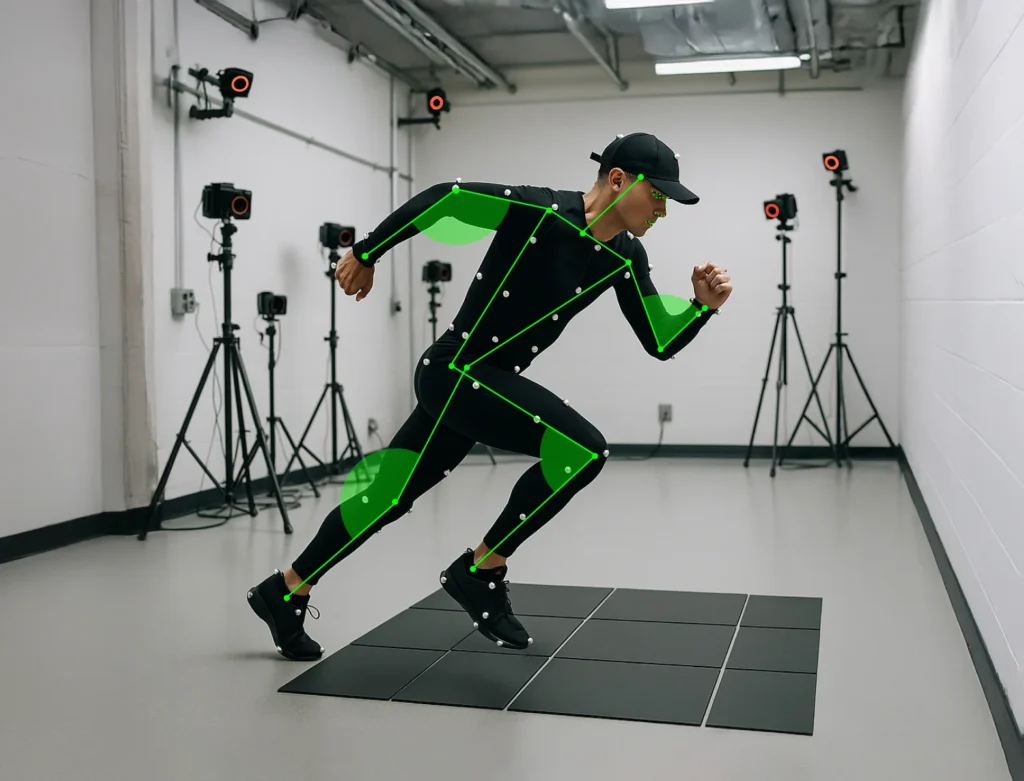
Tracking Every Muscle Move, In Real Time
Motion-capture technology used to be affordable only by Hollywood studios. Now it’s appearing as AR fitness gear for elite athletes and casual gym-goers alike.
These full-body or partial-body suits are lined with sensors that track your precise body position hundreds of times per second. When used alongside an AR app, they display a digital skeleton of your own body — revealing at a glance your posture, joint angles, and movement patterns in real time.
Why Athletes Are Paying Attention
Sports performance coaches have been employing motion-capture for years to optimize athlete form. Now those same insights are available to anyone willing to don a smart suit during training.
The XR Sports suit, for instance, tracks more than 17 body points and pairs with a smartphone app that converts your movement data into easy-to-read visual reports.
This type of AR fitness gear is particularly good for:
Injury prevention — Recognizing dangerous movement patterns before they result in injury.
Form mastery — Knowing precisely how to execute a deadlift, squat, or sprint using perfect mechanics.
Progress comparison — Comparing your month one vs month six form, validated with real data.
The suits are bulky and expensive at the moment (some cost $500–$2,000), but sleeker, budget-friendly versions are already in development.
Trend #4: AR Running and Cycling Apps with Real-World Overlays
Turn Your Neighborhood Into Your Very Own Race Course
AR fitness gear doesn’t all have to be worn on your body. Some of the fastest-growing trends are taking place right on your phone or tablet screen.
Apps like Zombies, Run! and the AR features of Strava project digital information, characters, or challenges onto real-world environments through your phone’s camera.
Zombies, Run! literally turns your morning jog into a life-or-death narrative. You listen to a story through your earbuds, and how well you evade zombie attacks depends on how fast you run. It sounds gimmicky — until you remember it’s one of the most downloaded fitness apps in the world.
AR Cycling Platforms Are Getting a Major Boost
Indoor cycling apps like Rouvy use AR to place your avatar over actual recorded race routes from around the world. You pedal through the real streets of Paris or the mountain roads of the Alps — and your effort directly controls how fast your avatar goes.
It’s immersive, it’s motivating, and it turns 45 minutes on a stationary bike into an odyssey.
| App | Type | AR Feature | Price |
|---|---|---|---|
| Zombies, Run! | Running | Narrative overlay | Free / $4.99/month |
| Rouvy | Cycling | Real-world route AR | $10/month |
| Supernatural | VR/AR Fitness | Full immersive workout | $19.99/month |
| Nike Run Club | Running | Route gamification | Free |
Trend #5: AR Boxing and Combat Training Gear
Hit Targets That Aren’t Really There
AR boxing and combat training is among the most exciting categories of AR fitness gear today — and also one of the fastest evolving.
Companies like FightCamp spent years building connected boxing gear. But the latest generation of AR boxing gear takes it a step further by displaying virtual targets, opponents, or training pads right into your line of sight.
You swing at the air, but your AR glasses or headset shows you a glowing target exactly where your punch should land. Miss the target? Your form tracker knows, and your coach (digital or human) receives the data.
The Physical Benefits Are Real
Boxing is a full-body workout. It develops cardio endurance, upper body strength, core stability, and coordination all at the same time. Adding AR to boxing doesn’t just make it more fun — it makes it more precise.
Most home boxers develop bad habits without AR. They punch too wide, let their guard drop, or fail to properly rotate their hips. AR boxing gear identifies those habits right away and corrects them in real time.
Some platforms even allow you to spar against AI opponents that match your skill level. The harder you work, the harder they fight back.
This kind of AR fitness gear is ideal for:
- People who find cardio boring
- Fans of combat sports who can’t make it to a gym
- Anyone seeking a high-intensity, full-body alternative to regular workouts
Trend #6: AR Yoga and Mindfulness Gear
Finding Your Flow with Digital Guidance
AR fitness gear isn’t just limited to high-intensity exercise. The yoga and mindfulness space is quietly emerging as one of the most creative AR fitness development sectors.
AR yoga apps and gear rely on your phone’s camera or wearable sensors to track your pose alignment in real time. They display a glowing digital skeleton representing the correct pose position, then compare your body’s actual position against it.
If something is off with your warrior two pose — perhaps your front knee is caving inward or your arms aren’t at shoulder height — the app alerts you immediately with a visual cue. No instructor needed.
Apps Making Yoga Smarter
Apps like Prana Breath, Alo Moves, and newer AR-specific platforms like ASANA Rebel are all incorporating body-tracking technology that edges into true AR territory.
The advantage isn’t only in fixing form. It’s about making yoga accessible for total beginners who find in-person classes intimidating. When you have a digital guide mapped onto your own body, the learning curve drops dramatically.
Breathwork is also getting the AR treatment. Some mindfulness apps now track tiny movements of your chest and shoulders with your phone’s camera during breathing exercises, giving you visual biofeedback that helps you breathe more deeply and efficiently.
This trend demonstrates that AR fitness gear goes beyond calorie burning. It’s about empowering the full spectrum of wellness — physical and mental — to become more informed and more personalized. If you’re looking to complement your AR-guided workouts with expert body health insights, AR Body Health is a great resource to explore.
Trend #7: Wearable AR Biometric Trackers
Fitness Wearables Backed by the Next Generation
Smartwatches and fitness bands have been around for over a decade. But the latest generation of wearable AR fitness gear does much more than count your steps.
We’re talking about devices that measure muscle oxygen levels, hydration status, lactate threshold, skin temperature, and even emotional stress levels — then present that data through an AR interface that’s genuinely useful while you work out.
Companies like Whoop, Athos, and newer startups are taking wearable biometrics into realms previously almost exclusively the domain of sports science laboratories.
From Data to Action
The true power of this AR fitness gear is how the data gets handled. It’s not just tracking — it’s interpreting.
These next-gen trackers use AI to tell you:
- When you’re recovered enough to train hard
- When your body is stressed and in need of rest
- Which muscle groups are firing correctly during a lift
- Whether your sleep quality is affecting your athletic performance
Some devices work alongside AR glasses so you can see a real-time biometric dashboard during your workout — without ever glancing at a screen.
This is where AR fitness gear gets genuinely exciting. It closes the loop between sensing, analyzing, and coaching in a way that feels almost like having a sports scientist tracking your every move. According to research published by the National Institutes of Health, wearable biometric monitoring has shown measurable improvements in athletic performance outcomes when used consistently over time.
How These 7 Trends Connect: The Bigger Picture
These seven trends don’t exist in isolation. They’re all part of a shift toward what fitness experts describe as “intelligent training” — workouts driven by data, personalized in real time, and engaging enough to keep people coming back.
Here’s a quick overview of where each trend falls on the spectrum from mainstream to cutting edge:
| AR Fitness Gear Trend | Mainstream Level | Best For |
|---|---|---|
| Smart AR Glasses | Growing | Athletes, runners, cyclists |
| AR Fitness Mirrors | Mainstream | Home workout fans |
| Motion-Capture Suits | Early adopter | Serious athletes |
| AR Running/Cycling Apps | Very mainstream | Casual and competitive users |
| AR Boxing Gear | Growing | Cardio and combat fans |
| AR Yoga Gear | Emerging | Beginners and wellness seekers |
| Wearable Biometric AR | Cutting edge | Performance-focused athletes |
What’s Holding AR Fitness Gear Back (For Now)
No trend is without friction. AR fitness gear still has a few real obstacles to overcome.
Cost is the biggest one. Most of these products sit in the $300–$2,000 range, which can make them out of reach for budget-minded buyers.
Comfort is another issue. Smart glasses and motion-capture suits aren’t always the most comfortable things to wear through a sweaty HIIT session.
Battery life remains a genuine limitation for glasses and wearables that need to continuously run advanced AR software.
But every single one of these issues is being actively addressed. Prices are dropping, materials are improving, and battery technology is advancing. Most industry analysts anticipate that mainstream adoption will accelerate sharply between 2025 and 2028.
FAQs About AR Fitness Gear
What exactly is AR fitness gear? AR fitness gear refers to sports and workout equipment that uses Augmented Reality technology to overlay digital information, coaching cues, or visual feedback onto your real-world environment. This includes smart glasses, fitness mirrors, motion-tracking suits, AR-powered apps, and more.
Is AR fitness gear just for serious athletes? Not at all. Most AR fitness gear — such as fitness mirrors and AR yoga apps — is built for beginners and casual exercisers. The technology adapts to your skill level and is becoming increasingly user-friendly.
How is AR fitness different from VR fitness? Virtual Reality (VR) replaces your real environment with a fully digital one. Augmented Reality (AR) overlays digital elements on top of your real world. AR fitness gear allows you to remain grounded in your actual space while receiving digital coaching and feedback layered on top.
Is AR fitness gear worth the cost? That depends on your fitness goals and budget. For those who struggle with motivation, form, or consistency, AR fitness gear can substitute for pricey personal trainers or gym memberships. For serious athletes, the performance data alone can be worth the investment.
Can AR fitness gear help prevent injuries? Yes. Motion-capture suits and form-correcting AR mirrors are specifically designed to recognize dangerous movement patterns before they lead to injury. Some sports medicine professionals are already recommending these tools as part of injury prevention programs.
Do I need special equipment to get started with AR fitness? Not always. Some AR fitness experiences run entirely on a smartphone. Apps like Zombies, Run! or AR yoga apps need only your phone and a bit of floor space. More advanced devices like smart glasses or motion suits require dedicated purchases.
What is the most popular AR fitness gear right now? AR fitness mirrors (like the Lululemon Studio Mirror) and AR-enhanced fitness apps are currently the most mainstream options. Smart AR glasses and biometric wearables are growing rapidly but still sit in the early adopter stage.
The Future of Working Out Is Already Here
AR fitness gear isn’t some far-fetched sci-fi fantasy. It’s on shelves, running on apps, and wrapping around athletes today. These 7 trends represent the fastest-moving corners of a technology wave that is deeply reshaping how humans think about physical fitness.
The best part? You don’t have to be a tech whiz or an elite athlete to benefit. Whether you’re doing yoga in your living room, cycling through virtual Alps, or punching at AR targets in your garage, this gear meets you exactly where your routines take you.
As prices fall and the technology further matures, AR fitness gear will no longer be a rare luxury — it will become a standard part of how people train, recover, and stay fit. The question isn’t whether this shift will happen. It’s whether you’ll be ready when it fully arrives.
Start exploring now. Your future self — with better form, better data, and a more mindful relationship with fitness — will thank you.