If you’ve spent any time exploring fitness trends lately, you’ve probably noticed how augmented reality (AR) has quietly slipped into workouts. Not in a flashy, overhyped way—but in subtle tools that change how you move, track, and stay consistent. While most people know about mainstream fitness apps, there’s a quieter layer of AR tools that trainers often use behind the scenes but rarely talk about openly.
These tools aren’t necessarily hidden because they’re exclusive. They’re “secret” because they require a bit more curiosity, experimentation, and willingness to go beyond standard workouts. What makes them powerful is not just technology—it’s how they reshape your relationship with exercise.
Below, you’ll find eight of these lesser-known AR fitness tools, along with practical insights, real-world applications, and structured tables to help you understand how they actually work in everyday routines.
- AR Movement Correction Overlays
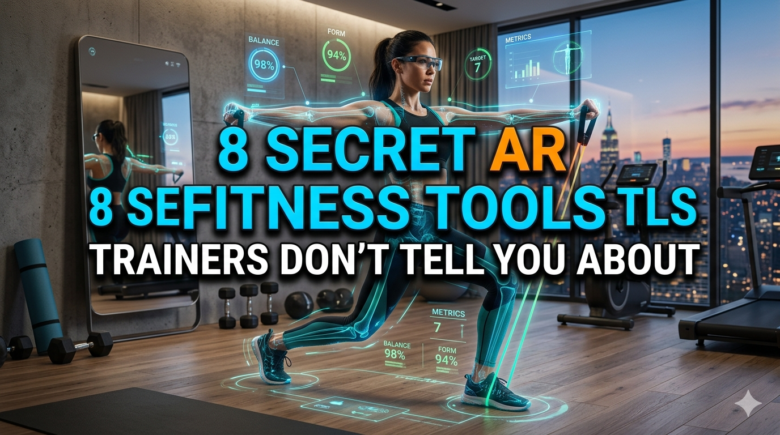
One of the most under-discussed AR tools is real-time movement correction. Unlike basic workout apps that just count reps, these overlays visually map your body and compare it to ideal movement patterns.
Imagine doing a squat while seeing a faint outline of the correct posture layered over your own reflection. That’s what this tool does.
Why trainers don’t talk about it much:
Because it replaces a large part of what personal trainers do—form correction.
How it helps:
- Prevents injury
- Improves muscle activation
- Speeds up progress
Practical example:
Instead of guessing whether your knees are aligned during lunges, the overlay highlights deviations instantly.
Table: Movement Correction Impact
| Feature | Without AR Tool | With AR Overlay |
|---|---|---|
| Form accuracy | Low to moderate | High |
| Injury risk | Medium | Low |
| Learning speed | Slow | Fast |
| Trainer dependency | High | Reduced |
- AR Rep Tempo Visualizers
Most people rush through reps without realizing it. Trainers often emphasize tempo, but it’s hard to follow without guidance.
AR tempo visualizers project pacing cues—like moving bars or pulses—that guide your speed.
What makes it “secret”:
It’s rarely included in mainstream apps because it requires precise synchronization.
How it helps:
- Builds muscle more effectively
- Improves control
- Enhances mind-muscle connection
Example:
A 3-second squat descent is shown visually, forcing you to slow down.
Chart: Ideal Tempo Breakdown
| Phase | Recommended Time |
|---|---|
| Eccentric | 3–4 seconds |
| Pause | 1–2 seconds |
| Concentric | 1–2 seconds |
- Spatial Workout Mapping
This tool uses AR to turn your room into a structured workout space. It places virtual markers for where to stand, move, or jump.
Why it’s underrated:
People assume space limitations are physical, not visual.
Benefits:
- Optimizes small spaces
- Improves workout flow
- Reduces confusion during circuits
Example:
Your living room becomes a mapped HIIT circuit with designated zones.
Table: Space Efficiency Comparison
| Setup Type | Space Needed | Efficiency |
|---|---|---|
| Traditional | Large | Medium |
| AR Mapped Space | Small | High |
- AR Resistance Simulation
This is where things get interesting. Some AR tools simulate resistance visually, tricking your brain into engaging muscles more intensely.
It doesn’t replace weights—but it enhances bodyweight training.
Why trainers keep quiet:
Because it challenges the idea that equipment is always necessary.
How it works:
Visual cues create perceived resistance, increasing muscle tension.
Example:
You see a virtual band stretching as you pull—your body responds accordingly.
- AR Balance and Stability Trainers
Balance training is often ignored, yet it’s crucial for overall fitness.
These AR tools create shifting visual environments that challenge your stability.
Why it’s overlooked:
It feels more like a game than a workout—but the benefits are serious.
Benefits:
- Strengthens stabilizer muscles
- Improves coordination
- Reduces fall risk
Table: Balance Improvement Timeline
| Week | Expected Improvement |
|---|---|
| 1–2 | Slight awareness |
| 3–4 | Better control |
| 5–6 | Noticeable stability |
- AR Fatigue Detection Systems
This is one of the most advanced tools. It tracks subtle changes in your movement to detect fatigue.
Why it’s “secret”:
It requires complex tracking and is often embedded in premium systems.
What it does:
- Identifies when your form starts breaking
- Suggests rest in real time
Example:
Your squat depth decreases slightly—AR flags it before you notice.
Chart: Fatigue Indicators
| Indicator | Meaning |
|---|---|
| Reduced range | Muscle fatigue |
| Slower movement | Energy depletion |
| Form deviation | Increased injury risk |
- AR Gamified Progress Layers
Gamification isn’t new—but AR adds a physical layer to it. Instead of points on a screen, progress appears in your environment.
Why trainers don’t emphasize it:
It seems less “serious,” but it’s incredibly effective.
Benefits:
- Increases consistency
- Makes workouts engaging
- Reduces boredom
Example:
Completing reps builds a virtual structure around you.
- AR Recovery and Stretch Guidance
Recovery is often neglected. These tools guide stretching with visual overlays showing exact angles and positions.
Why it’s underrated:
People underestimate recovery compared to workouts.
Benefits:
- Improves flexibility
- Reduces soreness
- Speeds up recovery
Table: Recovery Impact
| Factor | Without AR | With AR Guidance |
|---|---|---|
| Stretch accuracy | Low | High |
| Recovery speed | Moderate | Fast |
| Injury risk | Medium | Low |
How These Tools Change Fitness Behavior
What ties all these tools together is not just innovation—it’s behavioral change.
Traditional fitness relies on:
- Motivation
- Discipline
- External guidance
AR fitness tools shift this toward:
- Immediate feedback
- Visual learning
- Self-correction
Comparison Table: Traditional vs AR Fitness
| Aspect | Traditional Fitness | AR Fitness Tools |
|---|---|---|
| Feedback | Delayed | Instant |
| Engagement | Moderate | High |
| Learning curve | Slow | Fast |
| Independence | Low | High |
Practical Weekly Integration Plan
Here’s how someone could realistically use these tools:
| Day | Focus Area | AR Tool Used |
|---|---|---|
| Monday | Strength training | Movement overlay |
| Tuesday | Cardio + HIIT | Spatial mapping |
| Wednesday | Recovery | Stretch guidance |
| Thursday | Strength + tempo | Tempo visualizer |
| Friday | Balance + core | Stability trainer |
| Saturday | Mixed workout | Gamified layers |
| Sunday | Light recovery | Fatigue monitoring |
Why Trainers Rarely Share These
It’s not a conspiracy—it’s practicality.
Reasons include:
- Learning curve for clients
- Cost of advanced tools
- Fear of reducing trainer dependency
- Lack of awareness
But as AR becomes more accessible, these tools are slowly becoming mainstream.
Common Mistakes When Using AR Fitness Tools
Even powerful tools can fail if used incorrectly.
Mistakes:
- Over-reliance on visuals without body awareness
- Ignoring fatigue alerts
- Using too many tools at once
- Skipping recovery features
Solution:
Start simple. Master one tool before adding another.
FAQs
- Are AR fitness tools suitable for beginners?
Yes, many of them are actually more beginner-friendly than traditional workouts because they provide visual guidance and real-time feedback. - Do AR tools replace personal trainers?
Not completely. They reduce dependency but can’t fully replace human expertise, especially for advanced training or rehabilitation. - Do I need expensive equipment for AR fitness?
Not always. Many tools work with just a smartphone or basic wearable devices. - Are AR workouts safe?
They can be safer than traditional workouts because they help correct form and detect fatigue early—if used properly. - How quickly can I see results using AR fitness tools?
Most users notice improvements in form and consistency within 2–4 weeks, depending on usage. - Can AR fitness help with weight loss?
Yes, indirectly. By improving consistency, engagement, and workout quality, AR tools support effective calorie burning and long-term habits.