The first time I tried an augmented reality workout, it didn’t feel like exercise. It felt like stepping into a strange hybrid between a game and a mirror that knew too much about my posture. Instead of staring at a wall or following a dull routine, I was reacting—to floating cues, virtual coaches, and real-time corrections that felt oddly personal.
That’s the promise of AR fitness. It doesn’t replace your workout—it transforms how you experience it.
Augmented reality (AR) overlays digital elements onto your real environment, unlike VR, which replaces it entirely. Augmented Reality enhances your physical space rather than disconnecting you from it, allowing you to stay aware of your surroundings while interacting with digital guidance.
This subtle difference is exactly why AR fitness tools are gaining momentum. They’re not isolating. They’re integrating.
Let’s explore five tools that are quietly reshaping how people move, train, and stay consistent.
the shift from passive workouts to responsive environments
Before diving into tools, it helps to understand what’s changing.
Traditional workouts are static:
- You follow a plan
- You guess your form
- You track results after the fact
AR flips this model:
- Workouts respond to you
- Form is corrected instantly
- Feedback happens in real time
This matters because engagement is one of the biggest predictors of consistency. AR creates immersion and gamification—two factors shown to increase workout adherence and intensity.
tool 1: AR fitness headsets and smart glasses
If AR fitness had a “centerpiece,” this would be it.
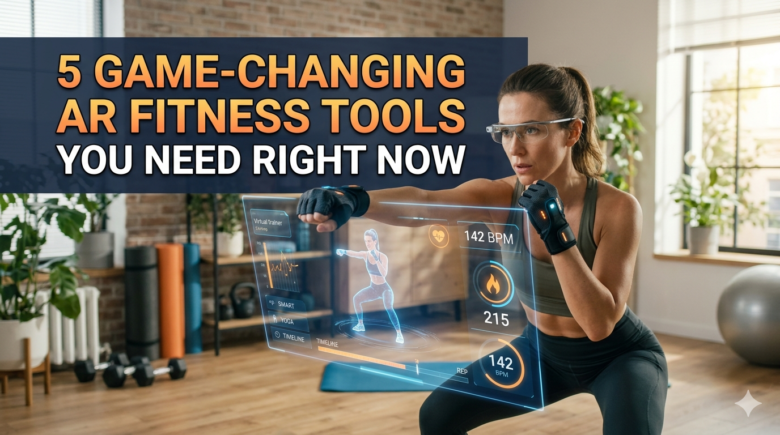
Devices like Aryzon MR Original represent the entry point into immersive AR training. These headsets use your smartphone or built-in displays to project workout data, virtual trainers, and movement guides directly into your field of view.
Instead of checking your phone between sets, your metrics float in front of you.
what makes them game-changing
- Hands-free guidance during workouts
- Real-time overlays of posture and movement
- Instant performance feedback
- Immersive coaching experience
Modern AR glasses are also becoming lighter—some weighing close to regular eyewear—making them practical for active movement.
practical example
Imagine doing squats:
- A virtual line shows your knee alignment
- A rep counter updates automatically
- A trainer appears correcting your depth
You’re not guessing anymore—you’re reacting.
table: AR headset impact on workout performance
| Feature | Without AR | With AR Headsets |
|---|---|---|
| Form accuracy | Low to moderate | High (real-time correction) |
| Engagement level | Medium | Very high |
| Feedback timing | Delayed | Instant |
| Workout consistency | Irregular | More consistent |
| Learning speed | Slow | Accelerated |
tool 2: smart AR mirrors
At first glance, they look like ordinary mirrors. But once activated, they become interactive training hubs.
AR mirrors overlay:
- Trainers beside your reflection
- Performance metrics
- Form corrections
The concept is simple: you see yourself and the ideal version simultaneously.
why it works
Humans learn visually. When you can compare your movement directly with a guided model, your brain adapts faster.
These mirrors bridge the gap between:
- Home workouts
- Personal training sessions
Instead of watching a video, you’re inside it.
chart: engagement comparison (estimated)
Workout Type vs Engagement Level
| Workout Type | Engagement Score (1–10) |
|---|---|
| Traditional gym | 6 |
| Video workouts | 7 |
| VR fitness | 8 |
| AR mirror workouts | 9 |
tool 3: AR-enabled smart equipment
This is where things get surprisingly practical.
Think dumbbells that count reps, mats that guide your yoga poses, or resistance systems that adjust based on your movement.
An example ecosystem like FitFlex Vision combines multiple AR-enabled tools, including smart weights and interactive surfaces.
what these tools do differently
- Track movement automatically
- Correct form during exercises
- Sync with AR visuals for guidance
- Provide adaptive resistance or feedback
Instead of logging your workout afterward, everything happens live.
table: traditional vs AR smart equipment
| Aspect | Traditional Equipment | AR Smart Equipment |
|---|---|---|
| Rep tracking | Manual | Automatic |
| Form correction | None | Real-time |
| Personalization | Limited | Adaptive |
| Data insights | Basic | Advanced |
| Motivation | Self-driven | System-assisted |
tool 4: AR fitness apps with spatial tracking
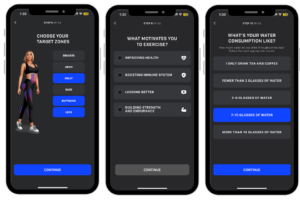
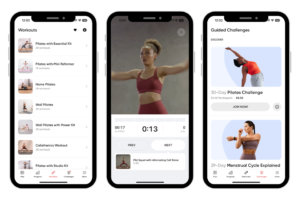
Not all AR requires expensive hardware. Many powerful tools run directly on smartphones.
These apps use:
- Camera tracking
- Motion detection
- Environmental mapping
They turn your room into a training space with:
- Virtual targets
- Movement zones
- Gamified challenges
why this matters
Accessibility.
You don’t need a full setup to start. Even a phone can:
- Project running paths
- Track movement patterns
- Create interactive workouts
AR apps can even overlay pace targets or checkpoints during outdoor runs.
chart: accessibility vs capability
| Tool Type | Accessibility | Capability |
|---|---|---|
| AR apps (mobile) | Very high | Moderate |
| AR mirrors | Medium | High |
| AR headsets | Medium | Very high |
| Smart equipment | Medium | High |
tool 5: gamified AR fitness systems
This is where things get fun—and surprisingly intense.
Gamified AR turns workouts into:
- Challenges
- Competitions
- Interactive experiences
Instead of doing reps, you might:
- Hit virtual targets
- Dodge obstacles
- Complete missions
And here’s the interesting part: gamification increases workout intensity because you’re focused on the objective—not the effort.
AR fitness blends gaming and exercise, making physical activity feel less like a task and more like play.
table: calorie burn comparison (approximate)
| Activity Type | Calories Burned (30 min) |
|---|---|
| Walking | 120–150 |
| Traditional workout | 200–300 |
| VR fitness | 300–400 |
| AR gamified workout | 250–400 |
how these tools change behavior (not just workouts)
Most people think fitness tools improve performance.
The real impact is behavioral.
AR tools:
- Reduce boredom
- Increase accountability
- Provide instant rewards
- Remove guesswork
And that last point matters more than it seems.
When you don’t have to think about what to do next, you’re far more likely to continue.
real-world limitations (that no one talks about)
Not everything is perfect yet.
Some challenges include:
- Hardware cost
- Limited app ecosystems
- Battery life constraints
- Comfort during long workouts
Even modern AR glasses are still evolving in ergonomics and usability.
But the trajectory is clear: lighter, smarter, and more integrated devices are already emerging.
what to look for before choosing an AR fitness tool
Not all tools are equal. Focus on:
- Accuracy of motion tracking
- Comfort during movement
- Real-time feedback quality
- App ecosystem compatibility
- Ease of setup
If a tool feels complicated, you won’t use it consistently—no matter how advanced it is.
quick decision guide
| Goal | Best Tool Type |
|---|---|
| Beginner fitness | AR mobile apps |
| Home workouts | AR mirrors |
| Advanced training | AR headsets |
| Strength training | Smart equipment |
| Motivation boost | Gamified AR systems |
the future of AR fitness (where this is heading)
The next wave isn’t just better visuals—it’s deeper integration.
Expect:
- AI-driven coaching
- Biometric tracking overlays
- Fully personalized workouts
- Social AR fitness experiences
The line between gaming, training, and reality will continue to blur.
And eventually, workouts may feel less like something you “do” and more like something you “step into.”
final thoughts
AR fitness tools don’t magically make you fitter.
What they do is remove friction.
They guide, correct, engage, and sometimes even entertain you enough to forget you’re working out.
And in a world where consistency is the hardest part, that might be the biggest advantage of all.
FAQs
- Are AR fitness tools better than traditional workouts?
They’re not inherently better—but they significantly improve engagement and feedback, which often leads to better consistency and results. - Do I need expensive equipment to start AR fitness?
No. Many AR fitness apps work with just a smartphone, making them accessible for beginners. - Is AR fitness safe for beginners?
Yes, especially because many tools provide real-time form correction, reducing injury risk compared to unguided workouts. - How accurate are AR fitness tools?
Accuracy varies by device, but advanced systems with sensors and tracking can provide highly precise feedback. - Can AR fitness replace a personal trainer?
Not entirely, but it can replicate many aspects like guidance, correction, and structured routines at a lower cost. - Does AR fitness actually burn more calories?
Indirectly, yes—because increased engagement and gamification often lead to longer and more intense workouts.