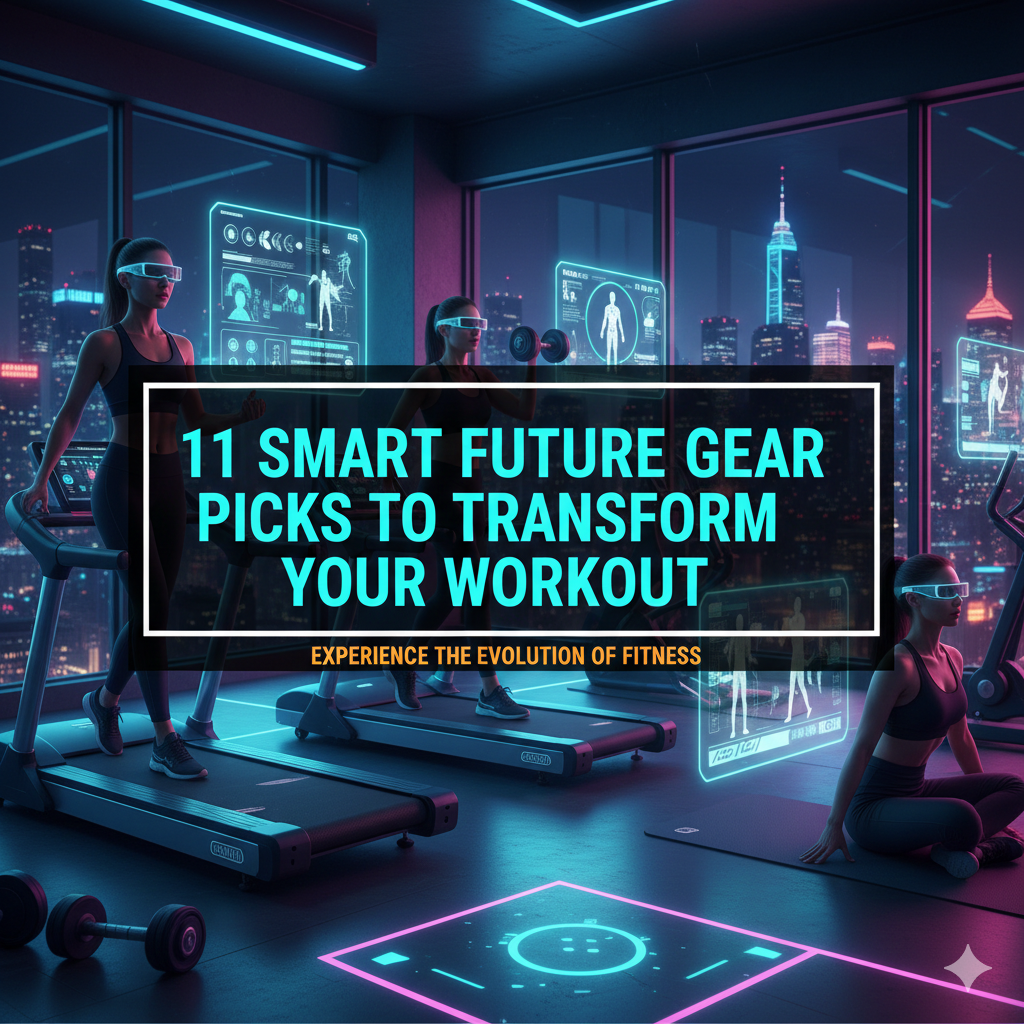
Imagine slipping on a pair of glasses and seeing a virtual personal trainer materialize in your living room. Or racing through your neighborhood while a digital coach floats next to you, recording every stride in real time.
This isn’t science fiction anymore. It’s where fitness is going — rapidly.
AR fitness future gear is where sweat meets technology. It is the point at which data, movement, and immersive experience meet to create an entirely different thing. And the best part? This stuff is already being built, tested, and in some instances — already delivered to you.
Here’s an overview of the 11 smartest AR fitness future gear innovations that are already on the market or coming soon. These tools are going to revolutionize the way you think about exercise, whether you’re a casual walker or an experienced athlete.
The Future of Fitness Lives Inside Augmented Reality
Traditional fitness has a serious flaw: the majority of people quit.
About half of all people who start a new fitness routine stop doing it within six months. Boredom, no feedback, and no sense of moving forward are the top reasons. AR fitness future gear attacks all three problems head-on.
Augmented reality overlays digital info — visuals, sound, and data — directly onto the real-world environment. Unlike virtual reality, you don’t find yourself stuck inside a headset and disconnected from the rest of the world. AR helps you stay in the moment, while also giving every rep, every step, and every breath a sense of purpose.
The fitness industry is taking notice. Industry analysts are forecasting that the global AR fitness market will exceed $6.4 billion by 2030. Major brands such as Nike, Apple, and Google are all racing to claim part of this space.
The revolution is already underway.
Why AR Fitness Future Gear Is Different From What Exists Today
AR fitness gear today is great. But the gear of tomorrow is on another level entirely.
Existing tools primarily report information — heart rate, calories burned, distance. Next-gen AR fitness gear will respond, adapt, and interact. It will observe your form and correct it in real time. It will adjust the difficulty of your workout based on your mood. It will connect you with people around the world in a shared AR space.
The evolution is from passive data to proactive intelligence.
Here’s how next-gen AR fitness future gear differs from what’s available today:
Real-time biomechanical feedback — Not just “you burned 300 calories” but “your left knee is buckling inward on squats — adjust your stance.”
AI-powered personalization — Workouts that adapt in real time based on how you perform, your recovery, and even your sleep log from the night before.
Social AR spaces — Training with friends who are in different cities yet still sharing the same virtual gym space.
Full-body haptics — Suits and wearables that give users a physical feeling of resistance, contact, and impact in AR environments.
These are not distant dreams. They are products currently under development — some already in beta testing.
The 11 Coolest AR Fitness Future Gear Innovations
1. Apple Vision Pro — The Game-Changing AR Fitness Headset
Status: Available Now | Price: $3,499
The Apple Vision Pro is the most powerful consumer AR headset ever made. Yes, the price is steep — but it also provides the clearest picture of where AR fitness is heading for everyone.
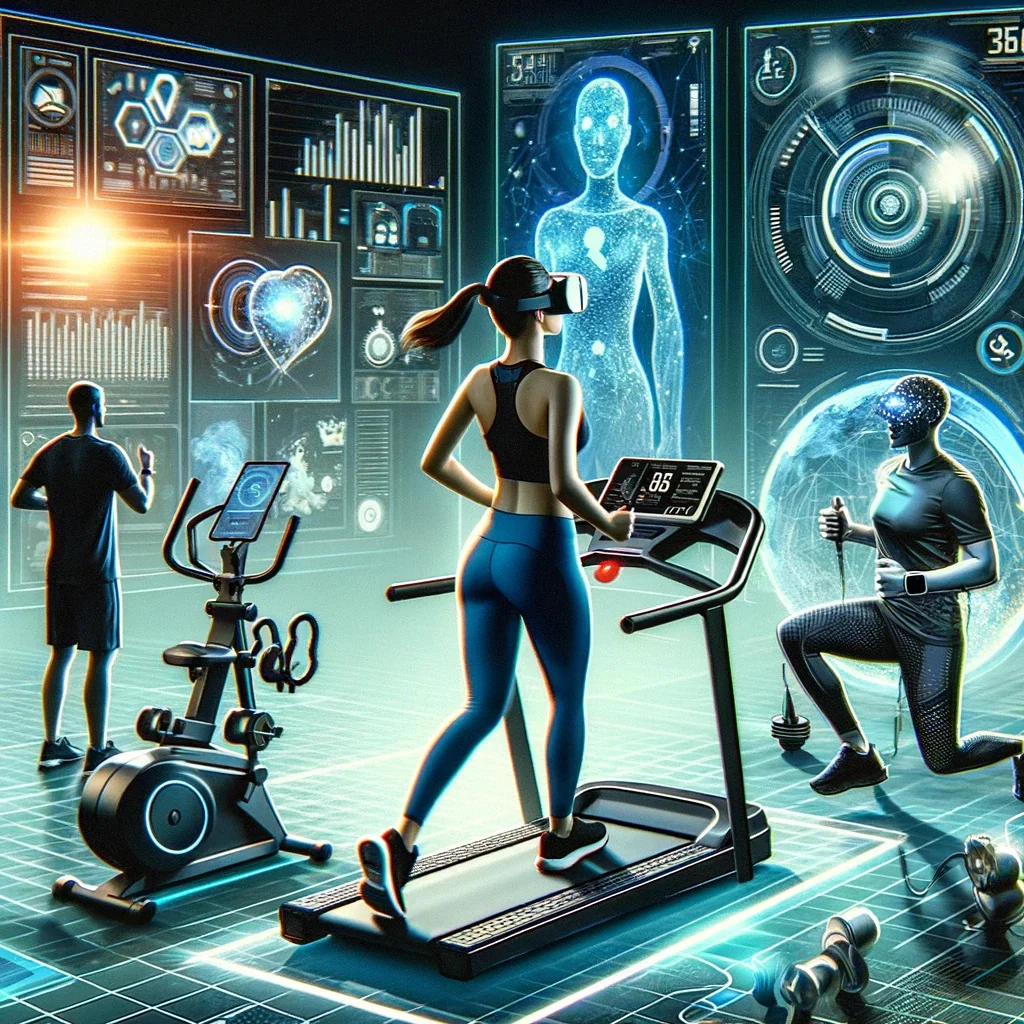
Vision Pro fitness apps provide fully immersive workout environments. You can pedal through simulated mountains, follow a 3D trainer hovering in your living room, or box against a virtual sparring partner that reacts to your punches.
No external sensors are required — the headset tracks your eyes, hands, and body position entirely on its own. This level of accuracy is what future AR fitness gear will eventually deliver across all price points.
Think of the Vision Pro as a blueprint. What it can do today will be within the capability of $200 headsets by 2028.
2. Meta Quest 3 Fitness Mode — Mixed Reality Workouts at Home
Status: Available Now | Price: $499
The Meta Quest 3 is arguably the most affordable mixed reality headset available today. And its fitness potential is huge.
Unlike pure VR, the Quest 3’s passthrough feature enables you to see your actual room while digital content is overlaid on top of it. This is what fitness apps like Supernatural, FitXR, and LES MILLS BODYCOMBAT capitalize on when they convert your own living room into a dynamic workout space.
Upcoming updates will enable the Quest 3 to scan your room, map out safe movement zones, and adapt workout intensity based on your available space. This is affordable AR fitness future gear that’s ready right now.
3. Smart AR Contact Lenses — The Display Vanishes Completely
Status: In Development | Expected: 2027–2029
This is where things get truly jaw-dropping.
Companies like Mojo Vision and InWith Corp are working on AR contact lenses that project information straight into your field of vision — no glasses, no headset, nothing visible whatsoever.
The implications for fitness are huge. Envision running with your pace, heart rate, and route sitting gently in the corner of your natural vision. No device. No distraction. Just pure, seamless data integration.
Early prototypes already exist. Clinical trials are ongoing. Within the next decade, AR contact lenses could be as common as regular corrective lenses.
This is perhaps the most revolutionary piece of AR fitness future gear on this entire list.
4. Form Swim Goggles 2 — AR Underwater, Right Now
Status: Available Now | Price: $249
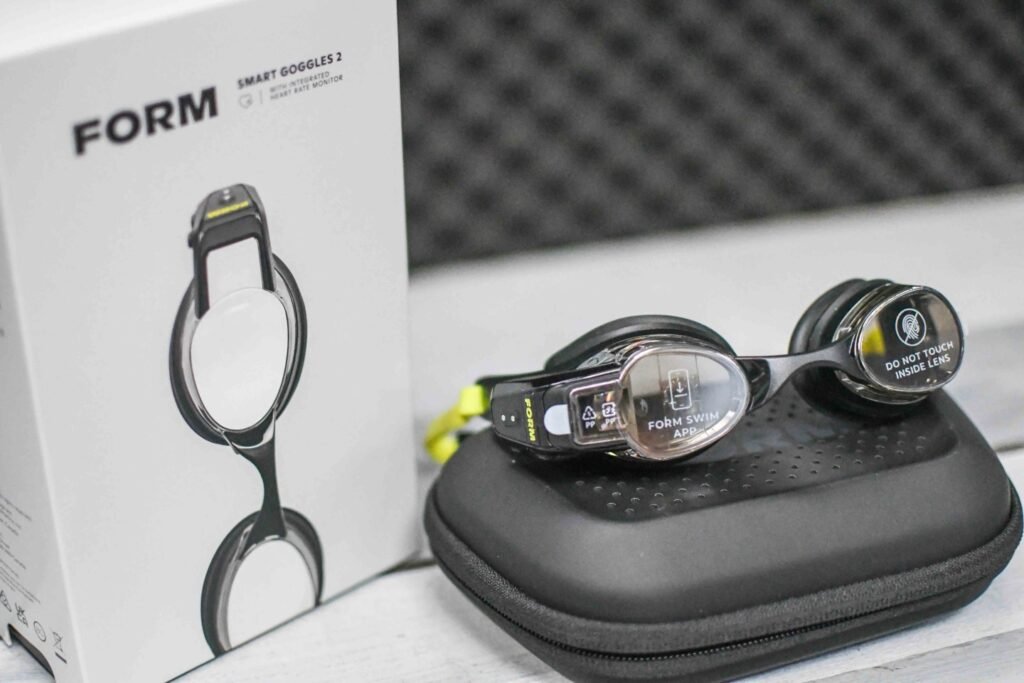
Most people forget that AR fitness future gear isn’t just for land-based workouts. Form Swim Goggles bring augmented reality to the swimming pool — and they do it remarkably well.
These goggles project real-time swim metrics directly onto the lens as you swim. Lap count, split times, stroke rate, pace per 100m — all hovering right in front of your eyes while you never stop moving.
The upcoming generation of Form goggles is expected to include AI coaching that identifies your stroke technique and offers live correction cues mid-swim. That’s the future coming to a pool near you.
5. Athos Smart Apparel + AR Integration — Clothes That Coach You
Status: Partially Available | AR Integration: In Development
Imagine if your workout shirt could tell you which muscles were firing — and which weren’t.
Athos smart apparel incorporates electromyography (EMG) sensors woven directly into the fabric. These sensors detect muscle activation in real time. Current versions send this data to a smartphone app.
The next phase — already in development — will project this muscle activation data as a real-time AR visualization onto your body. As you train, color-coded heat maps will be projected onto your actual muscles.
For strength athletes and rehabilitation patients alike, this is an absolute game-changer. It takes all the guesswork out of training.
6. Teslasuit — Full-Body Haptic Feedback for AR Fitness
Status: Enterprise Available | Consumer Version: In Development
The Teslasuit looks straight out of a sci-fi film. It’s a full-body suit embedded with haptic feedback technology, biometric sensors, and motion capture capabilities.
In AR fitness applications, the Teslasuit can simulate resistance, contact, and physical sensation. Imagine doing a virtual martial arts class and actually feeling the block when you defend a strike. Or performing physical therapy exercises with haptic feedback guiding your exact range of motion.
Sports teams and military training programs already use the enterprise version. A more consumer-friendly version is in development, with price targets reportedly between $500 and $800.
This is AR fitness future gear that will redefine what “working out at home” truly means.
7. Ultrahuman Ring AIR + AR Dashboard — Biometric Data Meets Augmented Display
Status: Ring Available Now ($349) | AR Dashboard: In Development
The Ultrahuman Ring AIR is one of the most advanced biometric tracking rings currently available. It measures sleep, HRV, body temperature, and activity with impressive accuracy — all from a slim titanium ring on your finger.
The exciting development for AR fitness future gear is Ultrahuman’s announced partnership with AR display manufacturers. The idea is a floating personal health dashboard — viewable through AR glasses — that shows all your biometric data in real time throughout your workouts.
You will no longer need to glance at a watch — your health data will simply exist in your field of view. Always there. Always current. Never interrupting.
For those looking to pair smart biometric tracking with a well-rounded approach to body health, AR Body Health is a valuable resource for optimizing your physical performance and recovery.
8. HoloLens 3 (Microsoft) — The Serious Athlete’s AR Fitness Coach
Status: HoloLens 2 Available | HoloLens 3: Expected 2026
Microsoft’s HoloLens line has been used in hospitals, factories, and military settings for years. Its fitness applications are only beginning to be explored — and the potential is extraordinary.
HoloLens can project full 3D holograms into your real environment. For fitness, developers are building apps that place a 3D coach right beside you — one that watches your movements, analyzes your form in real time, and provides verbal and visual corrections.
The upcoming HoloLens 3 is expected to be significantly lighter, more powerful, and more affordable. With broader consumer access, it could set the gold standard for AR form coaching at home.
9. NuroKor MiTouch + AR Recovery Mapping — Electrotherapy Gets a Visual Layer
Status: Device Available ($299) | AR Mapping: In Development
Recovery is half the fitness formula — and AR fitness future gear is working hard on that front too.
The NuroKor MiTouch device uses bioelectrical stimulation to support muscle recovery, pain relief, and performance enhancement. Professional athletes and sports medicine practitioners already rely on it.
The next version will include AR-guided recovery sessions. Through your phone or AR glasses, you will be able to see precisely where to place the device on your body, watch a live visualization of the electrical stimulation pathways, and receive real-time feedback on recovery progress.
It removes the guesswork from electrotherapy and makes recovery as data-driven as training itself. According to research published in the Journal of Sports Science & Medicine, bioelectrical stimulation has been shown to significantly accelerate muscle recovery when applied correctly and consistently.
10. Speedo Fastskin Phantom AR Swimsuit — Smart Fabric Meets Augmented Performance
Status: Concept/Early Development
Speedo has always led the field in competitive swimwear technology. Their next frontier involves embedding micro-sensors into their elite Fastskin suits that will connect with AR goggles.
The concept — still in very early development — would let swimmers see a live AR overlay of their hydrodynamic efficiency, stroke symmetry, and drag resistance as they swim. Mid-race adjustments to posture and technique could take place in real time.
It’s early days, but this represents one of the most specialized and exciting AR fitness future gear developments in competitive sport.
11. GymKit + ARKit Integration (Apple) — Every Machine Becomes a Smart AR Station
Status: GymKit Available | ARKit Integration: In Development
Apple’s GymKit already enables gym equipment — treadmills, bikes, rowers — to communicate directly with your Apple Watch. Calorie counts, pace, and distance sync automatically.
The next phase, reportedly in development, involves ARKit — Apple’s augmented reality platform. The vision is for every piece of gym equipment to become an AR station. Point your iPhone or Vision Pro at a treadmill and immediately see a virtual trainer demonstrating proper form. Watch your running gait analyzed and corrected in AR overlay.
That turns every gym in the world into a smart, AR-enhanced training environment — without replacing a single piece of hardware.
All 11 AR Fitness Future Gear Picks Side by Side
| Gear | Status | Price Range | Best For | AR Type |
|---|---|---|---|---|
| Apple Vision Pro | Available | $3,499 | Immersive training | Visual (headset) |
| Meta Quest 3 | Available | $499 | Home workouts | Mixed reality |
| Smart AR Contact Lenses | In Development | TBD | Data overlay | Visual (lens) |
| Form Swim Goggles 2 | Available | $249 | Swimming performance | Visual (goggles) |
| Athos Smart Apparel | Partial | TBD | Muscle activation training | Visual (phone/AR) |
| Teslasuit | Enterprise | $500–$800 est. | Full-body haptic training | Haptic + visual |
| Ultrahuman Ring AIR | Ring Available | $349+ | Biometric AR dashboard | Visual (glasses) |
| HoloLens 3 | Coming 2026 | TBD | Elite AR coaching | Visual (headset) |
| NuroKor MiTouch | Available | $299+ | AR-guided recovery | Visual (phone/AR) |
| Speedo Fastskin Phantom | Concept | TBD | Competitive swimming | Visual (goggles) |
| GymKit + ARKit | In Development | Free (Apple ecosystem) | Gym equipment coaching | Visual (phone/headset) |
3 Massive Changes That AR Fitness Future Gear Will Bring
From Counting Reps to Reading Movement
So far, fitness tracking has been primarily about numbers — steps, calories burned, heart rate. AR fitness future gear shifts the conversation to quality. Not how often you moved, but how well you moved. That shift alone will prevent millions of injuries every year.
From Solo Workouts to Shared AR Spaces
The biggest hurdle of home fitness might be the solitude. With future AR fitness gear, people will be able to train together — friends, coaches, and communities — all in the same digital space layered over each person’s real-world environment. Your friend in Tokyo and you in Karachi can run the same virtual trail together, in real time.
From Reactive to Predictive Coaching
Apps today tell you what happened. Tomorrow’s AR fitness gear will tell you what’s about to happen. AI models will proactively predict injury risk, performance plateaus, and recovery needs before they become problems. Coaching becomes truly proactive.
What the Experts Are Saying About AR Fitness Future Gear
AR’s role in fitness is being viewed with growing optimism within the sports science community. Researchers from the Human Performance Lab at the University of Calgary found that real-time visual feedback during exercise can increase performance output by up to 23%.
Physical therapists are especially excited about AR-directed rehabilitation. The ability to show patients exactly how to move — with visual cues overlaid on their own body — drastically cuts recovery time and decreases re-injury rates.
Nike’s Innovation Kitchen team has reportedly been working on AR shoe technology that analyzes gait and serves up personalized running form suggestions directly through AR glasses. Still unreleased, the project signals where major brands believe this technology is heading.
Across all types of experts, the consensus is clear: AR fitness future gear isn’t a fad. It’s the next platform for human performance.
Preparing for the AR Fitness Future — What You Can Do Right Now
You don’t have to wait until 2028 to benefit from AR fitness technology. Here’s how to get ahead of the trend today:
Build your Apple or Android ecosystem now. The next generation of AR fitness gear will integrate more fully with these platforms. The more your health data lives in one ecosystem, the more powerful your AR experience will be.
Try current AR fitness apps. Apps like Supernatural, Zwift, and Zombies, Run! are already AR-adjacent. Getting comfortable with this style of training now sets you up for a smooth transition to full AR.
Invest in a fitness tracker. Devices like the Ultrahuman Ring, Fitbit Charge 6, and Whoop band are collecting the kind of biometric data that AR overlays will use to personalize your experience.
Follow AR development news. Companies like Mojo Vision, Snap, and Meta regularly announce new AR fitness developments. Staying informed puts you first in line when these tools become available.
FAQs About AR Fitness Future Gear
Q: When will AR contact lenses for fitness be available to consumers? Based on current development timelines from companies like Mojo Vision and InWith Corp, consumer-ready AR contact lenses are expected between 2027 and 2029. Medical-grade variations may arrive slightly earlier for rehabilitation purposes.
Q: Is AR fitness future gear safe for long-term use? Current AR headsets have recommended usage limits of 30–60 minutes to reduce eye strain and fatigue. These limits will expand as display technology improves. AR contact lenses are being designed with all-day wear in mind, similar to traditional contacts.
Q: Will AR fitness future gear replace personal trainers? Not entirely. AR coaching tools will excel at correcting form and pacing in real time. However, human trainers deliver motivation, emotional support, and programming expertise that AI and AR cannot yet fully replicate. Most experts predict a hybrid model — AR tools and human coaches working together.
Q: Can AR fitness gear be used for injury rehabilitation? Yes — and this is one of the most exciting applications. AR-guided rehabilitation already exists in clinical settings. Tools like NuroKor’s AR recovery mapping and holographic PT guidance from HoloLens are making it more accessible. Expect significant growth in this area over the next five years.
Q: Does AR fitness future gear work outdoors? Absolutely. Many entries on this list — Form Swim Goggles, AR contact lenses, and audio AR earbuds — are designed for outdoor use. Outdoor AR fitness experiences come with unique benefits including GPS integration, real-world interaction, and location-based challenges.
Q: How much will AR fitness gear cost in the future? Prices will fall considerably as the technology matures. By 2028–2030, experts predict capable AR fitness headsets could be available in the $150–$300 range — the same trajectory smartwatches followed from $500+ to under $100 in a decade.
Q: Is there a privacy concern with AR fitness gear collecting so much body data? Yes, and it’s worth thinking about seriously. AR fitness devices gather highly sensitive data — biometrics, movement patterns, even eye tracking. Always review the privacy policies of any AR fitness platform you use, and look for devices that allow local data storage rather than cloud-only options.
The Finish Line — And Why It Keeps Moving
The truth about AR fitness future gear is that the finish line never stops moving. What was impossible a year ago becomes a prototype. What is a prototype becomes a product. What is a product becomes a standard.
The 11 innovations highlighted here give the clearest picture we have of what fitness technology has in store. Some are available right now. Some are months away. Others are still being built in labs by engineers who believe working out should feel like the most exciting thing you do all day.
And honestly? They’re not wrong.
The future of fitness is not about pushing harder or doing more. It’s about training smarter — with technology that sees what you can’t see, corrects what you can’t feel, and connects you with people and possibilities previously beyond your reach.
AR fitness future gear isn’t just coming. It’s already here — and it’s just getting started.