Exercise used to involve picking up a pair of dumbbells and staring into a mirror.
Not anymore.
Augmented reality is busting through the doors of the fitness world — and it’s not going anywhere. From virtual trainers appearing right in your living room to real-time movement feedback that used to cost thousands of dollars through lab testing, AR fitness is giving everyday people the kinds of tools that were once only available to elite athletes.
But this isn’t merely about nifty tech. These are legitimate, practical changes that are making workouts smarter, safer, more fun and more effective.
In this article, we are breaking down the 6 best AR fitness changes that are currently taking place. Whether you’re a weekend jogger, a serious gym-goer, or someone just trying to get off the couch and move — these changes will affect you.
Let’s get into it.
First, We Need to Set the Record Straight — What Is AR Fitness?
AR stands for augmented reality. It superimposes digital content over the real world.
VR (virtual reality) blocks out everything around you, but AR keeps you in your actual environment. It simply adds things to it — data, visuals, coaches, challenges and so on.
In fitness, this means:
- Having your heart rate hover in front of you when you run
- A virtual trainer in your living room, critiquing your squat form
- Racing against a digital version of yourself from last week’s session
- Chasing bright trail markers on an actual hiking path
Augmented reality fitness is not a pipe dream. It’s happening now, in gyms, homes, parks and studios around the world.
| Feature | Traditional Fitness | AR Fitness |
|---|---|---|
| Coaching | In-person or video | Real-time, in your environment |
| Feedback | After the workout | During the workout |
| Motivation | Self-driven | Interactive and gamified |
| Data | Post-session review | Live overlays |
| Cost of access | Varies | Increasingly affordable |
So here are the 6 best AR fitness changes you should know.
Change 1: We No Longer Guess What Is Wrong With Form — We Fix It in Real Time
For decades, one of fitness’s biggest challenges was this: the vast majority of individuals had no idea whether they were executing their exercises correctly.
Bad form leads to injury. Injury leads to missed workouts. Missed workouts can lead to giving up on the plan completely.
AR fitness has completely overhauled this.
How It Works
AR-driven systems now utilize your phone camera or wearable glasses to detect your body in real time. The software registers your skeleton, observes your movement and gives you immediate feedback on what to correct.
Does your knee cave in when you squat? Before you feel the strain, you’ll see a red highlight on your knee.
Elbows drifting during a push-up? A digital overlay shows you the correct position right beside your actual arms.
This type of feedback used to require a personal trainer standing beside you. Now, it fits in your pocket.
Why This Change Is Massive
Bad form is among the leading causes of self-injury in exercise. Fitness research shows that a significant portion of gym injuries are caused directly by improper movement patterns. AR form correction reduces that risk — particularly for beginners who are learning movements for the first time.
It also speeds up progress. When you do movements correctly from the very beginning, you get stronger and build muscle more efficiently. You don’t waste reps doing things the wrong way.
| Form Correction Method | Cost | Availability | Real-Time? |
|---|---|---|---|
| Personal trainer | $50–$150/session | Limited | Yes |
| Video self-review | Free | Always | No |
| AR fitness system | $0–$30/month | Always | Yes |
Change 2: Personal Training Is Now Accessible to Everyone Thanks to Virtual Coaches
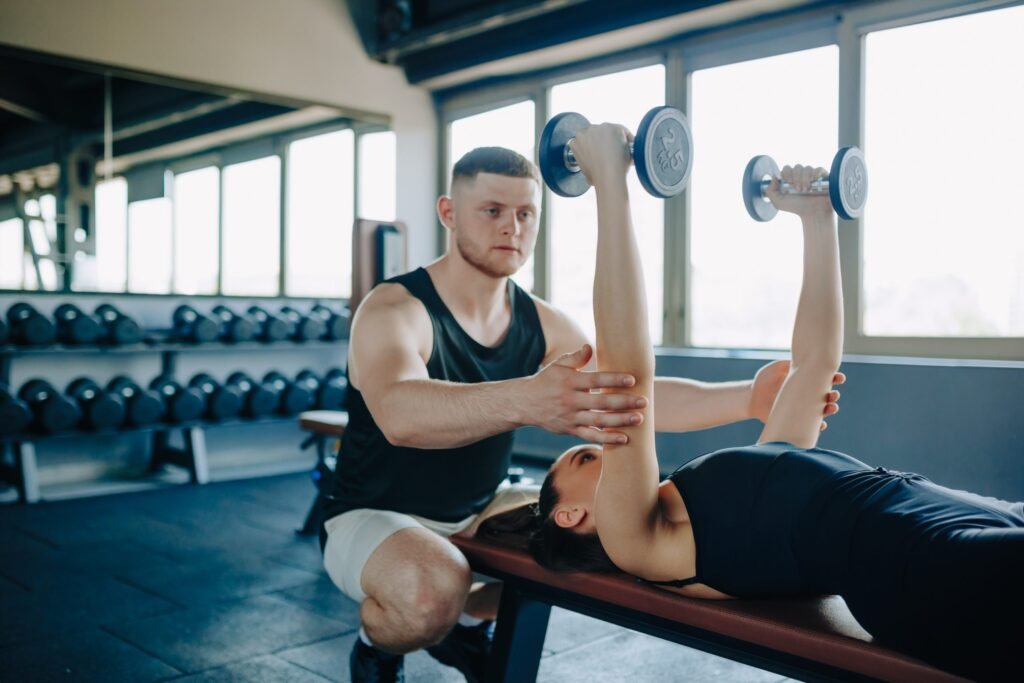
Hiring a personal trainer is costly. A single session can cost more than a week’s worth of groceries. For the majority of people, regular one-on-one coaching is not financially practical.
AR fitness has changed that equation completely.
A New Breed of Virtual AR Coach
Virtual AR coaches are digital trainers that show up in your real world. They demonstrate exercises. They count your reps. They motivate you. And they modify your program depending on how you perform.
Some platforms now even have coaches who look and move like actual human beings. They appear in your living room, your garage, or even the backyard — wherever you’re working out — and guide you through every single movement.
This is one of the most powerful of the 6 ultimate AR fitness changes because it democratizes access to quality coaching. A teenager living far from the nearest gym now has access to the same level of instruction as someone working out at a top-of-the-line facility in a big city.
What Virtual AR Coaches Can Do
- Show movements with full 3D visibility from all angles
- Automatically count reps and track sets
- Modify workout intensity depending on real-time performance
- Offer verbal cues and encouragement throughout the session
- Track your progress week after week and month after month
What They Can’t Do (Yet)
- Physically assist with hands-on corrections
- Completely replace the emotional bond of a human trainer
- Handle medical or injury-specific rehabilitation without professional supervision
Even so, for almost everyone doing general fitness training, virtual AR coaches are a realistic, working alternative to expensive in-person sessions.
Change 3: Exercise Has Been Gamified — and People Actually Want to Do It
Let’s be honest. Exercise is a bore for many people.
Treadmills are monotonous. The same weights in the same gym can become boring quickly. Motivation starts to slip, consistency falls apart and results plateau.
AR fitness through gamification has changed this — and the impact has been enormous.
Gamification in AR Fitness: What It Actually Is
Gamification means using game dynamics in non-gaming contexts. In terms of AR fitness, this looks like:
- Scoring points and earning badges for completing workouts
- Competing against friends or strangers in real-life fitness challenges
- Racing against a digital “ghost” version of your past self
- Unlocking new levels, characters or environments as your fitness improves
- Finishing workouts based on a storyline in which your movement drives a plot
One of the most well-known examples is AR running apps that turn your city into a game map. You may be picking up virtual objects along a route you’re actually running, or fighting for territory against other runners in your city.
Why This Shift Matters for Long-Term Fitness
Fitness results rely first and foremost on consistency. Anything that brings people back again and again wins.
Behavioral science has found over and over again that reward systems, progress monitoring and social competition are extremely effective at promoting exercise adherence. AR gamification achieves all three simultaneously.
| Motivation Factor | Traditional Gym | AR Gamified Fitness |
|---|---|---|
| Visibility of Progress | Moderate | High |
| Social Competition | Limited | Built-in |
| Reward System | None | Constant |
| Novelty and Variety | Low | High |
| Fun Factor | Varies | Consistently High |
If a workout feels like play, missing it feels like losing. This psychological shift is one of the most underrated of the 6 ultimate AR fitness changes.
Change 4: Outdoor Workouts Have Become Smarter and More Structured

Outdoor exercise has never gone out of style. Running, hiking, cycling, outdoor boot camps — there’s something about training in the great outdoors that people love.
But outdoor exercise has long lacked structure. No coach, no feedback, no programming. You go and hope for the best.
AR fitness has completely changed what’s possible outside the gym walls.
AR Takes Your Workout Outside
What if during your last run, a digital coach was running beside you — visible through your AR glasses — telling you to slow down, speed up or breathe differently?
Picture hiking a trail with AR markers appearing at intervals, showing your pace, elevation gain and calories burned — all without needing to look down at your phone.
Picture an outdoor circuit training session where AR stations pop up at spots around a park, walking you from one exercise to the next with video demonstrations floating in front of your eyes.
This is not future technology. All of these features exist on AR fitness platforms available right now.
Outdoor AR Fitness — A Genuine Game-Changer
For those focused on whole-body health and movement, AR Body Health highlights how pairing the mental benefits of outdoor exercise with precision AR coaching creates a uniquely powerful fitness experience — fresh air, natural environments and structured, data-driven training all rolled into one session.
According to research cited by the American Psychological Association, outdoor exercise consistently delivers extra mental health benefits compared to indoor workouts — lower stress hormone levels, improved mood and better cognitive function. AR fitness adds the structure and accountability that outdoor workouts have historically lacked.
| Workout Type | Structure | Data | Mental Health Boost | Coaching |
|---|---|---|---|---|
| Traditional outdoor | Low | Minimal | High | None |
| Indoor gym | High | Moderate | Moderate | Available |
| AR outdoor fitness | High | Real-time | High | Always-on |
Change 5: Recovery and Injury Prevention Are Now Built Into the Workout
Most people believe fitness is all about the work — the reps, the miles, the sweat.
The real results happen in the recovery. And injury prevention is what keeps you in the game long enough to see them.
AR fitness has made both of these areas significantly more accessible and more effective.
How AR Is Changing Recovery
AR platforms are now integrating recovery protocols directly into workout programs. After a training session, your AR system may walk you through:
- A cool-down routine tailored to the muscles you worked
- Breathwork exercises for nervous system regulation
- Mobility and stretching sequences displayed in your real space with movement cues
- Sleep and hydration reminders linked to your workout data
This is a major shift. Recovery was once an afterthought. AR fitness treats it as an essential, structured component of every session.
AR for Injury Prevention
Beyond form correction (covered in Change 1), AR systems are now being used to detect movement patterns that increase injury risk over time — even when individual reps look fine.
So if your left leg is consistently carrying a little less load than your right during squats across multiple sessions, the system flags this imbalance before it becomes a problem.
This type of longitudinal movement analysis traditionally required expensive lab equipment and sports scientists. AR fitness now puts it within reach of anyone with a smartphone or a pair of AR glasses.
The Bigger Picture on Recovery
The shift from reactive to proactive care is one of the most profound and underestimated of the 6 ultimate AR fitness changes. Rather than treating injuries after they happen, AR fitness systems are helping people avoid them altogether.
| Recovery Tool | Traditional | AR-Enhanced |
|---|---|---|
| Cool-down guidance | Generic | Personalized |
| Movement screening | Rare | Ongoing |
| Mobility work | Self-directed | Coached in real space |
| Injury risk detection | After injury | Proactive |
Change 6: Community and Social Fitness Has Gone Fully Immersive
Exercise has long had a social side. Group classes, running clubs, gym buddies — people perform better when they’re around others.
The problem? Life gets in the way. Schedules clash. Gyms are far. Not everyone lives close to a community of like-minded fitness enthusiasts.
AR fitness has found a way around this problem.
Exercising Together Without Leaving Home
AR fitness platforms can now enable you to train together in fully shared virtual environments superimposed on the physical world. You may be in your living room in Karachi while your training partner is in their garage in Toronto — but through AR, you’re both visible in each other’s space.
You can see them moving. You can hear them. You can compete against them. You can encourage them.
This isn’t simply screen-sharing or video calling in the middle of a workout. It’s true shared presence — probably the most electrifying of the 6 ultimate AR fitness changes, and one with massive implications for motivation and accountability.
Group Classes Have Gone Global
AR fitness has also revolutionized the group class model. You can now join live AR classes with hundreds of participants from around the world, instead of being limited to whatever classes are available at your local gym or studio.
The instructor appears in your actual environment. Your fellow participants appear as avatars or live figures. The energy of a real group class — the noise, the competition, the shared momentum — is replicated digitally.
Fitness industry reports show that social accountability is one of the most powerful indicators of long-term exercise adherence. AR community fitness brings that accountability to a global scale.
Building Real Habits Through a Virtual Community
The social aspect of AR fitness isn’t only fun. It’s functional. Communities built around AR fitness apps show higher completion rates, longer membership retention and better overall results than solo fitness programs.
| Social Fitness Factor | Traditional | AR Community Fitness |
|---|---|---|
| Geographic reach | Local | Global |
| Schedule flexibility | Limited | On-demand |
| Accountability | Peer pressure | Data + community |
| Instructor access | Local options only | World-class, global |
| Cost | $20–$150/month | $10–$30/month |
How Do These 6 Changes Work Together?
These aren’t 6 isolated improvements. They stack on top of each other.
Better form correction means safer workouts. Safer workouts mean more consistency. Gamification drives that consistency further. Community keeps you accountable. Recovery tools keep you healthy. And outdoor AR integration keeps things fresh and enjoyable.
Together, they create a fitness ecosystem that is more complete, more personalized and more sustainable than anything that existed five years ago.
| AR Fitness Change | Main Benefit | Who It Helps Most |
|---|---|---|
| Real-time form correction | Injury prevention | Beginners and self-trainers |
| Virtual AR coaching | Access to quality instruction | Budget-conscious fitness lovers |
| Gamification | Long-term motivation | Anyone low on consistency |
| Outdoor AR fitness | Structure and mental health | Outdoor enthusiasts |
| Recovery and prevention | Longevity and performance | All fitness levels |
| Social and community | Accountability and fun | People who train better in groups |
FAQs About AR Fitness Changes
Q: Do I have to spend money on expensive equipment to see these AR fitness changes? Not at all. Many of the changes described — gamification, virtual coaching, form correction — are available via smartphone apps at little or no cost. High-end AR glasses enhance the experience but are not necessary to begin.
Q: Are AR fitness apps suitable for older adults? Yes. Many AR fitness platforms are designed around accessibility. The guided coaching, form feedback and lower-impact program options make AR fitness especially appropriate for older adults who want structured, safe workouts at home.
Q: How does AR form correction compare to a real trainer? AR form correction technology is impressive but not perfect. It performs quite well for basic to intermediate movements. For highly technical lifts or sport-specific movements, a human coach still offers more nuanced feedback. Using both together is ideal.
Q: Can AR fitness replace a gym membership? For many people, yes. AR fitness offers coaching, community, structure and accountability that cover most of what a gym provides — minus the physical equipment. For those who require specific machines or heavy weights, a hybrid approach works best.
Q: Is AR fitness safe for injury recovery? With caution, yes. AR platforms with recovery protocols and movement screening capabilities can help support rehabilitation. But anyone recovering from a serious injury should still work with a qualified healthcare professional alongside any AR fitness routine.
Q: How will AR fitness continue to change in the next few years? Expect AR fitness to become cheaper, more personalized and more integrated with health data. AI advances will make virtual coaches even smarter. Better AR hardware will produce lighter and more comfortable devices. These 6 ultimate AR fitness changes are only the beginning.
Q: Is there any downside to relying heavily on AR fitness? Technology dependency is a real consideration. Disruptions can happen — an app shuts down or hardware breaks. Battery life, screen fatigue and depending too much on digital feedback rather than developing internal body awareness are all worth being mindful of. Balance is key.
Wrapping It All Up
These 6 ultimate AR fitness changes are not just trends. They are structural shifts in the way human beings connect with movement, health and community.
Real-time form correction has taken the guesswork out of training. Virtual coaching has made expert instruction accessible to everyone. Gamification has made consistency genuinely enjoyable. Outdoor AR has brought structure to open-air training. Recovery integration has made the full training cycle smarter. And social AR fitness has united communities around the world.
Each of these changes points in the same direction: fitness that is more personal, more informed, more fun and more sustainable for more people.
You don’t have to purchase every gadget under the sun. You don’t have to rework your entire routine overnight. Start small. Try one AR fitness tool. See how it feels. Let the technology serve your goals — not the other way around.
The future of fitness is augmented. And it’s already here.