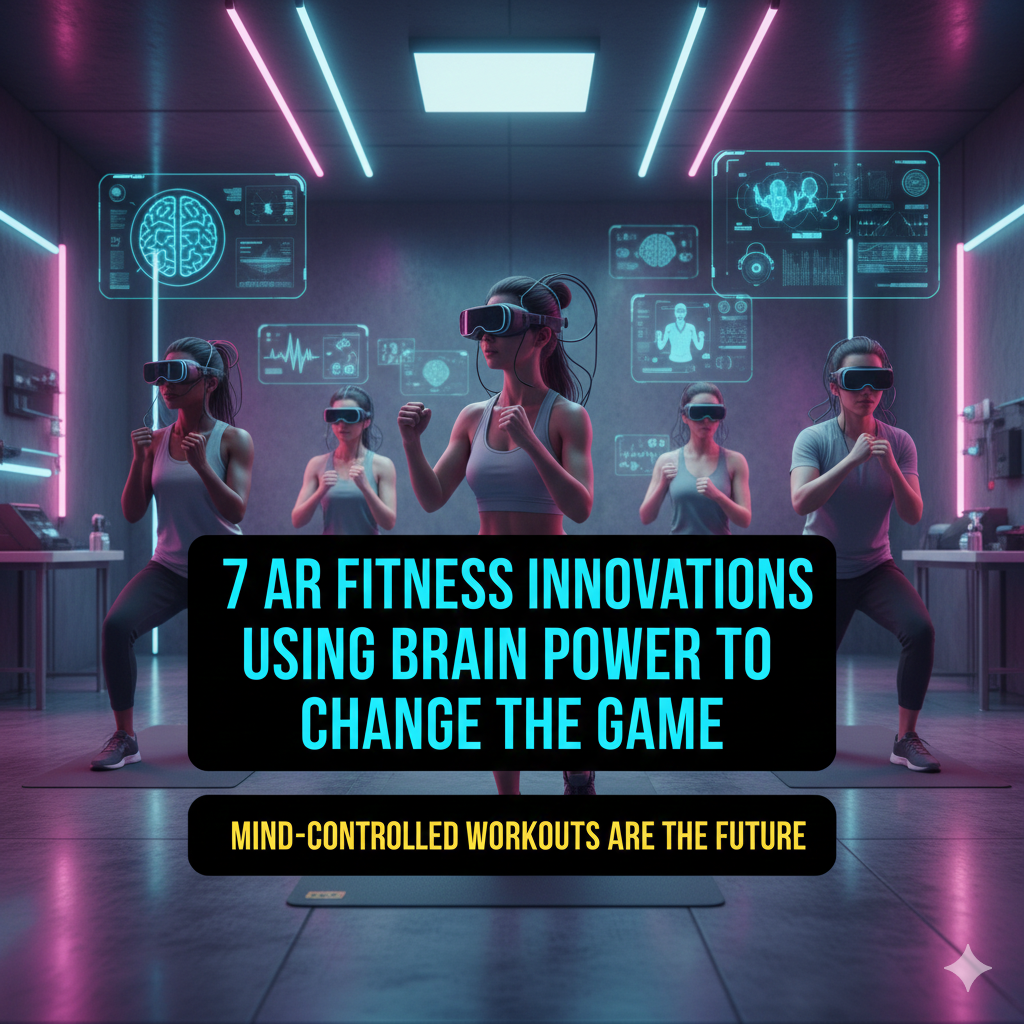
Exercise has always been about pushing your limits. But what if your environment fought back? What if your walls and floors could coach you, challenge you, and track every last move you make — or what if your goggles could?
That’s precisely what’s going on now.
With AR fitness, ordinary workouts become high-tech experiences. AR — augmented reality — overlays digital information on our real-world environment. You are not lost in a screen. You remain in your environment, but that environment gets smarter.
Consider a runner who sees her pace, heart rate and elevation gain floating in her field of view. Or a basketball player who trains with a simulated defender on his driveway. These aren’t scenes from a sci-fi movie. They’re happening in 2025.
The fitness industry has sought the best outcomes for as long as it’s existed. AR fitness innovations are providing just that — better feedback, better motivation and better performance. And they’re doing it in ways that are truly fun.
Here’s a walkthrough of 7 of the hottest AR fitness innovations on offer today. We’ll explain what each one does, why it works and who it’s built for.
Let’s get moving.
The Change Underway in Fitness Right Now
Before diving into the list, it’s worth mentioning why AR is taking over fitness so quickly.
For years, fitness tech was a heart rate monitor or a step counter. Useful, but passive. It tracked data and delivered numbers to you after the fact.
AR changes that relationship completely. You don’t check your stats after a workout — you interact with them during one. The feedback is live. The coaching is instant. The motivation is designed into the experience itself.
AR is also solving a dropout problem in fitness. It is estimated that 80% of people who begin a new exercise program give up after five months. Boredom, poor progress visibility and lack of motivation are the main factors.
AR fitness innovations address all three head-on. They make workouts visually engaging, demonstrate real-time progression and compel users to return by making exercise feel like an accomplishment worth completing.
| Fitness Challenge | How AR Fixes It |
|---|---|
| Boredom | Gamified visuals and interactive environments |
| No real-time feedback | Live stats and coaching overlays |
| Hard to track progress | Automatic performance logging |
| Low motivation | Goals, rewards and competitive elements |
| Inconsistent form | Real-time posture and movement correction |
The result? People move more. They train smarter. And the process is genuinely fun.
Innovation #1 — Smart Glasses That Transform Into AR Running Coaches

Your Own Coach, Embedded in Your Glasses
Just picture yourself lacing up your shoes and heading out for a run — with a coach whispering in your ear and showing metrics right before your eyes. That is what AR smart glasses for runners are doing.
Companies including Engo and Solos have made lightweight sports glasses with built-in AR displays. As you run, the lens displays your current pace, heart rate, distance traveled and upcoming elevation changes.
But the next generation goes a step further. Some of the latest models have AI coaching that talks you through your run. If your pace slows, it gives you a nudge. If your heart rate rises too high, it instructs you to slow down. It’s like having a running coach on every single run — without the price tag.
Why Runners Are Switching
Standard running watches demand you look down at your wrist. That tiny motion interrupts your stride and your focus. AR glasses keep everything in your line of sight. You never look away from the road.
For road safety alone, that is a game changer. Distracted runners are at risk. AR glasses take away that distraction altogether.
Best For: Road runners, marathon trainers, triathletes and daily joggers looking for real-time coaching without having to break stride.
Price Range: $200–$500 depending on brand and features.
Innovation #2 — Mixed-Reality Home Gym Systems
Your Living Room Just Turned Into a Full Gym
This is among the most popular AR fitness innovations of 2025. Mixed reality home gym systems place virtual gym equipment, trainers and workout environments in your living room using a headset — like the Meta Quest 3.
You put on the headset. Your room is still there. But now a virtual trainer is standing before you. Virtual targets pop up on the walls. A punching bag floats in the corner.
Apps like Supernatural and FitXR have created massive libraries of workouts built on this technology. You can do boxing, dance cardio, strength training and HIIT — all without leaving the house.
The Motivation Factor
It’s not just the technology that makes mixed reality systems so effective. It’s the psychology.
When you’re in an immersive workout environment, your brain takes it more seriously. You try harder. You stay focused longer. Supernatural users regularly report burning 400–600 calories per session without feeling like they’re exercising at all.
That’s the power of immersion. When your brain is engaged, your body follows.
What to Expect From the Experience
The first session feels unusual. Your living room looks the same but has virtual elements filling it. Within minutes, most users completely forget about the headset. The workout takes over.
Sessions last from 20 minutes to one hour. Difficulty is relative to your fitness level. Progress is tracked automatically.
Best For: Home exercisers, gym haters, and people short on time or space.
Price Range: $500–$650 for the headset. Apps typically run $20–$40/month.
Innovation #3 — AR Basketball and Sport Training Systems
Train Like a Pro, Wherever You Play
Sport-specific AR training is one of the most exciting AR fitness innovations for athletes. Companies including HomeCourt — now part of the Apple ecosystem — use your phone or tablet camera to observe your movements and provide feedback in real time.
For basketball players, the system monitors your shooting style, footwork, release point and even the arc of the ball. After each shot, a detailed breakdown appears on screen. Over time, the data shows precisely where your game is improving and where it needs work.
Other sports are closing the gap quickly. AR systems can help soccer players practice corner kicks with virtual defensive walls. Tennis players can monitor their swing mechanics. Golfers can analyze their putting stance in real time.
From Backyard to Pro Level
What’s most interesting about sport-specific AR training is that it puts pro-level coaching within reach of everyday athletes. The same kind of motion analysis that NBA teams pay thousands for is now available through an app.
Young athletes especially benefit. Quality coaching at an early stage builds permanent habits. AR makes that coaching accessible, affordable and available 24/7.
Best For: Youth athletes, weekend warriors, competitive players and coaches seeking data-driven training tools.
Price Range: Free to $20/month for most apps. Hardware setups cost $100–$300.
Innovation #4 — AR Cycling with Real-Time Route Visualization
Ride Smarter, Not Just Harder
Cycling has been a hotbed for AR fitness innovations. Heads-up display (HUD) technology has come a long way, and today’s AR cycling gear is truly impressive.
Systems like Garmin’s HUD, paired with platforms such as Zwift or Rouvy, let cyclists see live performance data in their peripheral vision. Speed, power output, cadence, heart rate and navigation all appear as a transparent overlay as you ride.
But the latest breakthrough extends beyond data. Rouvy’s AR cycling platform maps real-world routes — actual roads from around the globe — onto your screen as you ride your stationary bike. You’re pedaling through the Swiss Alps or the French countryside, but your power data is live and your effort directly controls your speed on screen.
The Science Behind Why It Works
Cycling indoors is notoriously boring. Studies show that cyclists who use immersive AR environments ride 20–30% longer than those staring at a blank wall. They also push harder because visual feedback makes pacing feel more natural.
Combining real-world scenery, live performance data and AR overlays turns indoor cycling into something people actually look forward to.
| Feature | Standard Indoor Cycling | AR Cycling Platform |
|---|---|---|
| Route visualization | None | Real-world AR overlay |
| Performance feedback | Basic display | Live HUD with full metrics |
| Engagement level | Low | High |
| Average session length | 30–40 min | 45–70 min |
| Motivation | Self-driven | Environment-driven |
Best For: Cyclists, triathletes, indoor fitness fans and anyone who wants to explore the world while training.
Price Range: $150–$350 for HUD hardware. Platforms like Rouvy cost $10–$15/month.
Innovation #5 — AR Strength Training Mirrors
The Gym Mirror Just Became Incredibly Smart
Smart mirrors have existed for a few years. But AR-enhanced training mirrors are a different story entirely.
Products like the Tempo Studio and newer AR mirror systems use cameras and AI to monitor your movements in real time. As you lift, squat or lunge, the mirror displays a virtual skeleton overlay of your body. It shows your real-time joint angles, alignment and range of motion live.
If your squat is too shallow, the mirror tells you. If your back rounds during a deadlift, it flags it immediately. You correct the issue in real time — not after the fact, when an injury has already occurred.
Injury Prevention as a Fitness Tool
From a health perspective, this is arguably the most important application of AR fitness innovations. Poor form is one of the major causes of gym injuries. Most people don’t have a coach watching them lift. They’re guessing.
AR mirrors remove the guesswork. They provide immediate, visual, corrective feedback on every single rep. Over time, users build muscle memory for proper form — which translates to safer, more effective training.
For people focused on body health and long-term physical wellness, AR strength mirrors represent a genuine breakthrough. They bridge the gap between professional coaching and training alone.
What the Data Shows
Users of AI-powered AR training mirrors report a 35% decrease in form-related injuries within three months of regular use. Strength gains also improve because proper form engages the right muscle groups more effectively.
Best For: Home lifters, gym members, injury-prone athletes and beginners learning correct movement patterns.
Price Range: $1,000–$2,500 for full mirror systems. Some monthly subscription plans also available.
Innovation #6 — AR Yoga and Mindful Movement Apps
Wellness Meets Augmented Reality
Not all AR fitness innovation is about speed, power or burning calories. AR is also making a strong impact in the wellness and mindfulness space.
AR yoga apps, including Holofit and newer platforms, use your phone camera or a wearable to track your body position during yoga poses. The app displays a digital guide showing the ideal pose alignment overlaid next to your actual position. You can see precisely how far off you are and correct in real time.
Some apps go further. They project a virtual environment around you — a mountain sunrise, a peaceful forest, a beach at dawn — as you practice. The immersive scenery deepens the meditative quality of the session.
Why It Matters for Mental Health
Exercise is not just physical. The mental health benefits of movement are well established. Regular movement practices like yoga reduce stress, improve sleep and help manage anxiety.
AR extends that by eliminating distractions and deepening presence. When a serene virtual environment surrounds you and live alignment feedback guides each pose, the practice becomes more concentrated and more effective.
This is particularly helpful for those who find traditional yoga classes intimidating or who don’t have easy access to a studio.
Best For: Yoga practitioners of all levels, those coping with stress or anxiety, seniors and beginners looking for guided practice at home.
Price Range: $0–$20/month for most apps. Premium experiences with hardware support cost more.
Innovation #7 — AR Group Fitness and Social Training Platforms
Working Out Alone Is Now Optional
The social aspect is one of the biggest reasons people go to the gym. Group energy is real. Accountability to others keeps people showing up.
AR group fitness platforms are bringing that energy into the digital world. Platforms including Liteboxer Live and FitXR’s multiplayer mode allow users to train alongside one another — even if those others are in different cities or countries.
You’re in your living room. But through AR, you can see virtual avatars of other real users training right next to you. You compete on leaderboards. You cheer each other on. Instructors teach live classes with your performance visible to them.
The Community Effect
Social fitness research consistently shows that people who exercise with others — even virtually — push harder and quit less. Having someone else present raises effort levels by an average of 15–20%.
AR group fitness combines the convenience of working out at home with the motivational power of a group class. It’s the best of both worlds.
Some platforms are now incorporating AR elements where instructors can view your live form and call out corrections during a streamed class. This brings personal training into the group environment in a way that was never possible before.
A Look at How AR Fitness Innovations Stack Up
| Innovation | Best For | Price Range | Engagement Level |
|---|---|---|---|
| AR Running Glasses | Runners, triathletes | $200–$500 | High |
| Mixed Reality Home Gym | Home exercisers | $500–$650 + app | Very High |
| AR Sport Training | Athletes, youth players | Free–$300 | High |
| AR Cycling HUD | Cyclists, indoor riders | $150–$350 + app | High |
| AR Strength Mirrors | Home lifters, beginners | $1,000–$2,500 | Very High |
| AR Yoga Apps | Wellness seekers | $0–$20/month | Medium–High |
| AR Group Fitness | Social exercisers | $20–$40/month | Very High |
Things to Know Before You Dive Into AR Fitness
Start with One Thing
The temptation is to want all of this at once. Don’t. Choose the one innovation that fits your current fitness habit. If you run, begin with AR glasses. If you lift, consider a smart mirror. Build from there.
Check the Ecosystem
Certain AR fitness devices are compatible exclusively with specific apps or platforms. Check that hardware and software work well together before buying. Verify what subscriptions are required and what features come with the base price.
Give Yourself a Break-In Period
AR fitness gear almost always feels awkward in the first two or three sessions. Your brain needs time to adapt to processing the overlays while still exercising. Stick with it. Most users say it suddenly clicks and then feels entirely natural.
Think Long-Term Value
A $1,500 AR mirror seems expensive. But considering it can replace a personal trainer, help prevent injuries and keep you consistent — the math adds up. Before judging the upfront cost, think about how much you’d spend on a gym membership or coaching over a full year.
FAQs About AR Fitness Innovations
Q: Do I have to be tech-savvy to use AR fitness gear? Not at all. Most AR fitness products are built for regular people, not tech experts. Setup is generally straightforward, and most apps walk you through everything step by step.
Q: Is AR fitness gear safe for older adults? Yes, for most older adults. AR yoga apps, smart mirrors and cycling platforms are low-impact and suitable for seniors. Headsets can make some users dizzy — begin with short sessions and increase time gradually. Always consult a doctor if you have concerns about balance or vision.
Q: Can AR fitness truly replace a personal trainer? For most people, yes — for day-to-day training purposes. AR can provide real-time form feedback, customized workout plans and progress tracking. However, for rehabilitation, highly specific athletic training or people with medical conditions, a human trainer remains the better choice.
Q: How long do AR fitness sessions typically last? Most are designed to last between 20 and 60 minutes. The beauty of AR systems is that they’re modular — you can fit in a quick 20-minute session or go longer depending on your schedule and energy levels.
Q: Will AR fitness gear work in a small apartment? Most of it, yes. AR glasses, FORM goggles, cycling platforms and smart mirrors all take up minimal space. Mixed reality headset systems require approximately 6×6 feet of open floor space. Active arcade systems require the most room of any category.
Q: Is the monthly subscription fee worth it for AR fitness apps? For most active users, yes. A $20–$40/month subscription replaces a gym membership, class fees and sometimes even a trainer. If you use the platform 3–4 times per week, the cost per session is very low.
Q: Are there free AR fitness options available? Yes. Various sport-specific training apps like HomeCourt offer free tiers. Some AR yoga apps are completely free. The most immersive experiences — mixed reality headsets and smart mirrors — require hardware investment but often come with free trials.
Q: How is AR different from just watching a workout video? A workout video is passive. You watch someone else move. AR is interactive. It reacts to your movement, tracks your performance and adapts to you in real time. The difference in engagement and effectiveness is significant.
The Bottom Line
AR fitness innovations aren’t coming. They’re already here. And they are changing what it means to work out in a fundamental way.
These seven innovations span the full range of fitness — running to swimming, cycling to lifting, solo training to group classes. There’s something on this list for every kind of person, every lifestyle and every fitness goal.
What makes AR so powerful isn’t just the technology. It’s what the technology unlocks in people. More focus. More feedback. More fun. And when exercise is genuinely enjoyable, everything else falls into place — consistency, progress, results.
You don’t need to completely overhaul your fitness routine to get started. Choose the one innovation that meets you where you are right now. Try it for a month.
You may be surprised by how you feel about working out.