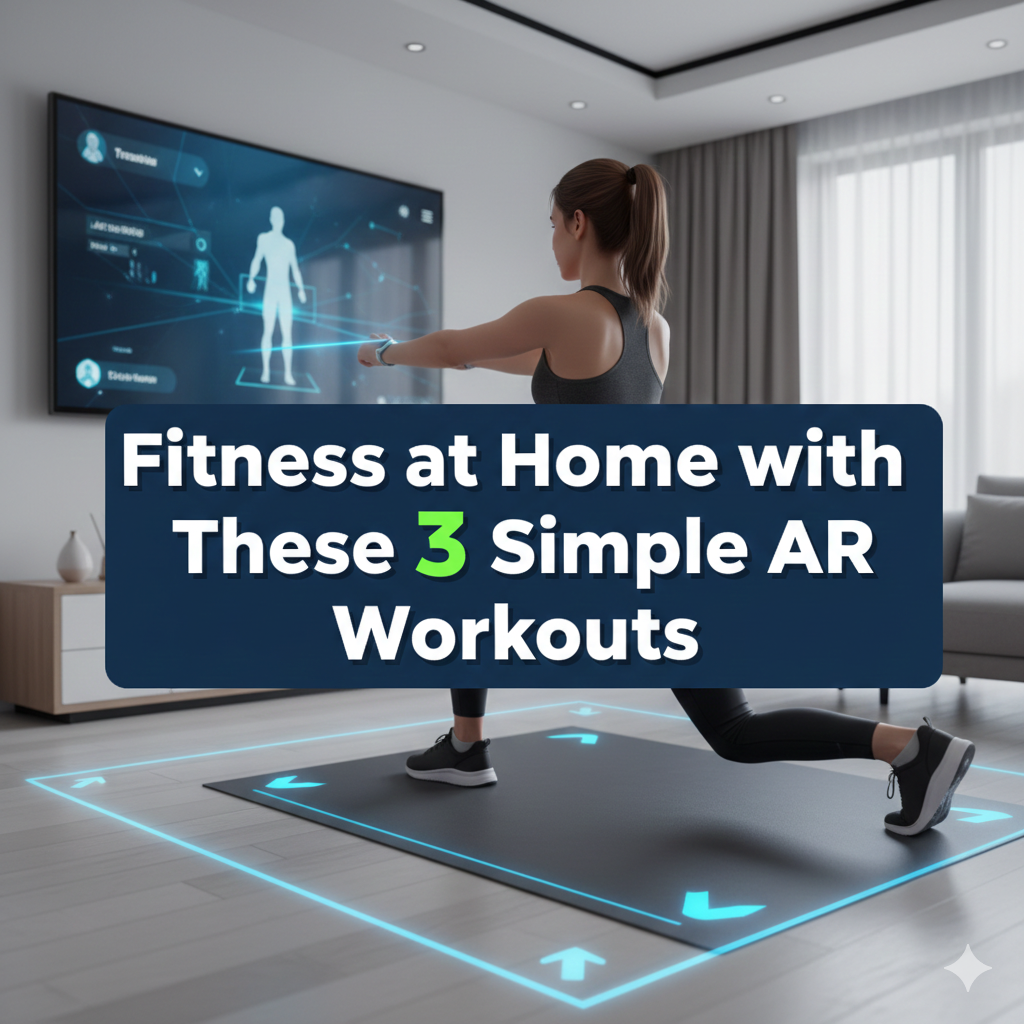
Learn How Augmented Reality Can Turn Your Living Room Into the Ultimate Fitness Studio
Have you ever wanted exercise to feel more like a video game? What if your living room could become a boxing ring, a yoga studio or a dance floor — without leaving home?
That’s precisely what AR fitness enables.
Augmented reality (AR) is not exclusively for gaming or Snapchat filters anymore. It’s now one of the hottest trends in health and wellness. AR fitness apps and devices overlay digital graphics, coaches and challenges directly onto your real-world environment via your phone or smart glasses.
The result? Exercises that are genuinely enjoyable to do.
In this article, you’ll find out 3 simple AR fitness home workouts that you can get going with today, how they work, what equipment you might need, and why millions have stopped their lame gym sessions for this futuristic way to move.
Let’s get into it.
What Is AR Fitness And Why Is Everyone Talking About It?
Before hurling yourself into the workout, let’s briefly go over what AR fitness actually is.
AR stands for augmented reality. Unlike virtual reality (VR), which puts you inside a fully digital universe, AR adds digital elements on top of the real world around you. You can still see your couch, your floor, your dog — but now you also see a glowing target hovering in front of you or a virtual trainer standing in your kitchen modeling the next move.
AR fitness uses this technology to make working out more entertaining. You may punch floating orbs to exercise your arms, squat to avoid digital barriers, or follow a holographic trainer through a full-body circuit.
The technology has become cheaper and easier every year. Most AR workouts can be run on a standard smartphone. Others use devices such as the Apple Vision Pro or AR-enabled workout apps that rely on your camera.
So, Why Is AR Fitness Expanding Rapidly?
The numbers tell a straightforward story.
| Year | Global AR Fitness Market Value |
|---|---|
| 2021 | $2.3 Billion |
| 2022 | $3.1 Billion |
| 2023 | $4.7 Billion |
| 2025 | $7.2 Billion (Estimated) |
| 2027 | $11.4 Billion (Estimated) |
Source: Industry market research estimates
People are sick of looking at a wall while doing pushups. That problem is solved in AR fitness by making every rep seem purposeful.
What You’ll Need to Get Started With AR Fitness at Home
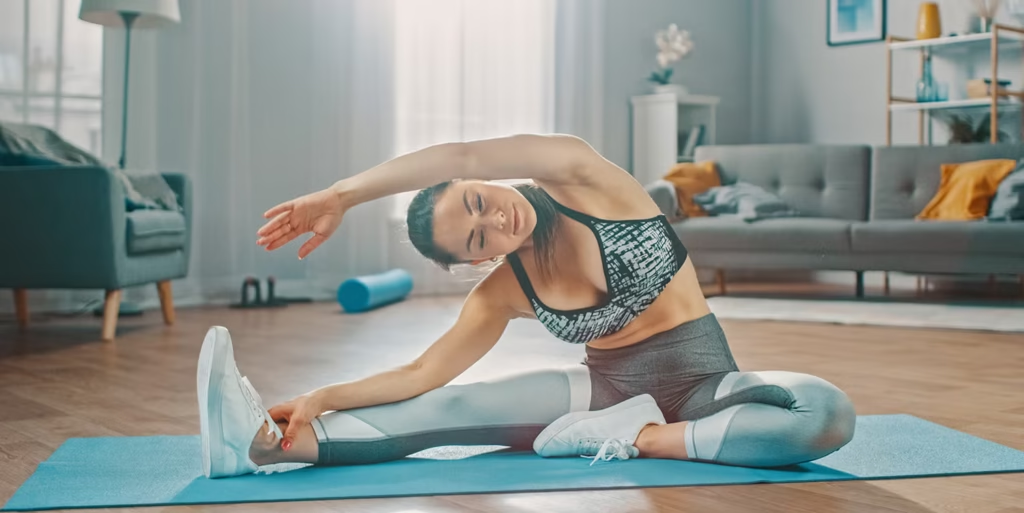
The good news is you don’t need a garage full of pricey equipment. Most AR fitness setups are straightforward and accessible.
Here’s a basic checklist:
Must-Haves:
- A smartphone (mid-range or better iPhone or Android)
- Room to stretch a bit (at least 6×6 feet minimum)
- Comfortable workout clothes and shoes
Optional But Helpful:
- A tablet for a bigger screen
- Bluetooth earbuds
- A yoga mat for doing workouts on the floor
- AR glasses or headset (for a more immersive experience)
Some apps are completely free. Others have subscriptions that run $5 and up to $20 a month. We’ll note which option works for each workout below.
Workout #1 — AR Boxing: A Goal-Setting Workout
Why Boxing Is the Ideal AR Sport

Boxing is a popular AR fitness activity — and it’s not hard to figure out why. The sport is already structured around hitting targets, moving, and reacting quickly. Using AR technology, it feels like those targets really hover in front of you.
You don’t have to use an actual punching bag. You can do it with or without gloves (some people wear light ones for added resistance). All you need is your phone, a bit of room and the motivation to throw some punches.
AR boxing workouts typically target:
- Shoulders and arms — jabbing, crossing, hooking and upper cutting all get these muscles working
- Core — twisting your torso with each punch works your abs the whole time
- Legs — good stance and footwork exercises keep your lower body engaged throughout
- Cardio — 20 minutes of boxing may burn 200–350 calories
How an AR Boxing Session Works
Open an AR boxing app, and your phone’s camera maps the space in front of you. The app then displays floating targets — normally colored orbs or glowing pads — at various heights and angles.
A timer counts down. Targets appear. You punch them.
Sounds easy, but it quickly ramps up. The speed picks up. The combinations get more complex. Your heart rate climbs. Suddenly you’re dripping with sweat and having the time of your life.
Top AR Boxing Apps to Try
| App Name | Platform | Cost | Best For |
|---|---|---|---|
| FitXR | Meta Quest, App | $9.99/month | Full boxing workouts |
| Supernatural | Meta Quest | $19.99/month | Music-driven punching |
| BoxVR | PlayStation VR, PC | One-time purchase | Structured training |
| AR Boxing (various) | iOS/Android | Free–$4.99 | Casual home sessions |
A Simple 20-Minute AR Boxing Routine
Try this beginner-friendly structure:
Warm-Up (3 minutes) Walk in place, roll your shoulders and loosen your wrists.
Round 1 — Basic Jabs (4 minutes) Use only your lead hand to follow the on-screen targets. Keep your feet moving.
Round 2 — Jab-Cross Combos (4 minutes) Two punches to each target. Twist your hips with every cross.
Round 3 — Full Combos (5 minutes) Combine jabs, crosses, hooks and uppercuts as the app sends combinations your way.
Cool Down (4 minutes) Shake out your arms. Gently stretch your shoulders, chest and neck.
Do this three times a week and you’ll see gains in your arm strength, endurance and reaction time within 30 days. If you’re looking to complement your AR workouts with expert wellness guidance, AR Body Health offers great resources to help you build a stronger, healthier body from home.
Workout #2 — AR Yoga and Stretching: Align Your Body and Mind in a Digital Space
Yoga Does Not Have to Be Boring Anymore
Many people want to practice yoga but get demotivated. Gazing at a video on a laptop while attempting to maintain a warrior pose is not particularly inspiring.
AR yoga changes that.
With AR yoga apps, a digital instructor appears in your real room — on your real floor — and guides you through each pose. Some apps actually use your phone’s camera to track your body and provide real-time feedback on form.
Did your knee pull out of alignment during a lunge? The app will tell you. Are you holding your breath? A soft audio cue snaps you back in focus.
This type of interactive coaching was once available only to those who could afford private yoga instructors. Now it’s at your fingertips, for what you’d pay for a streaming subscription.
Physical Benefits of AR Yoga at Home
Yoga may seem relaxing, but it builds genuine strength and flexibility gradually. Here’s what regular AR yoga practice can do for your body:
Flexibility: Stretching regularly lengthens tight muscles and increases your range of motion. Most people notice a difference within 2–3 weeks.
Balance: Maintaining yoga postures requires work from the small stabilizing muscles around your ankles, knees and hips — muscles that usually don’t get a lot of attention in a traditional gym workout.
Core Strength: Almost every posture encourages you to engage the muscles of your core for alignment and stability. This deepens abdominal strength with no crunches.
Mental Health: Study after study indicates yoga lowers levels of cortisol (the stress hormone) and elevates mood. AR yoga incorporates another level of engagement that keeps your mind totally present.
A Beginner’s 25-Minute AR Yoga Flow
This routine is great for morning energy or to wind down in the evening.
Start-Up Breathing (2 minutes) Sit cross-legged. Listen to the AR instructor’s breath cues — inhale for 4 counts, hold for 2 and exhale for 6. Repeat 6 times.
Warm-Up Flow (5 minutes) Cat-cow stretches, child’s pose and gentle spinal twists. Your AR guide demonstrates each movement in real-time, next to you.
Standing Sequence (10 minutes) Mountain pose → forward fold → warrior one → warrior two → triangle pose. Each should be held for 30–45 seconds on each side. The AR coach calibrates the visual demonstrations to your pace.
Floor Sequence (5 minutes) Seated forward fold, butterfly pose, supine spinal twist, legs up the wall.
Final Relaxation (3 minutes) Lie down in savasana (corpse pose). The AR environment may transition to a soothing setting — such as a forest or ocean — which could help you relax fully.
Apps to Try for AR Yoga
- MOXIE — uses AR-led movement sessions
- Nadi X — pairs smart clothing with augmented reality guidance for yoga poses
- Holofit — provides guided movement and mindfulness in AR settings
- Apple Fitness+ — adds AR elements on Apple Watch-connected workouts
Workout #3 — AR Dance Cardio: Sweat While Having Fun
The Exercise That Doesn’t Feel Like an Exercise
Here’s a little secret about dance cardio: it burns serious calories. Depending on your intensity and body weight, a 30-minute dance cardio session can burn approximately 250–400 calories.
The problem? Most people feel awkward dancing alone in the living room.
AR dance fitness fixes that instantly.
When you launch an AR dance workout, the technology inserts virtual dancers or animated guides into your environment. They show you moves. They mirror your energy. Some apps put you on a virtual stage with other real users around the world.
All of a sudden, dancing alone in your living room seems much cooler.
Which Muscles Does Dance Cardio Work?
Dance cardio is a full-body workout disguised as fun.
| Body Area | Dance Moves That Target It |
|---|---|
| Legs & Glutes | Squats, lunges, kicks, jumps |
| Core | Hip circles, twists, lateral movements |
| Arms & Shoulders | Arm choreography, reaches, punches |
| Cardiovascular | Continuously moving keeps heart rate up |
| Coordination | Learning and repeating choreography improves the mind-body connection |
How AR Dance Fitness Apps Work
At least two systems are widely used in AR dance apps.
Camera Tracking: The front or rear camera on your phone observes what you’re doing and rates you based on how closely you follow the choreography presented on screen. It’s sort of like Just Dance, but a fitness version.
AR Environment Overlay: The app casts a virtual stage, dancers or dropping beat markers into your actual space. You hit the markers, follow the dancers or track the rhythm cues laid over your floor.
A few apps merge the two systems for a completely immersive experience.
A 30-Minute AR Dance Cardio Session
Warm-Up (5 minutes) March in place or light stepping side to side, shoulder rolls, arm swings. Keep it low intensity and follow your AR guide.
Beginner Choreography (8 minutes) Basic 4-count combinations — step-tap, step-touch, grapevines. The AR instructor steps through each movement before attempting it at full speed.
Intensity Build (10 minutes) Quicker paced music. More complex choreography. Jumps, kicks and hip movements added in. Heart rate should be elevated — this is where the cardio magic happens.
Cool-Down Dance (5 minutes) Slow, sweeping movements. Arms flow through the air. Body sways gently. AR visuals may shift to something more soothing.
Static Stretching (2 minutes) Quad stretch, hamstring stretch, hip flexor lunge. Hold each for 30 seconds.
Top AR Dance Fitness Apps
| App | Platform | Price | Highlight |
|---|---|---|---|
| Just Dance (AR Mode) | Mobile/Console | $39.99 game | Celebrated franchise, great variety |
| Kinect Sports | Xbox | Varies | Full-body motion tracking |
| Dance Reality | iOS/Android | Free + in-app | Real AR overlay of instructors |
| FitXR Dance | Meta Quest | $9.99/month | VR/AR hybrid dance workouts |
Building a Weekly AR Fitness Schedule
Consistency beats intensity every time. You don’t have to go all out every day. You just have to show up on a consistent basis.
Here’s an example weekly schedule using all three AR fitness workouts:
| Day | Workout | Duration |
|---|---|---|
| Monday | AR Boxing – Cardio Focus | 20–25 min |
| Tuesday | AR Yoga – Morning Flow | 25 min |
| Wednesday | AR Dance Cardio | 30 min |
| Thursday | Rest or Light AR Stretching | 15 min |
| Friday | AR Boxing – Strength Focus | 25 min |
| Saturday | AR Dance Cardio – Long Session | 35–40 min |
| Sunday | AR Yoga – Deep Stretch & Relax | 30 min |
This schedule touches cardio, strength, flexibility and mental wellness throughout the week. Tailor it to suit your life. Even three days a week will get you real results.
Tips to Maximize Your AR Fitness at Home
Set Up Your Space Right
Clear a minimum 6×6 foot area. Get rid of anything you could trip over — rugs with curling edges, furniture set too close to your workout zone, or pets who might wander into the shot. Good lighting will help your phone’s camera follow your movements accurately.
Wear Proper Footwear
During AR boxing or dance sessions, don’t work out in socks on a hardwood floor. You’ll slip. Wear clean sneakers with excellent grip and ankle support.
Make Sure Your Phone Is Charged and Steady
A dead phone in the middle of a workout is annoying. Some AR apps drain your battery fast because they’re using the camera, processor and display all at once. Have a charger handy or plug in during sessions when you can.
If you’re using your phone as a mirror (camera facing you), set it in a stand or lean it against something stable at chest height.
Track Your Progress
A lot of AR fitness apps feature built-in progress tracking. Use it. The most encouraging thing for a beginner is to see your numbers improving — more reps, faster reaction times, longer sessions.
You can also keep a simple paper journal or use a free fitness app like MyFitnessPal to log your sessions alongside your AR workouts.
How AR Fitness Really Helps (Besides Getting Fit)
These 3 simple AR fitness home workouts give you benefits beyond what your body can show.
Motivation: Gamification elements — points, levels, leaderboards — prompt dopamine release in your brain. You are rewarded for exercising, which only encourages you to do it more.
Accessibility: You don’t need a gym membership, a car to get there or daycare while you’re gone. AR fitness meets you where you are.
Variety: Alternating boxing, yoga and dance keeps your body guessing and your mind engaged. It is harder to hit plateaus when your workouts are always changing.
Social Connection: Many AR platforms allow you to work out alongside your friends, or compete with strangers around the world. Exercise is no longer a solitary experience.
Mental Sharpness: The need to react to fast-moving AR targets, memorize dance choreography and hold yoga poses are just some of the challenges that will test your brain as much as your body.
FAQs About AR Fitness Home Workouts
Q: Do I need a lot of expensive equipment to begin AR fitness at home? A: No. Most AR fitness workouts will work on a regular smartphone. You’ll need some open floor space and a free or low-cost app. Expensive headsets are optional, not required.
Q: Do AR fitness workouts actually work for weight loss? A: Yes. AR fitness workouts such as boxing and dance cardio can burn 200–400 calories per session. Along with a clean diet and regular routine, they absolutely support weight loss goals.
Q: What kind of space do I need for AR fitness at home? A: At least 6×6 feet is advisable. More space is preferable, particularly for dance cardio. You want to be able to extend your arms completely in all directions without hitting anything.
Q: Are these workouts appropriate for absolute beginners? A: Completely. All three workouts described in this article — AR boxing, AR yoga and AR dance cardio — feature beginner modes or low-intensity starting points. You work at your own pace.
Q: Can kids or teenagers do AR fitness workouts? A: Yes, and a lot of kids enjoy them as they seem like games. Just be sure the app’s age rating is appropriate and that younger children have adult supervision during intense sessions.
Q: How often should I do AR fitness workouts to see results? A: Try for at least 3–4 sessions a week, 20–30 minutes each. You should see improvements in stamina, strength and mood within the first 3–4 weeks.
Q: What’s the best AR fitness app for a total beginner? A: Dance Reality (free on iOS/Android) and basic AR boxing apps are good entry points. They’re user-friendly, don’t require expensive hardware and offer good instructions for new users.
Wrapping It All Up
The bottom line: exercise doesn’t have to be something you dread doing.
These 3 simple AR fitness home workouts — AR boxing, AR yoga and AR dance cardio — show that exercise doesn’t have to be mundane or lonely. It can be exciting, social, immersive and actually super fun. From punching glowing targets to build arm strength, to flowing through yoga poses with a digital coach standing in your living room, or burning calories on a virtual dance floor, AR fitness meets you right where you are.
You don’t need a gym. You don’t need expensive equipment. You don’t even have to leave your home.
Just a bit of space, a smartphone, and the desire to try something new.
The future of fitness is already upon us — and it’s even more fun than you dreamed.
Start with a single session this week. Choose whatever workout appeals to you most — boxing, yoga or dance — and devote 20 minutes. That’s all it takes to begin.