Your workout is about to get some serious upgrades.
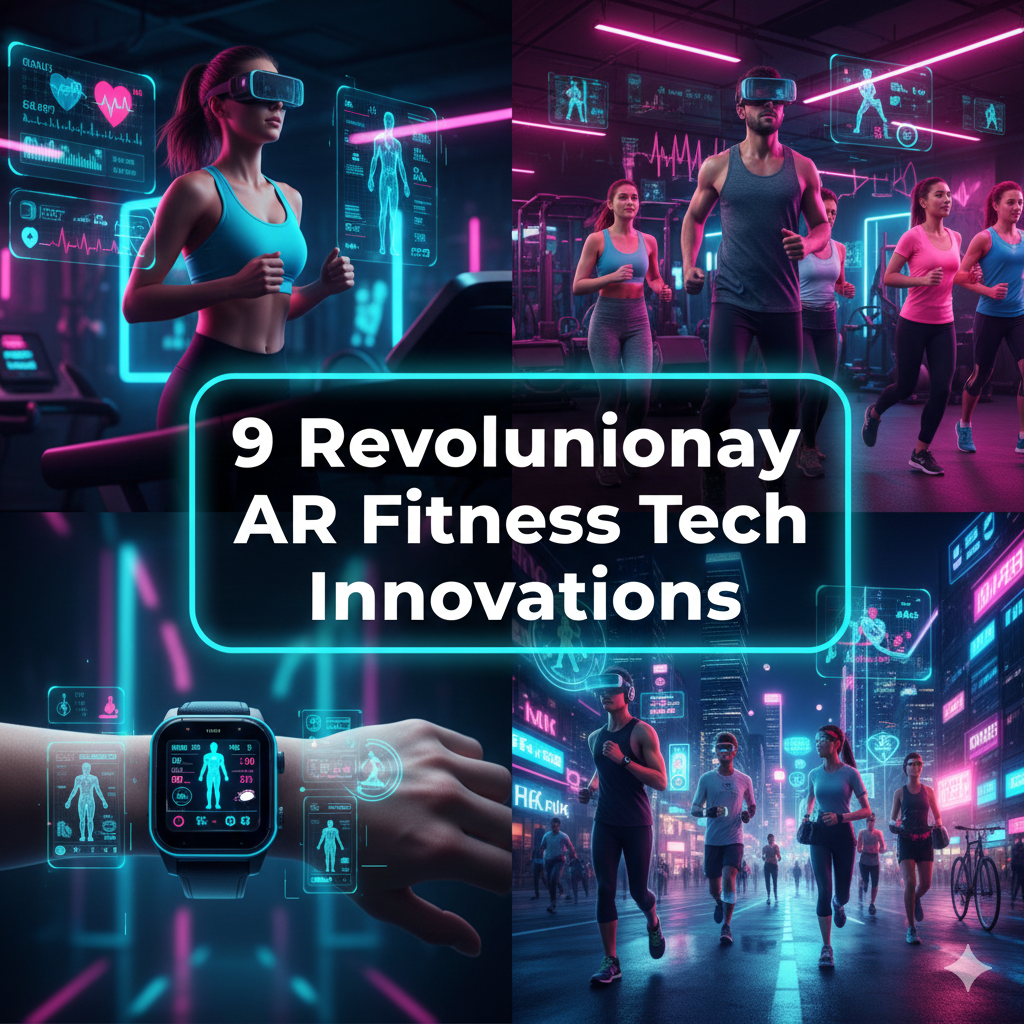
Not from a new protein shake. Not a fancy gym membership. From technology that overlays digital smartness directly on top of your everyday life — as you move, sweat and push your limits.
AR fitness tech upgrades aren’t relegated to movies or gaming anymore. They’re real, they’re accessible today and the top athletes on the planet are already using them to train smarter, recover faster and perform better than ever.
But here’s the thing — most people don’t know where to start.
Dozens of AR-equipped tools come to market each year. Some are genuinely game-changing. Others are pure hype. Understanding the difference is important, especially when you’re about to spend your hard-earned money.
That’s precisely why this article exists.
Here are 9 AR fitness tech upgrades that actually work in 2025. All have been selected considering real-world performance, innovation and the value they add to regular athletes — not just elite pros.
Whether you’re a runner, a gym-goer, a cyclist, or someone who simply wants to move more and feel better, there’s something on this list for you.
Let’s get into it.
What Should Make an AR Fitness Tech Upgrade Worth It?
Before we get into the list, let’s clarify what we mean when we say “AR fitness tech.”
Augmented reality overlays a digital layer on your view of the real world. Whereas virtual reality insulates you from your present environment entirely, AR keeps you connected to the world around you while feeding you live information, visuals and coaching prompts.
In the context of fitness, that translates to:
- Seeing your heart rate hovering in front of you while running
- Real-time form correction while lifting weights
- Tracking a virtual pacer that runs with you on the track
- Seeing your cycling route and power output on your lens
The best AR fitness tech upgrades share some common traits. They are accurate, comfortable, durable and useful in real workouts — not just a demo room.
With that in mind, here are the 9 upgrades to know about.
The 9 Proven AR Fitness Tech Upgrades
1. AR Smart Glasses With Real-Time Biometric Display
The upgrade: Body data, in real time — no wrist checking required
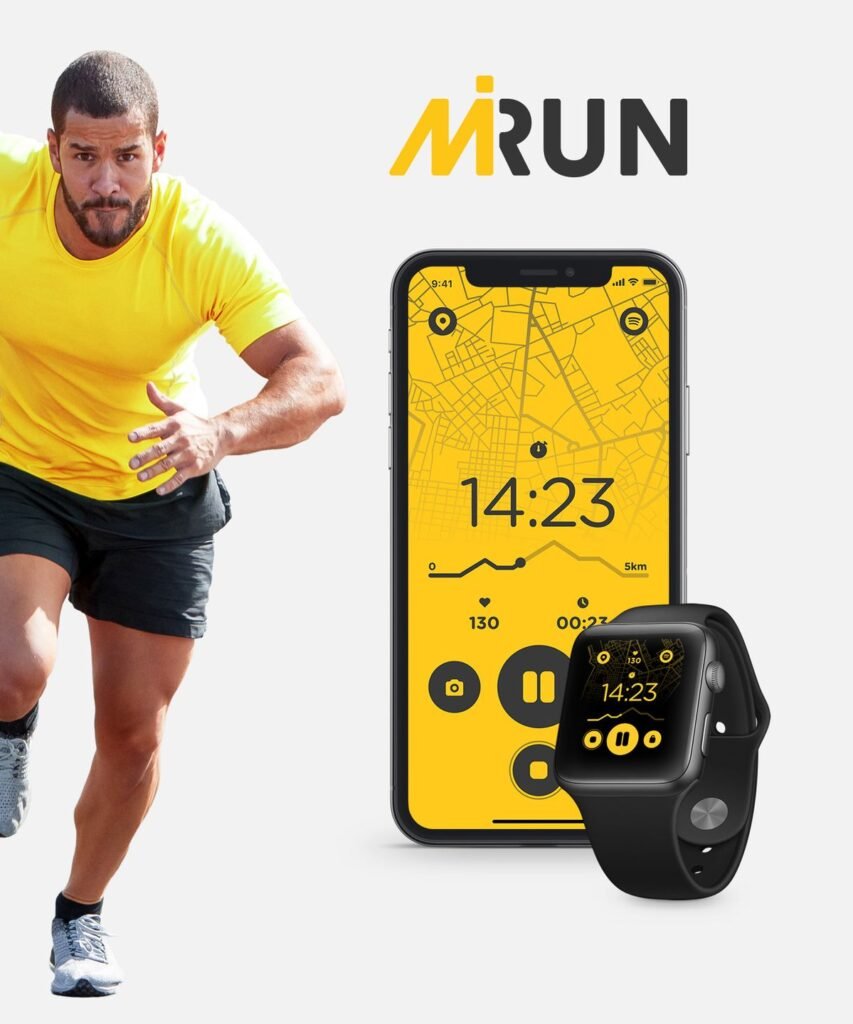
Live biometric overlays on smart glasses are the flagship category of AR fitness tech. These devices are capable of projecting your heart rate, pace, distance, calories and oxygen levels right in front of your eyes.
The best options in 2025 are the Everysight Raptor (for cyclists) and the Vuzix Blade (for multi-sport athletes). Both use waveguide lens technology to display clear, readable data without obstructing your natural vision.
Why it’s a game-changer:
Traditional fitness trackers force you to stop and look. AR smart glasses never pull your attention away from what you’re doing. You stay in the zone. You stay safe. And you stay informed.
For runners, that means no more pausing to glance at your watch. For cyclists, it means keeping your gaze on the road while monitoring every metric that counts.
Who it’s best for: Runners, cyclists, triathletes, hikers
Price range: $200–$800 depending on device
2. AR-Powered Swimming Goggles
The upgrade: Real-time swim stats projected inside your goggles
Swimming has long been the most difficult sport to track in real time. You’re underwater. Your phone is in a locker. Your watch is unreadable mid-stroke.
FORM Swim Goggles changed everything.
These goggles feature a transparent AR display inside the lens that shows lap count, split times, stroke rate, pace per 100 meters and heart rate — all while you swim. The display is bright enough to read clearly underwater and positioned in your peripheral vision so it doesn’t disrupt your stroke.
The FORM app syncs after every session, giving you a complete breakdown of your performance. Over time, the app uses your data to provide recommendations on stroke efficiency and pacing strategy.
How FORM Goggles track your activity:
| Metric | Displayed In Real Time |
|---|---|
| Lap Count | Yes |
| Split Times | Yes |
| Stroke Rate | Yes |
| Pace per 100m | Yes |
| Heart Rate | Yes (with chest strap) |
| Calories Burned | Yes |
| Stroke Type Detection | Automatic |
Who it’s best for: Lap swimmers, open water swimmers, triathletes
Price range: ~$199–$249
3. AR Mirrors to Correct Form in Real Time
The upgrade: A smart mirror that coaches your movement as it happens
AR fitness mirrors are one of the fastest-growing segments in home gym tech. Products like the Mirror (now Lululemon Studio) and Tempo use a full-length reflective screen with cameras and AI to overlay coaching cues, pose guides and performance feedback directly onto your reflection.
You see yourself working out — and the AR layer tells you precisely what to change.
If your squat depth is off, the system flags it. If your elbow position during a shoulder press is wrong, you’ll see a visual cue in real time. If your rep speed drops below the target, a prompt appears to push harder.
What sets this upgrade apart:
It’s rare that anyone has ever received real-time form feedback during a workout. The cost of a personal trainer ranges from $50 to $150 per hour. An AR mirror is a one-time payment and works every single session, any time of day — from the comfort of your own home.
For injury prevention alone, this upgrade pays for itself quickly. Bad form is the number one cause of gym injuries — and AR mirrors attack this problem head on.
Who it’s best for: Home gym users, weightlifters, yoga practitioners, HIIT athletes
Price range: $800–$1,500 (one-time hardware purchase)
4. AR Running Apps With Virtual Pacers and Overlays
The upgrade: Train with an algorithmic partner that helps you maintain your pace
AR fitness tech upgrades don’t always require new hardware. Many of the most powerful tools are app-based — and they’re already available on your phone or compatible smart glasses.
Apps like Strava, Zwift (for treadmill running) and AR Runner use augmented reality overlays to superimpose virtual pacers, route markers and performance data onto your surroundings as you run.
The virtual pacer concept is especially powerful. Instead of mentally calculating whether you’re ahead or behind your target pace, you see a visual cue — a ghost runner, a glowing line or a floating avatar — showing exactly where you need to be.
The psychology behind this works incredibly well:
Runners instinctively want to match or beat the pacer. It activates competitive instincts without needing another human to be present. Studies in sports psychology reveal that visual pacing cues improve time-trial performance by measurable margins.
Who it helps most: Casual runners, marathon trainers, speed-work athletes
Price range: Free to ~$15/month depending on the app
5. AR Cycling Computers With Heads-Up Display Integration
The upgrade: Ditch the handlebar screen — see everything through your lens
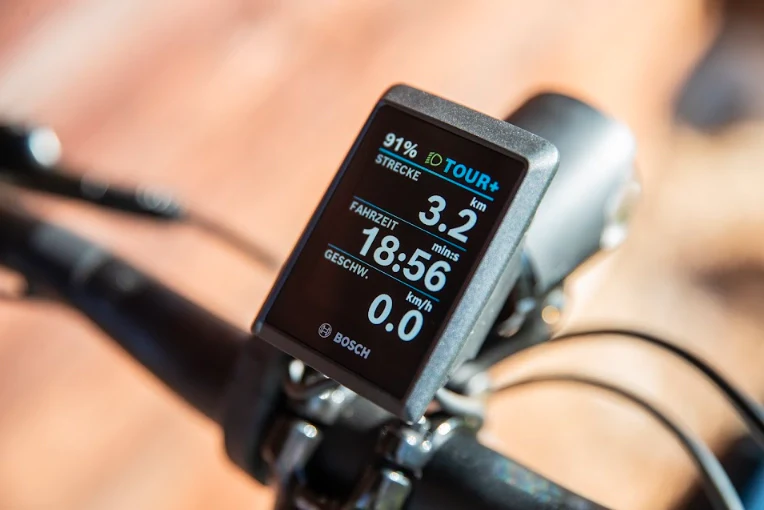
Cyclists are data addicts. Watts, cadence, heart rate zones, elevation gain, segment times — the numbers never end. Traditionally, all of this data lived on a small Garmin or Wahoo computer bolted to the handlebars.
That’s changing fast.
Devices such as the Everysight Raptor and upcoming integrations from Garmin and Wahoo now relay live cycling data directly to compatible AR glasses. The result is a genuine heads-up display (HUD) for cyclists — the same technology used in fighter jet cockpits, now inside a pair of sport glasses.
What a cyclist sees in real time:
- Current speed and average speed
- Power output in watts
- Heart rate and heart rate zone
- Cadence (pedal revolutions per minute)
- Navigation turn-by-turn arrows
- Segment alerts and interval timers
- Elevation and gradient of the current road
Why this matters for safety:
Glancing at a handlebar computer — even for two seconds — means taking your eyes off the road. At 30 mph, two seconds equals 88 feet traveled without watching where you’re going. AR cycling HUDs remove that risk completely.
Who it’s best for: Road cyclists, mountain bikers, competitive racers, commuter cyclists
Price range: $300–$700 for AR-integrated cycling glasses
6. AR Strength Training Guides
The upgrade: See exactly how to perform every lift — projected into your space
Imagine pointing your phone at your home gym and seeing a 3D, life-size representation of a deadlift floating right in front of you. That’s what AR strength training apps deliver.
Apps like Nike Training Club (with AR features), Kenhub AR and several newer platforms use your phone’s camera to project animated workout instructions directly onto your environment. You can rotate the 3D model, slow it down and view the movement from any angle before you attempt it yourself.
This is especially powerful for:
- Learning new movements safely before adding weight
- Checking muscle activation patterns to understand which muscles are working
- Completing full AR-guided workout programs in your home gym
The difference between video and AR is significant.
A video plays on a flat screen. An AR guide exists in your real-world space, at your real-world scale. You can walk around it. You can line up next to it. You can mimic it in real time with the guide right there beside you.
For self-coached home trainers, this upgrade is as close as it gets to having a personal trainer in the room.
Who it’s best for: Home gym athletes, beginners mastering proper form, bodybuilders
Price range: Free to ~$20/month for premium AR training apps
7. AR Recovery Tools — Visualizing Muscle Soreness and Load
The upgrade: See your recovery data mapped onto your body in 3D
Recovery is just as important as training. Most athletes know this intellectually — but they don’t truly feel it until an injury forces them to stop.
AR recovery tools are changing this by making recovery data visual and impossible to ignore.
Platforms like WHOOP, when paired with emerging AR dashboards and apps like RecoveryApp AR, use your biometric data — HRV, sleep quality, resting heart rate and strain scores — to create a visual body map that shows where your muscles are stressed, how recovered you are and what kind of training load your body can actually handle today.
Instead of numbers on a screen, you get a 3D overlay of your own body with color-coded zones. Green means ready. Yellow means moderate stress. Red means back off.
Why this approach to recovery data is powerful:
Numbers are easy to ignore. Visual warnings are a lot more difficult to dismiss. When your AR dashboard shows a red zone over your lower back and quads, you’re far less likely to jump into an aggressive leg day.
If you want to explore how AR tools fit into a greater body health and recovery strategy, AR Body Health offers detailed guides on combining these technologies for full-body performance.
Who it’s best for: Endurance athletes, strength athletes, anyone facing overtraining
Price range: $30–$50/month for complete biometric + AR recovery platforms
8. Mixed Reality Fitness Games That Double as Real Workouts
The upgrade: Play games that actually burn calories and build fitness
This one will probably surprise you — but fitness gaming is one of the most effective AR fitness tech upgrades for people who struggle with motivation.
Platforms like Supernatural (Meta Quest), Beat Saber and FitXR use mixed reality headsets to turn exercise into gameplay. You’re not merely moving — you’re dodging obstacles, slashing targets and completing challenges that require full-body movement.
The results are real. A typical 30-minute Supernatural session burns 200–400 calories, comparable to a moderate cardio workout. Beat Saber players regularly hit 300+ calories in a single session. And since it feels like a game, people actually stick with it.
Calorie burn across AR fitness games:
| Game/Platform | Avg. Calories (30 min) | Primary Movement |
|---|---|---|
| Supernatural | 200–400 | Full body squats, lunges, reaches |
| Beat Saber | 150–300 | Upper body, arm speed |
| FitXR Boxing | 250–350 | Punching, footwork, defense |
| Thrill of the Fight | 300–450 | Full boxing simulation |
| Pistol Whip | 200–320 | Lower body, rhythm movement |
The motivational advantage is massive.
For many people, traditional cardio is dull. Forty minutes on a treadmill takes serious mental discipline. Forty minutes of slashing neon blocks in Beat Saber feels like nothing — until you check your heart rate and realize you’ve been in zone 3 the entire time.
Who it’s best for: People who hate traditional cardio, beginners building a fitness habit, teens and young adults
Price range: Meta Quest 3 (~$499) + game subscriptions (~$10–$20/month)
9. AR Personal Training Platforms With Live Coach Overlay
The upgrade: Work out with a real coach who monitors your movement through AR
This is the most advanced AR fitness tech upgrade on this list — and it’s only now starting to roll out at scale.
Platforms including Tonal, newer Peloton AR features and specialized AR coaching apps now allow a remote personal trainer to track your movement in real time through your device’s camera. The trainer can then superimpose annotations, arrows, correction prompts and guidance directly onto your live video feed — which you see through your AR glasses or on your device’s screen.
It’s like having a trainer standing in the room with you, pointing at your knees, drawing lines along your spine and showing you precisely where your movement needs to adjust.
Why this is the future of personal training:
Remote coaching already works well via video call. But AR-enhanced remote coaching introduces a spatial dimension that flat video calls simply can’t provide. The trainer’s annotations exist in your space, not on a 2D screen. They refer to your actual body parts, not a video of your body parts.
According to research published by the American College of Sports Medicine, real-time coaching feedback consistently produces better technique outcomes than delayed feedback — and AR delivery amplifies this effect significantly.
Who it’s best for: Serious athletes, people rehabbing injuries, anyone working with a remote coach
Price range: $50–$200/month for premium AR coaching platforms
How All 9 Upgrades Compare at a Glance
| AR Fitness Tech Upgrade | Skill Level | Best Setting | Monthly Cost | Wow Factor |
|---|---|---|---|---|
| AR Smart Glasses | Intermediate+ | Outdoors | $0 (hardware only) | ⭐⭐⭐⭐ |
| AR Swimming Goggles | Any level | Pool | $0 (hardware only) | ⭐⭐⭐⭐⭐ |
| AR Fitness Mirror | Any level | Home gym | ~$40/month | ⭐⭐⭐⭐ |
| AR Running Apps | Beginner+ | Outdoors/treadmill | Free–$15 | ⭐⭐⭐ |
| AR Cycling HUD | Intermediate+ | Road/trail | $0 (hardware only) | ⭐⭐⭐⭐ |
| AR Strength Guides | Beginner+ | Home/gym | Free–$20 | ⭐⭐⭐ |
| AR Recovery Tools | Any level | Anywhere | $30–$50 | ⭐⭐⭐⭐ |
| Mixed Reality Games | Beginner+ | Home | $10–$20 | ⭐⭐⭐⭐⭐ |
| AR Personal Training | Any level | Home/gym | $50–$200 | ⭐⭐⭐⭐⭐ |
Top Trends Driving AR Fitness Tech Growth in 2025
The pace of change in this space is extraordinary. Here’s what’s driving the momentum:
Lighter, faster hardware. AR glasses that previously weighed 80+ grams are now under 45 grams. Processing power has doubled in two years. The result is longer battery life, sharper displays and less eye strain — quite literally.
AI meets AR. Many AR fitness tools now have artificial intelligence built in. This means your AR coach isn’t merely displaying data — it’s analyzing your movement patterns, assessing injury risk and building a personalized training plan in real time.
Affordable entry points. Most high-end AR fitness hardware was $500+ just a year ago. Today, AR running apps are free, AR strength guides cost $10/month and entry-level AR glasses have dropped below $200.
Integration across devices. Your WHOOP band now talks to your AR glasses. Your AR glasses sync with your Garmin watch. Your Garmin watch feeds data into your coaching app. The ecosystem is finally connecting in ways that matter.
Social and competitive features. Fitness apps are building AR leaderboards, shared virtual courses and multiplayer workout challenges using real-world locations. The line between fitness and gaming is blurring fast.
Picking the Right AR Fitness Tech Upgrade for You
With 9 options on the table, choosing can feel overwhelming. Here’s a simple way to think about it:
If you swim: Start with FORM Swim Goggles. For in-water tracking, nothing else comes close.
If you cycle: Get AR cycling glasses or integrate your existing power meter with a HUD-compatible device.
If you lift: An AR fitness mirror or AR strength training app will transform your technique and safety.
If you struggle with motivation: Mixed reality fitness games are your best friend. Make movement fun first, and performance will follow.
If you train seriously: Combine an AR recovery platform like WHOOP with AR coaching sessions. Data + guidance is the ultimate combination.
If you’re on a budget: Start with free AR running apps or affordable AR strength guides. You don’t need to spend $800 to experience the benefits.
FAQs About AR Fitness Tech Upgrades
Q: Do I need to buy expensive hardware to use AR fitness tech? Not at all. Several AR fitness tech upgrades are app-based and work with whatever phone you already have. You can start exploring AR running apps, AR workout guides and recovery platforms at little or no cost.
Q: Are AR fitness tools accurate enough to trust during real training? Yes — the best devices on this list use medical-grade or near-medical-grade sensors. FORM Swim Goggles, WHOOP and Everysight Raptor all have strong accuracy records backed by athlete testing and independent reviews.
Q: Is it safe for kids and teenagers to use AR fitness tech? Most AR fitness apps and tools are suitable for teens. Mixed reality games in particular are a great way to get younger people moving. For head-mounted AR glasses, always check the manufacturer’s age recommendations, as prolonged display use may not be suitable for very young children.
Q: Will I become overly reliant on data if I use AR during workouts? This is a fair concern. The aim of AR fitness tech is to amplify your awareness, not substitute your instincts. The best athletes usually rely on data as a guide, not a strict rule. Use AR tools sparingly at first and grow from there.
Q: How long does the battery last on AR fitness glasses during a workout? It varies by device. FORM Swim Goggles last up to 16 hours. Everysight Raptor provides about 8 hours. Vuzix Blade lasts around 2 hours of active display use. Always check battery specs relative to your average workout length before buying.
Q: Are AR fitness tech upgrades useful for rehabilitation and injury recovery? Absolutely. AR form correction tools and AR recovery dashboards are increasingly being used in physiotherapy and sports rehab settings. Observing your movement patterns in real time helps both patients and practitioners spot compensation patterns and monitor progress more precisely.
Q: What’s the best AR fitness tech upgrade for someone completely new to this space? Start with an AR running app or a mixed reality fitness game. Both are inexpensive, simple to set up and immediately impactful. After you experience what AR adds to a workout, you’ll be in a much better position to decide which hardware upgrade makes the most sense for your goals.
The Bottom Line
AR fitness tech upgrades aren’t a trend. They’re a permanent shift in how training works.
The 9 upgrades discussed in this article represent the best that this technology currently has to offer. We’re talking AR swim goggles that display your split times underwater, mixed reality games that burn calories without feeling like exercise, and live coaching platforms that project real-time feedback directly over your body — these tools are producing results that simply weren’t possible five years ago.
The athletes who are embracing these upgrades right now are building smarter habits, training more effectively, sustaining fewer injuries and reaching their goals faster than those who are waiting for the technology to mature.
Here’s the truth: the technology has already matured enough to make a real difference. You don’t need to wait.
Pick one upgrade from this list that fits your sport, your budget and your goals. Try it for 30 days. Notice how it changes your awareness of your own performance.
The upgrade you choose could be the one that makes all the difference.