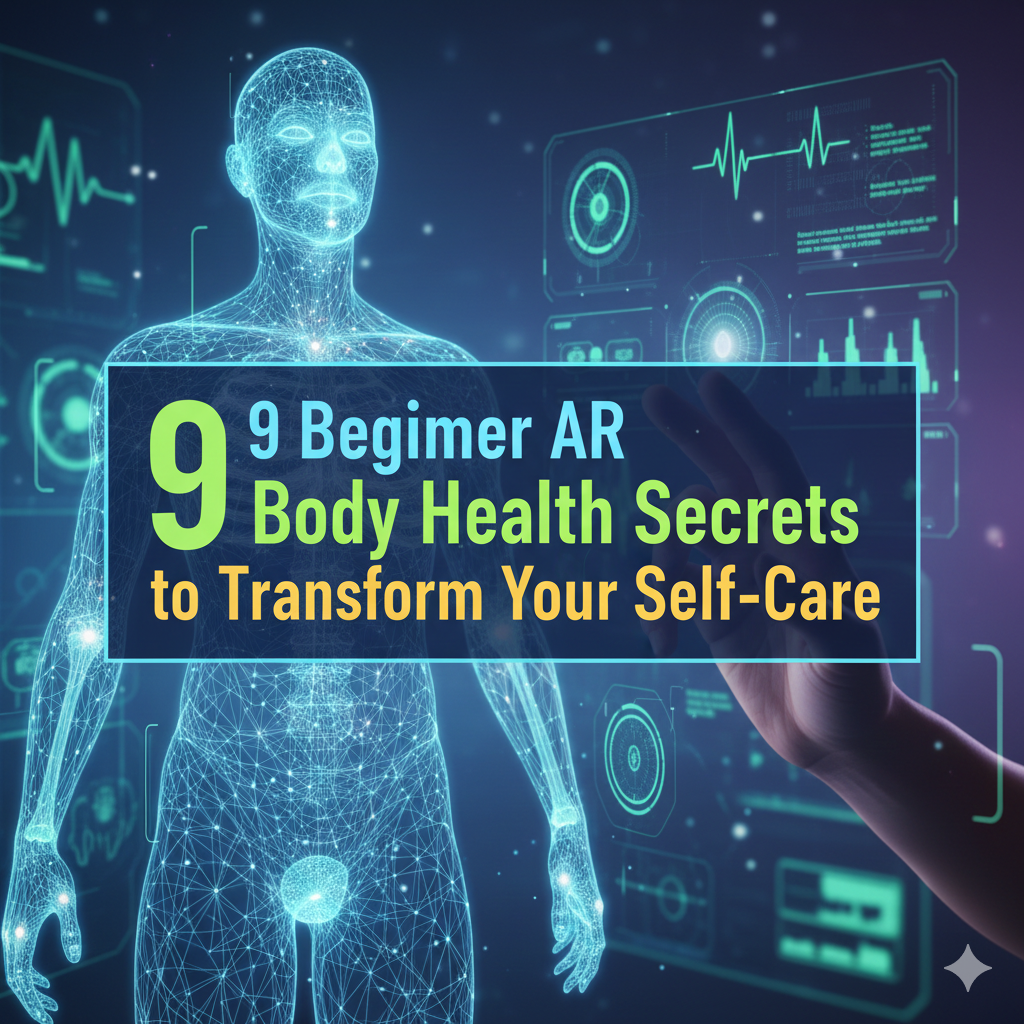
Perhaps you have heard of augmented reality (AR) as it pertains to video games or Snapchat filters. But here’s something you don’t often hear mentioned — AR is gradually becoming one of the most effective tools for getting better health.
No, you don’t have to be a tech genius to use it. And no, it’s not for just gamers or scientists.
AR is moving into gyms, kitchen countertops, doctor’s offices and even your bedroom. It’s helping ordinary people understand their bodies as never before. Whether to lose weight, improve your posture, manage stress or even just live healthier — AR could be the secret weapon you didn’t know you needed.
This article will break down 9 beginner AR body health secrets. They’re all easy to follow, straightforward to get started with and actually quite fun. By the end, you will be looking at your health from an entirely new perspective.
Let’s get into it.
Secret #1 — AR Can Give You an X-Ray View of Your Own Body (No X-Ray Machine Required)
What This Actually Means
One of the coolest things AR can do is allow you to “see inside” your body — not literally, but close enough to be genuinely useful.
AR-enabled apps can project 3D renders of muscles, bones and organs on you using your phone’s camera. You aim your camera at your arm, and suddenly you know which muscles are engaged when you do a bicep curl. You gaze into your chest, and a 3D heart model displays how blood pumps through it.
This isn’t just cool. It’s educational in a way that really sticks.
Why Beginners Love This
Because textbooks are so tedious, the vast majority of us avoid learning about anatomy. But when you can actually point your smartphone at your stomach and see a 3D digestive system spring to life in real time, suddenly you tend to care about the way what you eat influences how you feel.
Such capabilities are already available in apps such as Complete Anatomy and Human Anatomy Atlas. They are designed for medical students, but novices are also using them — and loving them.
Quick Tip: Try spending 10 minutes a week exploring one body part or organ with an AR anatomy app. In a month, you’ll know more about your body than most adults do.
Secret #2 — AR Fitness Coaching Is Like Having a Personal Trainer in Your Pocket

The Old Way vs. The AR Way
Old way: You pull up a YouTube workout video at home, follow the movements and don’t know if you’re doing it right.
AR way: Your phone or AR glasses follow your body in real time, overlaying its skeleton or muscle groups and telling you precisely when your form is off — before you hurt yourself.
That’s a massive difference.
How It Works for Beginners
Combined with your device’s camera, AR fitness apps use AI to track your joints and movements. They generate a digitized “ghost” of your body and match it against the ideal form for each exercise.
If you don’t squat low enough, the app lets you know. If your back starts rounding during a deadlift, you receive an alert. It’s like having a coach monitor every rep — only the coach is always there and never judges you.
| Feature | Traditional Video Workouts | AR Fitness Coaching |
|---|---|---|
| Real-time form feedback | ❌ No | ✅ Yes |
| Personalized to your body | ❌ No | ✅ Yes |
| Available 24/7 | ✅ Yes | ✅ Yes |
| Injury prevention alerts | ❌ No | ✅ Yes |
| Progress tracking | Limited | Advanced |
Gymcatch, FitXR and ARENA are leaders in this space. Even Apple’s Vision Pro is creating workout environments where AR coaching comes baked in.
Secret #3 — You Don’t Need to Count Every Calorie to Keep Track of Your Nutrition

Why Most People Fail at Calorie Counting
Ask anyone who has tried tracking their food — it can be grueling. Weighing every gram of rice or hunting down the exact peanut butter brand you used takes ages. Most people quit within a week.
AR flips this completely.
The Magic of AR Food Scanning
Some AR-powered nutrition apps show you what’s on your plate by pointing your camera at it. It estimates your portions — as well as macronutrients (protein, carbs, fat) — and logs everything for you automatically.
Some apps even superimpose a color-coded nutritional breakdown in real time, right on top of your food. Green means high in vitamins. Red flags excessive sugar or sodium. You see it before you eat it.
Apps to check out:
- Noom (combines AI and AR elements for food tracking)
- Calorie Mama AI (food identification based on pictures)
- PlateJoy (personalized meal planning with smart scanning)
What It Means for Your Health
When you can see your nutritional breakdown in seconds instead of minutes, you make better choices. Research shows that those who log their food — even if they aren’t perfect about it — lose more weight and maintain healthier diets than those who track nothing.
AR makes that tracking effortless. And effortless means you’ll actually stick with it.
Secret #4 — AR Posture Correction Saves Your Back (No, Seriously)
The Posture Problem No One Talks About
Bad posture is an epidemic. Hours spent sitting, hunched over phones and staring at screens have inflicted chronic neck pain, back pain and even headaches on millions of people.
Most folks know their posture is poor. They just don’t know how to solve it — or they forget to fix it over the course of the day.
How AR Fixes This
AR posture apps analyze how you are sitting or standing using your camera. They overlay your spine alignment on the screen and show you exactly where you’re leaning, hunching or twisting incorrectly.
Some systems have taken it even further — using your laptop’s webcam to monitor you during the workday. The second your shoulders begin to round forward, you receive a gentle nudge or alert.
Popular posture tools using AR and AI:
- Upright GO (wearable + app combo)
- PostureScreen Mobile (used by physical therapists)
- Prana (posture + breathing tracker)
The Health Payoff
Practicing better posture is more than a trick to seem confident. Bad alignment crushes your lungs (decreasing breathing capacity), slows digestion, strains neck muscles and can even alter your mood.
One study in Health Psychology found that sitting upright increased energy levels and reduced fatigue in participants compared to a slouched position.
AR helps flag poor posture and allows you to fix it before it becomes a permanent problem.
Secret #5 — AR Mental Health Tools Are Quietly Changing the Game
When Stress Hits, AR Can Help You Reset
Mental health is body health. That’s not just a feel-good statement — chronic stress does physical harm. It elevates cortisol, suppresses your immune system, disturbs sleep and increases the risk of heart disease.
AR is now being used to build immersive calming environments that allow your nervous system to recalibrate.
AR Meditation and Stress Relief — How It Works
You’re not sitting in a room trying to envision a tranquil forest — AR allows you to place that forest directly within your actual environment. Dreamlike trees surround the walls of your bedroom. Your desk gets swallowed by a calm ocean horizon.
This isn’t gimmicky. Research on immersive environments demonstrates that your brain reacts to these visual cues in truly calming ways. Your heart rate slows. Your breathing deepens.
Tools leading this space:
- Tripp (AR/VR mindfulness app)
- Headspace (exploring AR features)
- DEEP (breathing-controlled AR experience)
The Beginner-Friendly Angle
You don’t have to meditate for 30 minutes daily to reap the benefits. Even 5 minutes of an AR-guided breathing session in a soothing visual environment is enough to reduce your stress response. And because it’s much more engaging than traditional meditation, beginners are far more likely to continue doing it.
Secret #6 — Sleep Tracking Gets Smarter With AR Insight Tools
Why Sleep Is the Most Underappreciated Health Factor
You can eat well and work out daily, but if you’re not sleeping well, your health pays the price. Sleep deficiency is associated with weight gain, mental cloudiness, weakened immunity and even a shorter lifespan.
The majority of people believe they sleep fine. Many don’t.
Where AR Comes In
AR isn’t already inside your dreams (though that would be wild). But it’s making sleep data more visual, understandable and actionable than ever.
AR dashboards can superimpose your sleep data — cycles, REM patterns, heart rate during sleep — as interactive 3D graphs you can actually explore. Instead of scrolling through a flat chart on your phone, you can “walk through” your sleep data in an AR view and instantly spot where your sleep breaks down.
Other AR tools project calming visual environments at bedtime to assist your brain with winding down — swapping out harsh screen light for soothing AR displays designed to help you prepare for sleep.
| Sleep Stage | What Happens | Why It Matters |
|---|---|---|
| Light Sleep | Body starts to relax | Entry point to deeper sleep |
| Deep Sleep | Body repairs tissue, immune system activates | Critical for physical recovery |
| REM Sleep | Brain processes emotions and memories | Essential for mental health |
| Wake Cycles | Brief awakenings (normal) | Too many = poor sleep quality |
Tools to explore:
- Oura Ring (advanced sleep data, AR-ready integrations)
- Whoop (sleep coaching with visual dashboards)
- Eight Sleep (smart mattress with AR companion app features)
Secret #7 — AR Rehab and Injury Recovery Is Healing at Warp Speed
Getting Injured Doesn’t Have to Mean Months of Guesswork
If you’ve ever experienced a sports injury, you know how frustrating recovery can be. Physical therapists send you home with exercises — and then you go home and do them completely wrong for two weeks.
AR is changing this dramatically.
Real-Time Guidance During Recovery Exercises
AR rehab apps project movement guides right onto your surroundings. If your physical therapist prescribes a specific knee extension exercise, the AR app shows you exactly how wide your leg should go, what angle to aim for, and whether you’re compensating with the wrong muscle groups.
This real-time guidance reduces re-injury rates and drastically accelerates recovery times.
Who Is Using This Right Now?
This is not the stuff of future technology — this is happening today.
XRHealth’s platform is currently deployed in actual clinical environments. AR headsets are being used in hospitals and rehabilitation centers to guide stroke patients through motor function recovery. Athletes are using the latest AR tools to return to sport sooner following knee and shoulder injuries.
Even novices who just pull a muscle or develop tendonitis could benefit from AR-guided stretching apps that ensure each stretch is done correctly.
Beginner tip: If you have any chronic pain or old injury, search for “AR physical therapy app” in your app store. Some are free or low cost, and they can have a real impact on how quickly and safely you recover.
Secret #8 — AR Hydration and Vital Signs Monitoring Are Rapidly Becoming Very Accessible
The Most Ignored Hydration Problem
Most of the time, most people are mildly dehydrated. It can lead to headaches, low energy and poor concentration — and even cause overeating (thirst frequently masquerades as hunger).
AR is beginning to tackle this in some astonishingly innovative ways.
Smart AR Reminders and Hydration Visualization
Some AR apps and wearable combos can now gauge your hydration levels in real time based on activity data, sweat rate and environmental temperature — then project reminders and progress visuals into your AR view over the course of the day.
Picture looking at your AR glasses and simply seeing a water-level indicator showing you’re at 60% hydrated. It’s a small thing, but visual reminders go a long way.
Beyond hydration, AR is already being built into wearables that display your vital signs — heart rate, blood oxygen and stress levels — as overlays in your visual field. You don’t have to take out your phone. The data is just there when you need it.
What This Actually Looks Like in Practice
For now, this technology is most available through smartwatch + AR app pairings. Devices like the Apple Watch or Garmin watches collect health data, while companion AR apps make that data more visual and actionable.
As AR glasses hit the mainstream — through companies like Meta, Apple and Google — this kind of ambient health monitoring will naturally become part of our everyday routine.
Secret #9 — AR Body Scanning Can Help You Set Smarter Fitness Goals
The Reason So Many People Set Fitness Goals That Go Unmet
“I want to lose 20 pounds” is a goal. But it doesn’t provide much to work with on a day-to-day basis. It doesn’t tell you where the fat is coming from, what your muscle mass looks like, or whether what you’re doing is actually working.
That completely changes with AR body scanning tools. If you want to dive deeper into how AR is reshaping personal wellness, AR Body Health is a great resource to explore.
How AR Body Scans Work
Using only your phone’s camera or a dedicated AR scanning device, these tools create a full 3D scan of your body. They measure:
- Body fat percentage
- Muscle distribution
- Posture alignment
- Body measurements (waist, hips, chest, arms, legs)
- Symmetry (whether one side is bigger or more developed than the other)
Then you can monitor how you change over time — watching your 3D model evolve as you become healthier. That is so much more motivating than stepping on a scale.
Top AR body scanning tools:
- Naked Labs 3D Body Scanner (home-use 3D mirror)
- Fit3D (used in gyms and wellness centers)
- Bodi.me (smartphone-based AR body scan)
Smarter Goals = Better Results
Once you can see your body in full 3D and have precise data to back it up, vague goals go out the window — and instead, you’re working toward specific, measurable progress. This is the kind of clarity that keeps people motivated for the long run.
Bringing It All Together — Your AR Health Starter Plan
You don’t have to implement all 9 of these secrets at once. Begin with one or two that inspire you the most.
Here’s a simple starter plan:
Week 1–2: Download an AR anatomy app and spend 10 minutes exploring one system of the body.
Week 3–4: Use an AR fitness app for your workouts. Focus on form, not intensity.
Month 2: Incorporate an AR food scanning app into your daily routine for at least one meal per day.
Month 3: Start using AR posture tools during your workday. Establish your AR body scan baseline.
Small steps. Consistent action. Big results.
FAQs About AR Body Health
Q: What kind of equipment do I need for AR health tools? The majority of AR health apps require nothing more than your smartphone. Some of the more advanced tools rely on AR glasses or wearables, but many great options don’t need anything more than your phone’s camera.
Q: Are AR health apps accurate? They vary. Apps developed using medical-grade technology (for use in clinical settings) are very accurate. Consumer-level apps are improving rapidly but should be used as helpful guides — not medical diagnoses.
Q: Is AR health technology safe for daily use? Yes — in almost all applications. Using your phone’s camera with AR features is no different from regular app use. If you’re using AR for any medical condition, always consult your doctor first.
Q: What do AR health apps cost? Most basic AR health apps are free or have low-cost subscriptions ($5–$20/month). More sophisticated tools like 3D body scanners or clinical AR rehab platforms are a little pricier.
Q: Is it appropriate for children and teenagers to use AR health tools? Absolutely. Many AR anatomy and fitness apps are great for young people. You just have to ensure any app is age-appropriate, and parental supervision is in place for younger users.
Q: Will AR replace doctors? No — and it shouldn’t. AR has great potential as a tool for awareness, education and daily health habits. But it works most effectively when used alongside professional medical care, not as a substitute for it.
The Bottom Line
AR body health is no longer sci-fi. It’s here, it’s available, and it is genuinely helping people do a better job of taking care of themselves — in ways that are more engaging, more accurate and more fun than anything we’ve had before.
From anatomy education to fitness coaching, nutrition tracking, posture correction, mental health, sleep management, rehab, hydration and body scanning — the 9 beginner AR body health secrets in this article cover every angle. Each is a door you can open right now, with tools that already exist and are at your disposal.
Your body is the most important thing you will ever own. AR is simply a new way to understand it, protect it and make the most of it.
Start with one secret. See what changes. Then keep going.