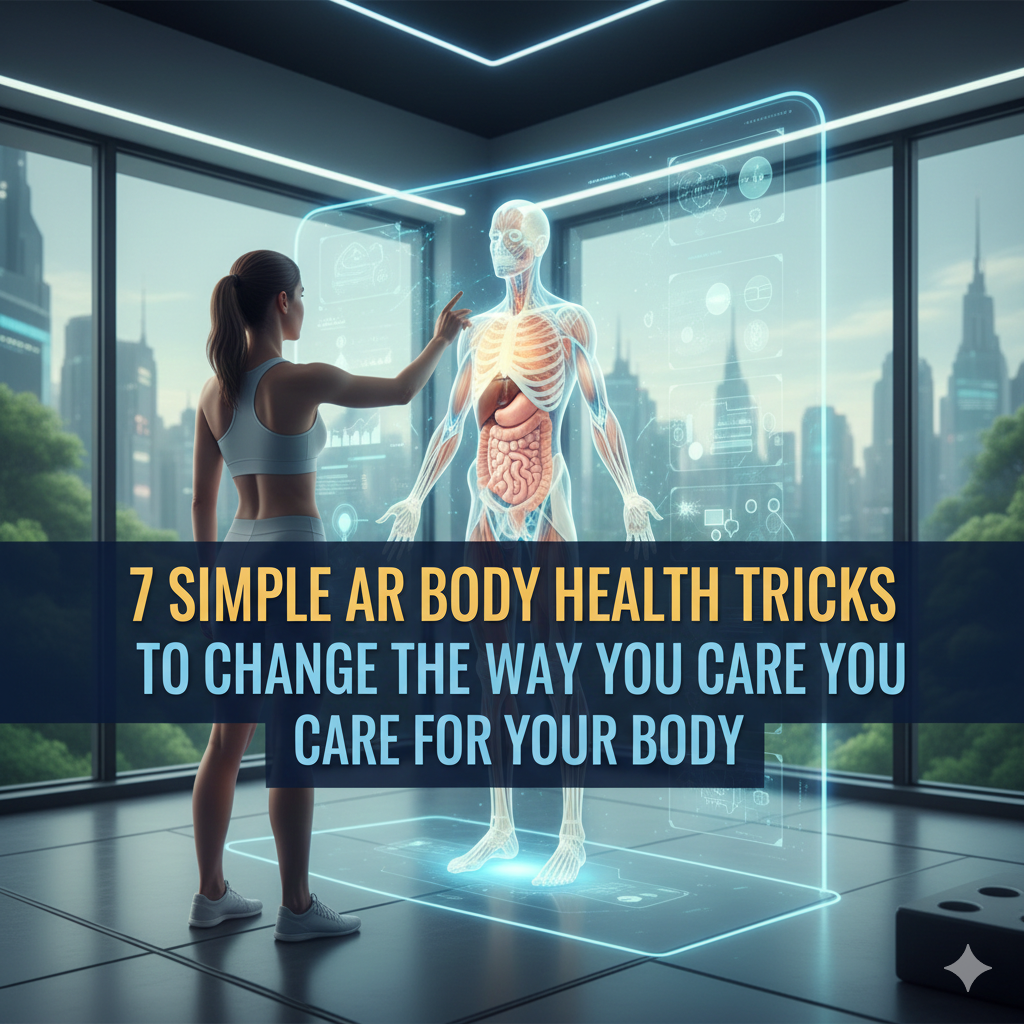
We now live in a world where your phone can let you see a dinosaur walking through your living room. So why not use that same technology to show you how to get healthier?
Augmented reality — or AR — isn’t just for games and fun filters anymore. Now it’s venturing into fitness, nutrition, mental wellness and personal health in some exciting ways. And the best part? It is user-friendly; you do not need to be a tech genius to use it.
If you want to move more, eat better, improve your posture or just feel good in your skin, then AR body health tips can provide you with a modern and innovative advantage. This guide will take you through seven actionable beginner tips that merge technology with real-world health habits.
Let’s get into it.
What Is AR and Why Should It Matter to Your Health?
Before we dive into that, let’s quickly explain what AR is.
Augmented reality is a technology that places digital images, sounds or information over the real world around you. You’re looking at the real world, with extra stuff laid on top of it — via your phone screen, AR glasses or other devices.
Snapchat filters, an app that shows you where to put furniture at IKEA, or Pokémon GO. That is AR in action.
Now imagine being able to use that same idea to see how many calories are on your plate, simply by pointing your phone at the food. Or having a virtual personal trainer doing push-ups right next to you in your living room. Or checking whether your back is straight while you sit at your desk in real time.
That’s what AR body health is — and it’s rapidly growing. You can explore more about it at AR Body Health, a great resource dedicated to this emerging space.
Tip 1: Train With AR Fitness Applications
Your Living Room Can Double as a Gym
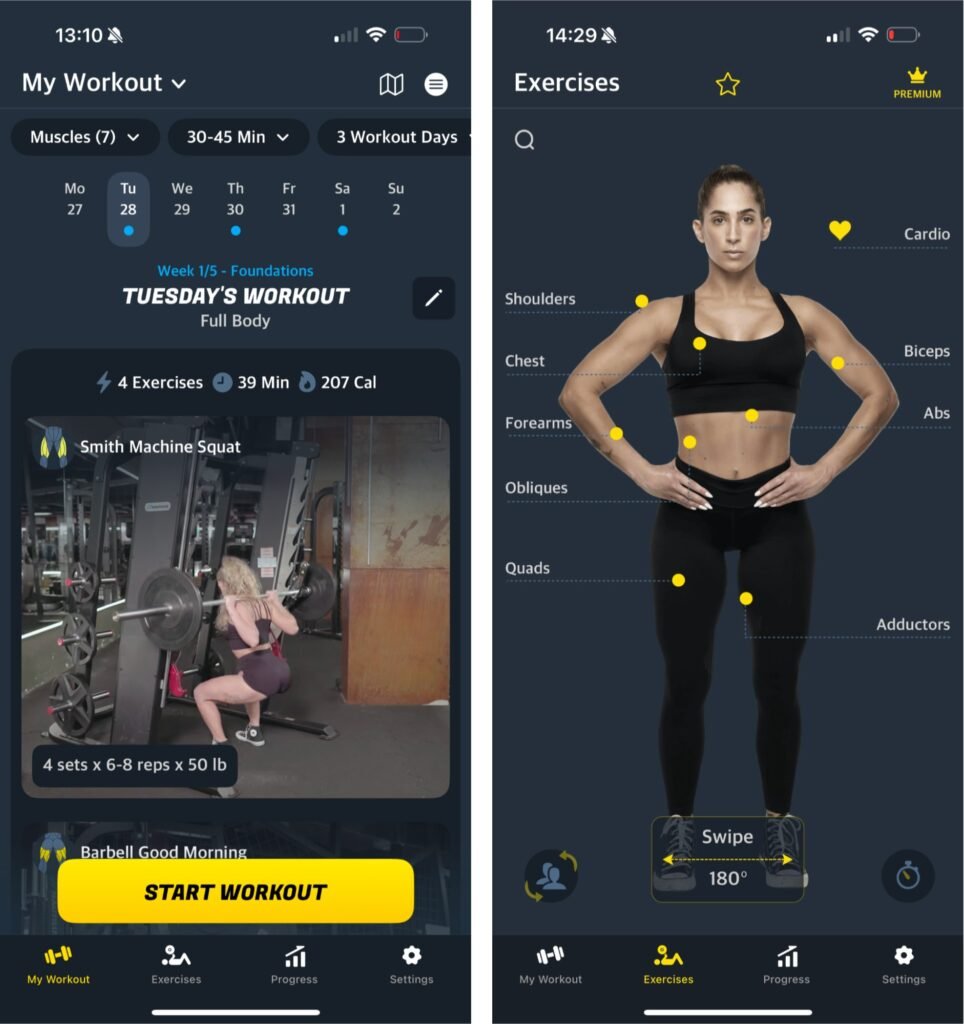
Augmented reality fitness apps are one of the coolest AR body health tips. These apps drop a digital trainer or workout overlay directly into your actual physical environment via your phone or tablet camera.
Fitness apps like Supernatural (for VR/AR headsets) and FitXR use immersive visuals so that you don’t think of exercising as such a chore — more an experience. You jab, duck and squat — and literally burn calories while you’re at it.
Even more basic apps use your phone’s camera to track your body movements and offer immediate feedback. The app alerts you instantly if your squat form is incorrect.
Why This Works
It’s easy to bail on traditional workouts because they feel boring or intimidating. AR adds a layer of playfulness and engagement to movement. When exercise comes in the form of play, you forget it’s exercise — and that translates to doing it longer and more often.
Research suggests that those who have fun working out are 80% more likely to be consistent long-term. AR literally has enjoyment factored in.
| Feature | Traditional Workout | AR Workout |
|---|---|---|
| Real-time feedback | Rare | Yes |
| Engagement level | Medium | High |
| Need for gym | Yes | No |
| Personalization | Limited | Advanced |
| Fun factor | Varies | Consistently high |
Tip 2: Use Your Phone to Make Smarter Eating Decisions
Why Nutrition Scanning Matters and How to Do It
One of the most interesting AR body health tips relates to your diet. Several apps will now allow you to scan your plate or a food package, and instantly receive a full nutritional breakdown — calories, protein, fat, sugar, vitamins — all appearing on your screen in real time.
Food recognition technology is also already being combined with AR and AI in food-focused apps such as Calorie Mama, Noom and Nutrino. You don’t have to keep a detailed log of everything you eat. Just point, scan, and see.
How to Use This Every Day
Here is a potential daily practice you can develop around food scanning AR:
- Morning: Scan your breakfast to check sugar and protein levels.
- Lunch: Plan portion size based on what you see on your plate before eating.
- Dinner: Use the app for healthier swaps for high-calorie ingredients.
- Snack time: Look out for hidden sugars and bad fats in packaged snacks.
It takes less than a minute each time, yet can completely shift your awareness about what you are feeding your body.
Why Awareness Beats Willpower
Most people do not choose to eat badly. They have no idea what is in their food. AR nutrition scanning solves that blind spot. When you can see that your afternoon snack contains 400 calories and almost a day’s worth of sugar, you will naturally start making different choices — not because you force yourself, but because the information is right in front of you.
Tip 3: Improve Your Posture in Real Time With AR Feedback
Poor Posture Is a Quiet Health Issue
Here’s something most people don’t think about: bad posture is a major contributor to back pain, neck strain, headaches — even breathing difficulties. And with so many of us bending over phones and laptops all day, poor posture has reached what is effectively epidemic levels.
AR body health tips around posture can go a long way in such scenarios.
Apps like PostureScreen Mobile and newer AR-enabled wearables can assess your spine alignment, shoulder position and head tilt using your camera. They superimpose a posture guide onto your image and tell you where you’re misaligned.
The Power of Seeing Yourself in Real Time
When your own slouch is projected in an app — perhaps as a colored overlay that changes from green (good) to red (bad) — a switch flips. Being told “sit up straight” is one thing. It’s quite another to see that your head is extending two inches forward and adding 40 pounds of pressure to your neck.
Reminders are no match for real-time visual feedback.
Here is a quick posture check routine using AR:
- Open your posture AR app.
- Position your phone where you can sit or stand and face it.
- Allow the app to measure your alignment for 30 seconds.
- Follow the on-screen corrections.
- Repeat twice a day — morning and after your midday meal.
Even just doing this for five minutes a day may significantly improve your posture within a few weeks.
Tip 4: Meditate With AR to Find Your Calm

Body Health Is Also the State of Mind
When people think of body health, they often think of muscles and diets. But your mental health is as much an aspect of your body as your heart or lungs. Stress, anxiety and lousy sleep are physical problems — they disrupt hormones, immune function, digestion and much more.
AR body health tips are not just about physical fitness. Some of the strongest tools are aimed at the mind.
AR Environments for Stress Relief
AR meditation apps use your phone or AR glasses to construct calming, immersive environments all around you. Imagine sitting down at your desk and putting on an AR experience that fills your view with a quiet beach or a peaceful forest, with the sounds of nature all around you.
Apps like Tripp and Guided Meditation VR mix AR with VR to create environments that lower cortisol — the stress hormone — within minutes.
A 2020 report from Oxford University found that immersive digital nature environments reduce stress almost as effectively as spending time outdoors in actual nature. That matters a great deal for people who live in a city with no easy access to green spaces.
Breathing Exercises With AR Guidance
Some AR apps overlay breathing guides onto your real environment — a growing and shrinking circle that you follow with the pace of your breath, for instance. This type of visual biofeedback is far easier to follow than audio-only guides and allows you to reach a proper breathing rhythm much more quickly.
Try this 3-minute AR breathing reset:
- Inhale as the circle expands (4 seconds)
- Hold as it pauses (4 seconds)
- Exhale as it contracts (6 seconds)
- Repeat for 3 minutes
You can do this before bed or during an anxious moment at school or work. The results can feel immediate.
Tip 5: Track Your Body Measurements and Progress Using AR Overlays
Skip the Measuring Tape — Use Your Camera
If you are trying to improve your health, tracking your body is one of the best things you can do. Jumping on a scale every morning is both imprecise and demoralizing. Weight alone does not tell you if you are gaining muscle, losing fat or retaining water.
AR body measurement apps go for an even fuller picture — literally.
Apps like BODI and Naked 3D use AR and 3D scanning to map your body shape over time. You stand in front of your phone camera, slowly rotate, and the app creates a 3D model of your body. Come back four weeks later, do it again and put the two models side by side.
What You Can Track
| Measurement | Scale Only | AR Body Scan |
|---|---|---|
| Weight | ✅ | ✅ |
| Body fat % | ❌ | ✅ |
| Muscle gain | ❌ | ✅ |
| Posture changes | ❌ | ✅ |
| Shape changes | ❌ | ✅ |
The sheer sight of a visual 3D change in your body shape is way more encouraging than watching a number go up and down. If you lose two pounds, you may think “that is nothing.” But when you can see your waist visually narrower and your shoulders visually broader, you feel the progress in a real and meaningful way.
Keep It Positive and Realistic
Just a heads-up — body measurement tools should not be used to criticize yourself. AR is a tool — like a ruler or a compass — and how you use it matters. Aim for kind, realistic goals and use these apps to celebrate change, not to judge your current shape.
Tip 6: Use AR Education and Gamification for Learning Healthy Habits
Making Health Fun Enough That It Sticks
Here’s a hard truth: what we know to be true and what we actually do are two very different things. We all know we’d be better off if we drank more water, moved more and slept better. But there is a huge gap between knowing and doing.
AR body health tips can bridge that gap through gamification — transforming healthy habits into game-like experiences.
Habit Games That Use AR
Several apps leverage AR to transform everyday health habits into missions, quests or challenges. For example:
- Zombies, Run! turns your outdoor walk or jog into a story-driven adventure in which you’re literally running from zombies — making cardio feel like entertainment.
- Pokémon GO famously got millions of people walking who had never been walkers before — purely because AR characters were placed throughout the real world.
- Newer apps build on this model, offering hydration quests and sleep challenges, even AR “plant a garden” games where your in-game plants blossom only if you meet your daily step goals.
The Science Behind Gamification
Gamification works because it triggers your brain’s dopamine reward system. When you finish a quest, earn a badge or level up — even in a health app — your brain releases the same feel-good chemical as any real-world reward.
Eventually, the habit becomes motivated from within. You stop doing it for the sake of the game and do it because it feels normal — and that is precisely how a sustainable health habit is created.
Tip 7: Use AR for Physical Therapy and Injury Recovery at Home
Rehab Doesn’t Have to Be Boring Repetitions
If you’ve ever suffered an injury — a sprained ankle, a sore shoulder, a strained back — you know that physical therapy exercises can be dull. You repeat the same movements over and over with no feedback, no incentive and no clue whether you are even doing them correctly.
AR is changing that.
How AR-Guided Rehab Works
AR physical therapy apps project a virtual therapist or guide into your space and walk you through each movement. The app measures your range of motion using your phone camera and alerts you when to go higher, slower or hold longer.
Companies like XRHealth and MindMaze are already providing FDA-approved AR rehabilitation tools currently used in clinics and hospitals. Simpler home versions are also becoming more widely available.
Benefits of AR for Recovery
- You receive instant feedback on whether you are doing the movement correctly.
- Exercises are more engaging, so you actually do them.
- You can see your range of motion progress over weeks.
- You don’t have to travel to a clinic as frequently.
For those recovering from surgery or coping with chronic pain, this kind of accessible, interactive guidance can literally mean the difference between a full recovery and getting reinjured.
A Daily AR Body Health Routine You Can Start Today
Here’s how to incorporate all seven AR body health tips into one easy daily practice:
| Time of Day | AR Health Tip |
|---|---|
| Morning (5 min) | AR posture check + breathing exercise |
| Breakfast | Scan your meal with a nutrition AR app |
| Midday (10 min) | AR fitness app workout or active AR game |
| Afternoon | Hydration or habit tracking gamified app |
| Evening | AR meditation or stress relief environment |
| Weekly | AR body measurement scan to track progress |
| As needed | AR rehab exercises if recovering from injury |
You don’t need to do each one of these every day. Start with two or three and grow from there.
FAQs About AR Body Health Tips
Q: Do I need to buy expensive equipment to use AR for health? No. The majority of AR health apps run on a regular smartphone. You don’t need AR glasses or special headsets to begin. Most of the tips here require nothing more than a phone with a decent camera.
Q: Are AR health apps safe to use? Yes, for the most part. Always stick to trusted sources for app downloads, such as the App Store or Google Play. For any medical usage — such as rehab or posture correction — it’s always a good idea to bring this up with your doctor or physical therapist, especially if you have an existing condition.
Q: When can I expect results from AR body health tips? It depends on what habits you develop and how consistently you apply them. Within a week, many people report being more aware of their posture. Visible fitness changes typically appear around four to six weeks of regularly getting in movement. Benefits of AR meditation for stress reduction can occur within a single session.
Q: Are kids and teenagers allowed to use AR health apps? Yes. Many of the apps listed are appropriate for teenagers and are even popular among younger users. It is good practice for parents to check app content and age ratings before downloading. AR body health tips are typically safe and entertaining for younger users.
Q: What if I find AR screens overstimulating? Begin with shorter sessions — even two or three minutes — and increase over time. Not all AR tools are for everyone. If a certain app feels like too much, try a simpler version or use only one or two tips that you feel comfortable with.
Q: Is AR body tracking accurate? It isn’t as precise as professional medical equipment, but it is accurate enough to be very useful for day-to-day health tracking, posture monitoring and fitness feedback. Always seek the advice of your doctor or qualified health provider for any medical concerns.
Conclusion — Your Health, Upgraded
These AR body health tips are not about replacing doctors, trainers or nutritionists. They are about giving you better tools to understand your own body, stay motivated and develop habits that actually stick.
This guide covers all major dimensions of your health — movement, nutrition, posture, mental wellness, body tracking, habit formation and recovery — in seven steps. You don’t have to master all of them right away. Pick the one that feels most exciting to you, try it for a week and notice what’s different.
Technology at its best does not pull us away from our bodies — it helps us pay more attention to them. AR body health is one of the most interesting examples of technology doing just that.
The healthiest version of you is not a far-off goal. It is right in front of you — augmented and all — with the right tools.