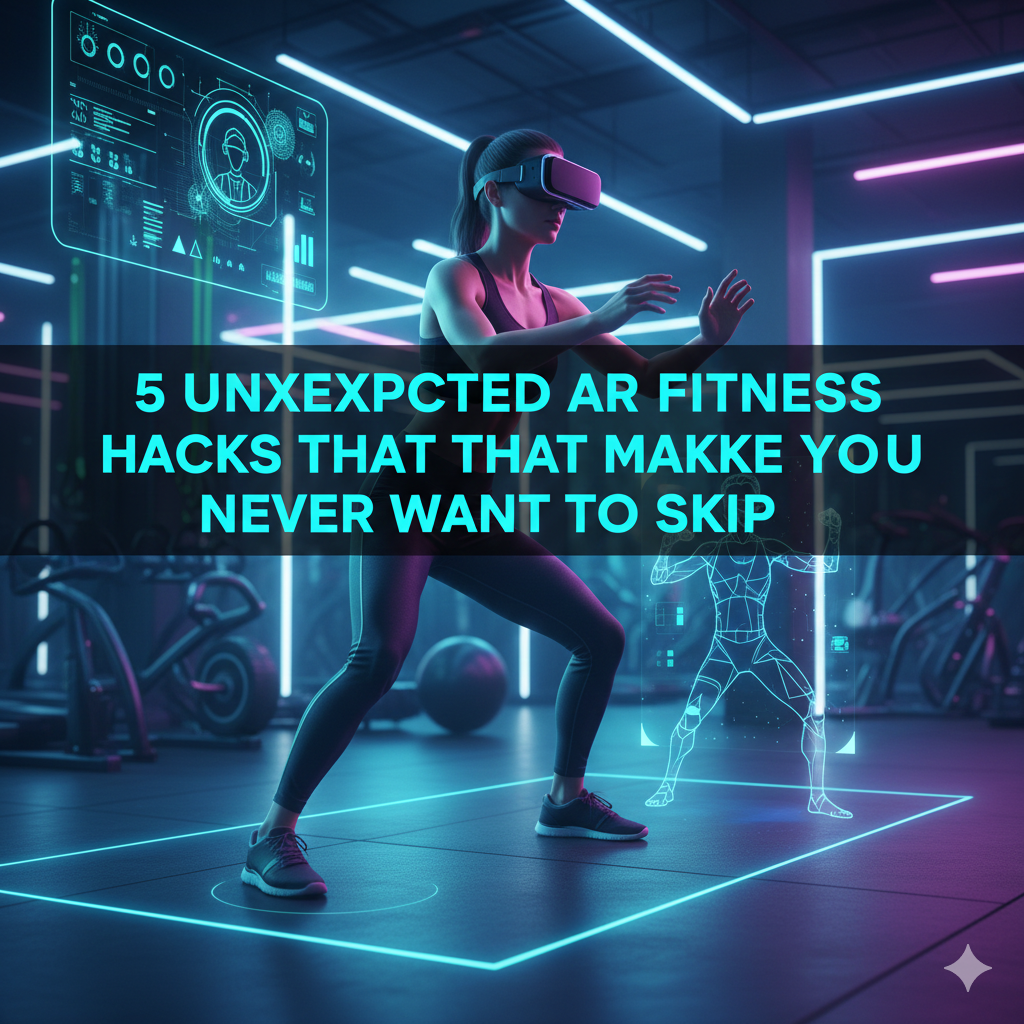
Working out can feel boring. Same routine. Same gym. Same playlist. But what if your living room could become a boxing ring? What if a virtual coach was right next to you, correcting your form in real time?
And that’s precisely what augmented reality fitness makes possible.
AR fitness is no longer a line out of a sci-fi movie. It’s here. It’s real. And it’s growing fast. Whether you’re just starting out or someone who needs a quick fix to make workouts fun again, AR fitness has something for everyone.
Lucky for you, this guide takes you step-by-step through 5 practical and fun AR fitness starter hacks that are easy to put into place — even as a beginner. By the end, you will have a clear path to getting started without wasting time or money.
Let’s go.
What Is AR Fitness and Why Should You Care?
Before diving into the hacks, let’s take a moment to look at what AR fitness actually is.
Augmented reality (AR) overlays digital elements — graphics, animations, or data — onto the physical world. Unlike virtual reality, you aren’t wearing a full headset blocking out everything around you. AR allows you to remain in your physical environment while overlaying something digital on top of it.
When it comes to fitness, this can look something like:
- A virtual trainer materializing in your living room via your phone screen
- Stats hovering next to you in real-time as you run
- Interactive movement-based games that get your whole body involved
AR fitness blurs the boundary between exercise and entertainment. That’s huge — especially for those who battle with motivation.
The Numbers Behind the Trend
The augmented reality fitness space is blowing up. Here’s a quick rundown of why interest is nowhere near slowing down:
| Stat | Detail |
|---|---|
| Global AR fitness market size (2023) | $2.8 billion |
| Expected market size by 2030 | $18.6 billion |
| Percentage of Gen Z interested in gamified workouts | 73% |
| Average increase in workout duration with AR | 35% longer sessions |
| Leading category for AR fitness device | Smartphones (68% of users) |
These figures suggest one thing — AR fitness is no fad. It’s becoming the new normal.
Hack #1 — Get Started With Your Smartphone, Not Expensive Gear
One of the biggest misconceptions surrounding AR fitness is that you require expensive hardware to start. You don’t.
Your smartphone is already a great AR fitness tool. The majority of modern phones — whether Android or iPhone — have the hardware required to run AR apps without a hitch. That means you can get started today, for free or little cost.
Top Free AR Fitness Apps to Use Right Away
Here are a few good options that rely on your phone’s camera and AR technology:
Nike Training Club — Not strictly AR, but this app uses your phone’s camera to provide guided workouts and form feedback. Great for beginners.
Zombies, Run! — This app drops you into an ongoing story. You traverse the physical world while audio describes a post-apocalyptic adventure unfolding around you. It’s addictive.
Move with Google — Tracks body movement and encourages activity goals using the phone’s sensors and camera.
Just Dance Now — Complete AR-style dance workouts using your phone as a controller. Zero equipment needed.
BodyPump AR Apps (using Apple’s ARKit) — Various apps built on Apple’s ARKit framework put virtual gym equipment and coaches in your room.
Getting Started With AR Fitness on Your Phone
Getting up and running takes less than 10 minutes. Here’s a simple setup checklist:
- Clear a space in your room — minimum 6×6 feet
- Ensure the camera lens on your phone is clean
- Update your phone’s operating system (AR works better on newer OS versions)
- Download one app from the list above
- Ensure you have decent lighting — AR tracking performs best in well-lit rooms
- Use a phone stand or tripod so your hands stay free
That’s it. You’re ready.
Starting with your phone takes away all excuses. You do not need a gym membership. You don’t need a headset. You only need what you already have.
Hack #2 — Turn Cardio Into Fun With AR Running Apps
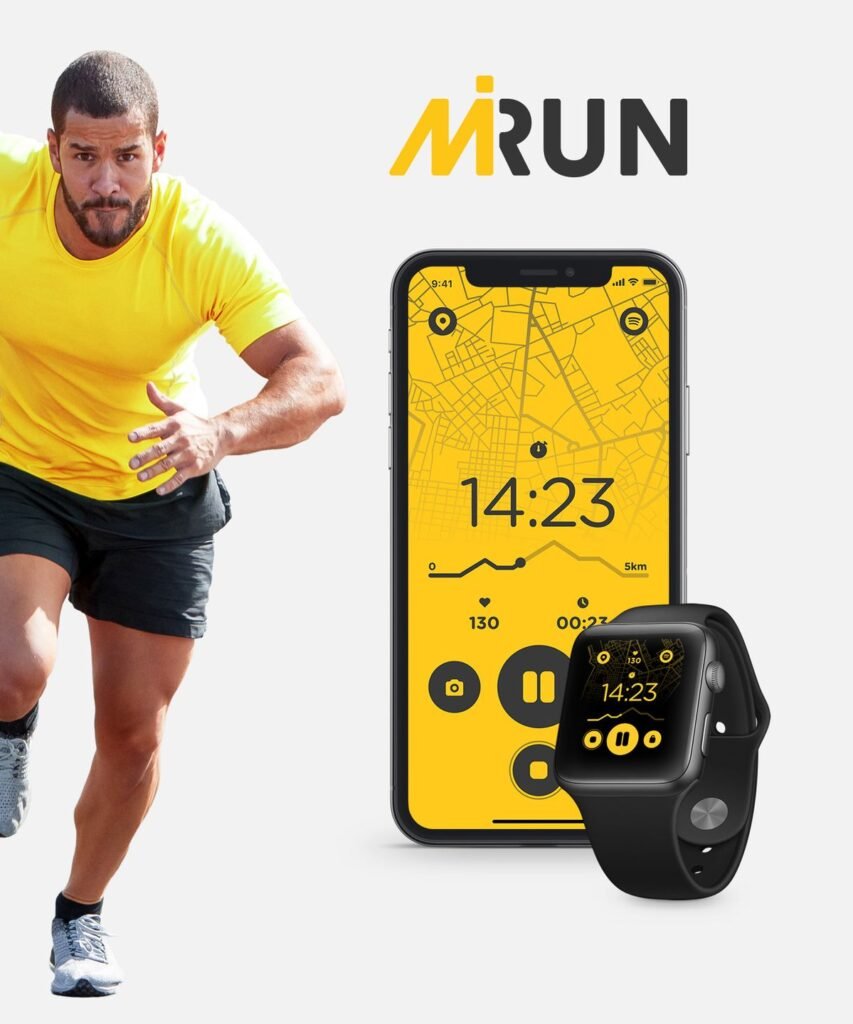
Running is one of the most skipped workouts. It’s repetitive. It’s lonely. And for newcomers, it often seems never-ending.
AR running apps solve all of that.
These apps layer digital experiences over your actual real-life running route. Some add story missions. Some project live stats — pace, heart rate, distance — into your field of vision. Others allow you to race against virtual opponents or earn virtual rewards.
Top AR Running Experiences Broken Down
| App | AR Feature | Best For | Cost |
|---|---|---|---|
| Zombies, Run! | Mission-based AR audio | Motivation & storytelling | Free/Premium |
| Strava + AR visuals | Route tracking with visual data | Serious runners | Free |
| Runna | AI coaching with AR prompts | Training plans | Subscription |
| AR Runner (beta apps) | Pace ghosts to race against | Competitive runners | Varies |
| Nike Run Club | Guided runs with live coaching | Beginners | Free |
How to Stick With AR Running
The trick is finding an app that fits your personality.
If you love stories — go with Zombies, Run!. You will actually look forward to your next chapter.
If you’re competitive — find an app with virtual race opponents. Racing a “ghost” version of your former self is surprisingly motivating.
If you’re data-driven — apps with floating stats overlays keep your brain busy the entire run.
Boredom is the number one reason why most people stop running. AR fights boredom by making every single run different. There’s always something to pursue, finish, or unlock.
Quick Tip: Pair AR Running With Simple Goals
Don’t just run. Run with a mission.
Use the app’s built-in goals — like “complete three missions this week” or “beat your ghost by 30 seconds” — as your weekly targets. Specific goals work far better than vague ones like “work out more.”
AR apps are designed to set these goals for you automatically. Let them do the work.
Hack #3 — Level Up Home Workouts With an AR Virtual Trainer

Personal trainers are expensive. A single session can cost between $50 and $150. But AR technology is bringing personal coaching to anyone, at any time, in their own home.
AR home workout apps put a virtual trainer in your environment. Through your phone or AR glasses, you can see the trainer demonstrating every move. Some apps even monitor your form through the phone’s camera, providing real-time corrections.
If you’re serious about training smarter at home, AR Body Health is a great resource to explore AR-based wellness tools and body health guidance that pairs perfectly with these workouts.
How AR Home Workouts Are Different
Traditional workout videos are one-way. You see someone else do the exercise. You try to copy it. You don’t really know if you’re doing it right.
AR home workouts are two-way. The app watches you. It reacts to what you’re doing. That’s a huge difference.
Here’s how a typical AR home workout session looks:
Step 1 — You launch the app and point your phone at the floor. The app scans your room.
Step 2 — A virtual trainer appears on your screen, standing inside your actual room.
Step 3 — The trainer demonstrates the first exercise. You follow along.
Step 4 — The app’s camera tracks your movement via motion detection or AI body tracking.
Step 5 — If your form is off, the app prompts you with a correction on screen.
Step 6 — You finish your sets, and the app records your workout automatically.
It feels nothing like watching a boring YouTube video.
Apps That Offer AR Personal Training
Tempo Studio — Tracks 13 body points in real time with 3D sensors and AI. Gives live form feedback. Requires their hardware, but worth mentioning.
FitXR — Pairs with VR/AR headsets for full-body boxing, HIIT, and dance workouts in immersive environments.
Kinetica AR — Tailored to mobile AR training. Places coaches in your environment using ARKit or ARCore.
Apple Fitness+ with AR features — Despite being predominantly video-based, Apple is expanding AR tech via the Apple Watch and iPhone camera combination.
AR Beginner Home Workout Plan (No Equipment)
Here’s a basic weekly plan you can do using AR home workout apps:
| Day | Workout Type | Duration | AR Feature to Use |
|---|---|---|---|
| Monday | Upper body strength | 20 min | Virtual trainer form check |
| Tuesday | Rest or light walk | — | AR walking app for steps |
| Wednesday | Full body HIIT | 25 min | Gamified AR workout |
| Thursday | Flexibility/yoga | 20 min | AR pose guidance |
| Friday | Lower body strength | 20 min | Virtual trainer form check |
| Saturday | Fun AR game workout | 30 min | Dance or boxing AR game |
| Sunday | Rest | — | — |
This plan keeps things balanced and uses AR features throughout the week so nothing feels repetitive.
Hack #4 — Turn Your Workout Into a Game With AR Fitness Games

Games are addictive by design. Fitness doesn’t need to be a chore — not when you can literally play your way to a stronger body.
AR fitness games turn your own body into the controller. You jab, sidestep, squat, leap, and sprint — all in reaction to what’s happening on your screen. And the wild part is, because you’re so focused on the game, you don’t actually realize you’re exercising.
Why Gamification Works for Fitness
Research backs this up. When exercise is wrapped in a game format, people:
- Exercise 30–40% longer per session
- Return to workouts more consistently
- Report feeling more energized after sessions
- Experience lower perceived effort — it feels easier, even when it’s not
That last one is key. The brain pays less attention to effort when it’s having fun. You push harder without feeling like you’re pushing at all.
According to Healthline’s research on exercise motivation, making workouts enjoyable is one of the single most important factors in maintaining a long-term fitness habit — and that’s exactly what AR fitness games deliver.
Top AR Fitness Games Worth Playing
Beat Saber (VR/AR) — Slice blocks to the rhythm of music using lightsabers. Full arm, core, and reflex workout. One of the most played fitness games on the planet.
Supernatural — A daily VR/AR workout game combining music, beautiful environments, and coach-led moves. Scientifically proven to burn serious calories.
Holofit — AR rowing, cycling, and running paired with virtual environments. Turns cardio into a mini adventure.
Ring Fit Adventure (Nintendo Switch) — Not exactly AR, but uses real physical movement to control the game. A surprisingly demanding full-body workout.
Pokémon GO — The classic. Still one of the best tools for getting people to walk more. Simple, free, and devastatingly effective at putting people outdoors.
Making AR Fitness Games a Legit Training Tool
The trick is treating game sessions as real workouts — not just playtime.
Here’s how:
Set a session timer. Play for a set amount of time — 20 or 30 minutes — rather than just until you’re bored.
Track your active heart rate. Sync your phone or game with a fitness tracker so you can monitor your true calorie burn and heart rate during the session.
Choose games that align with your fitness goal. Beat Saber is better for arms and cardio. Pokémon GO is better for steps and low-intensity movement. Choose based on what your body needs.
Rotate games weekly. Playing one game every single day leads to the same boredom problem as traditional workouts. Rotating keeps things fresh.
Hack #5 — Track Progress With AR-Powered Fitness Data
Motivation comes and goes. What keeps people consistent? Seeing real progress.
AR fitness tools don’t just make workouts fun — they also provide some of the most detailed progress tracking available anywhere. And when you can clearly see your progress, you keep going.
What AR Fitness Tracking Really Measures
Modern AR fitness apps and devices track far more than steps or calories. Here’s how traditional tracking compares to AR-powered tracking:
| Metric | Traditional Fitness Tracker | AR Fitness Tools |
|---|---|---|
| Steps | ✅ | ✅ |
| Heart rate | ✅ | ✅ |
| Calories burned | ✅ | ✅ |
| Workout form/posture | ❌ | ✅ |
| Muscle group usage | ❌ | ✅ |
| Real-time coaching cues | ❌ | ✅ |
| 3D body movement analysis | ❌ | ✅ |
| Gamified milestone tracking | ❌ | ✅ |
| Environment-based AR goals | ❌ | ✅ |
That’s a massive difference. AR fitness tools give you a complete picture of your body’s activity — not just your step count.
How to Use Your AR Data to Stay Motivated
Data means nothing if you don’t actually look at it. Here’s a simple habit to build:
Spend 5 minutes every Sunday reviewing your AR fitness numbers from the previous week. Look at:
- When you were most active during the week
- What workouts felt hardest vs. easiest
- What your form scores looked like
- Whether your heart rate zones are improving
Then use that data to adjust your plan for the following week. This weekly review habit is one of the most powerful things you can do for long-term fitness progress — and AR apps make it easy by doing most of the data collection for you.
Setting AR Fitness Milestones
AR apps allow you to set visual milestones — unlocking a new virtual badge, reaching a new level, or completing a challenge streak. These seem small, but they’re a big deal for your brain.
At the beginning, set one short-term milestone (1–2 weeks away) and one long-term milestone (2–3 months away). Let your AR app track the distance between where you are and where you want to be.
Progress visualization is one of the biggest advantages AR fitness has over traditional gym tracking. Use it.
Putting It All Together — Your 30-Day AR Fitness Starter Plan
Here’s an easy roadmap to use all 5 hacks in your first month:
| Week | Focus | Hack Used |
|---|---|---|
| Week 1 | Set up phone, try one AR app | Hack #1 |
| Week 2 | Add AR running 3x per week | Hack #2 |
| Week 3 | Try an AR home workout 3x and one fitness game | Hack #3 + #4 |
| Week 4 | Review all progress data, set next month’s goals | Hack #5 |
This plan builds gradually. You don’t throw everything at the wall at once. You stack one new habit on top of another — which is precisely how lasting fitness routines are built.
Frequently Asked Questions About AR Fitness for Beginners
Q: Do I need special glasses or a headset to start AR fitness? No. Most AR fitness apps work through your smartphone camera. No special hardware is required to get started.
Q: Is AR fitness safe for beginners who are out of shape? Yes. Most AR fitness apps allow you to select your fitness level. Start at beginner settings and build from there. Always listen to your body.
Q: How much do AR fitness apps and subscriptions cost? It varies. Many solid apps are free or have free versions. Premium subscriptions tend to cost between $5 and $30 per month. Some AR hardware, such as headsets, can be expensive, but they are not required to get started.
Q: Can AR fitness replace a gym membership? For most people, yes — especially for cardio, bodyweight training, and flexibility work. Heavy weightlifting would still require equipment. But you do not need a gym membership to get a great workout with AR tools.
Q: What phone do I need for AR fitness apps? Most phones manufactured after 2018 can run basic AR fitness apps. For the best experience, a phone with ARKit support (iPhone 12 or newer) or ARCore support (most recent Android phones) works best.
Q: How can I stay motivated long-term with AR fitness? Rotate your apps, play different games, and review your progress data weekly. The variety built into AR fitness is its biggest motivator — use it intentionally.
Q: Do AR fitness games really count as a workout? Yes. Research on games including Beat Saber and Supernatural has found heart rates climbing into moderate- to vigorous-intensity zones — the same zones targeted in traditional cardio workouts.
The Future Is Already Here — Be Ahead of the Game
AR fitness is still early. It is still under most people’s radar. That means now is the best time to start — before gyms go fully digital, before prices go up, and before everyone around you is already ahead.
The 5 smart AR fitness starter hacks in this guide don’t need a huge investment. They don’t require a perfect schedule or an upscale gym. They only need you to choose one item from this list and do it today.
Start with your phone. Try one app. Do one session.
That’s the whole secret. Every physical transformation begins with one small step — and with AR fitness, that step is actually kind of fun.
Your future self — stronger, fitter, and actually enjoying workouts — is waiting. Go meet them.