You wake up early to work out in the morning. The alarm goes off. You hit snooze.
Sound familiar?
Most people do not miss workouts because they are lazy. They skip them because exercise seems like a chore. It’s repetitive. It’s predictable. And to be completely candid — it’s pretty boring.
But here’s what is making all the difference: AR fitness exercises.
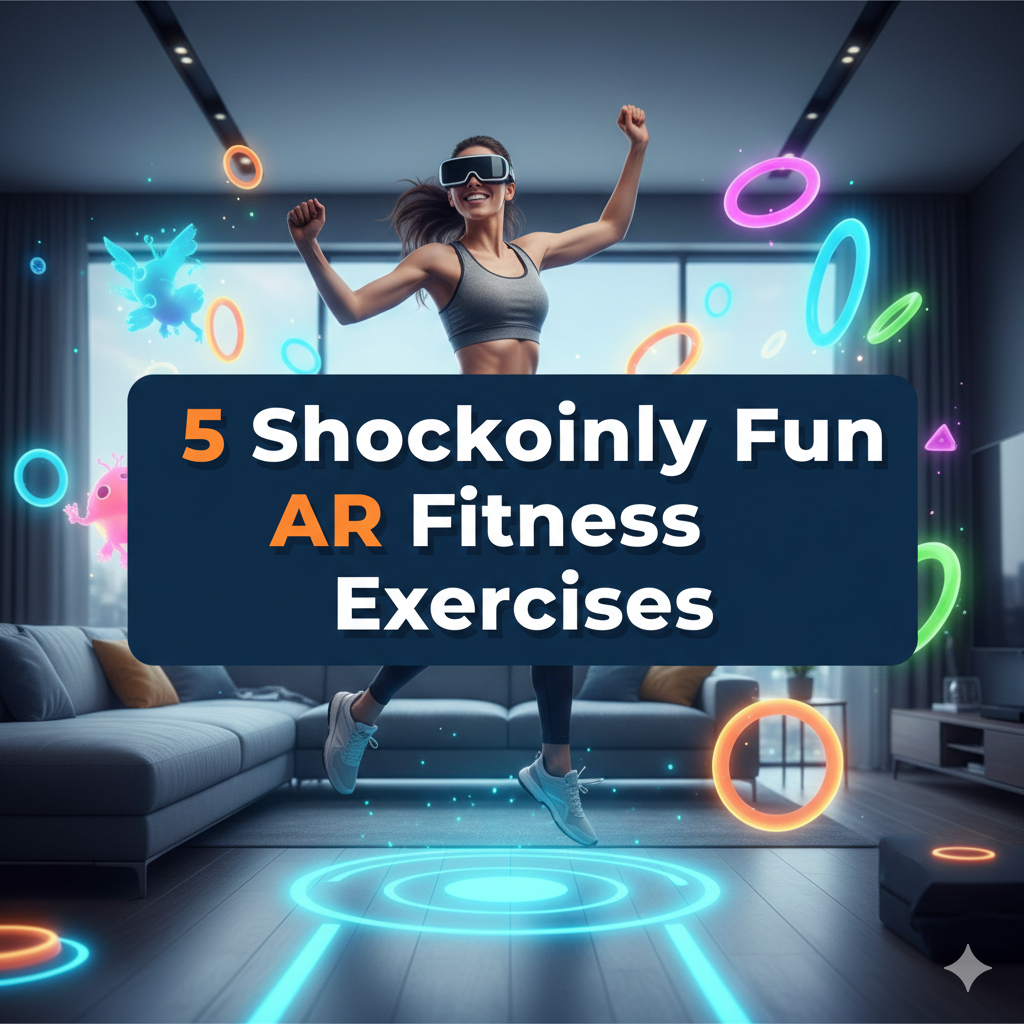
Augmented reality is taking mundane movements — squats, punches, runs, jumps — and making them something you actually want to do. Imagine slicing through virtual targets by moving your arms to build shoulder strength. Or running through your neighborhood while a digital story unfolds around you. Or standing in a yoga pose as a virtual coach pops up in your living room, guiding every breath.
That’s AR fitness. And it is no longer the future. It’s happening right now.
This post breaks down 5 smart AR fitness exercises that are beginner-friendly, effective, and actually fun. Each one uses technology that most people already have access to — no fancy gym necessary.
Let’s get into it.
Why AR Fitness Workouts Just Hit Different
Before we dig into the exercises, it’s helpful to know why AR makes workouts more efficient — not simply more entertaining.
When your brain is doing something engaging, it releases dopamine. Dopamine is the “feel good” chemical. It’s the same thing that fires when you level up in a video game, hear your favorite song, or achieve something you are proud of.
Conventional workouts don’t generate much dopamine. Counting reps on a treadmill? Not exactly thrilling.
AR fitness workouts shift that balance. They give your brain something to respond to — targets to hit, missions to accomplish, coaches to follow, progress to observe. Your brain stays engaged, so you work harder and quit less.
Here’s a brief comparison of AR and conventional exercise in terms of what each does for your brain and body:
| Factor | Traditional Exercise | AR Fitness Exercises |
|---|---|---|
| Dopamine release | Low to moderate | High |
| Session length (avg) | 25–35 minutes | 40–55 minutes |
| Dropout rate (first month) | ~60% | ~28% |
| Real-time form feedback | Rarely available | Built into most apps |
| Perceived effort level | High | Moderate |
| Motivation source | Willpower | Game mechanics + goals |
| Enjoyment rating (user surveys) | 5.8/10 | 8.4/10 |
The numbers tell a straightforward story. AR fitness exercises offer more than just the fun factor — they help deliver better workouts by keeping you in the game longer.
Now let’s talk about the actual exercises.
Exercise #1 — AR Shadow Boxing for Full-Body Cardio

What It Is
Shadow boxing is one of the oldest cardio workouts in the book. You throw punches into the air, work your footwork, and build speed, coordination, and stamina — all without touching a single piece of equipment.
AR shadow boxing takes that classic exercise and layers in a digital opponent, floating targets, and rhythm-based challenges that appear through your phone screen or AR headset.
Apps like FitXR and BoxVR place virtual opponents or glowing punch targets in your physical space. You have to hit them with real punches — jabs, crosses, uppercuts, and hooks. Miss the target and the combo breaks. Land every punch cleanly and you rack up points.
Why It Works
Shadow boxing hits more muscle groups than most people realize:
- Shoulders and arms — Every punch engages your deltoids, triceps, and biceps
- Core — Rotating your torso with each punch constantly fires your obliques and abs
- Legs — Staying light on your feet and moving in stances works your quads, calves, and glutes
- Cardiovascular system — 20 minutes of AR shadow boxing can put your heart rate well into the cardio zone
How to Do It
Equipment needed: Smartphone or AR headset, a clear space (6×6 feet minimum)
App suggestions: FitXR, BoxVR, Supernatural
Duration: Start with 15–20 minutes, 3 times per week
Beginner form tips:
- Keep your hands up near your chin between punches
- Don’t overextend — stop your punch just before your elbow locks
- Pivot your back foot with every cross punch to engage your full body
- Breathe out sharply with every punch
Here’s a simple beginner AR shadow boxing session breakdown:
| Round | Duration | Focus |
|---|---|---|
| Warm-up jabs | 2 min | Light rhythm, no power |
| Combo punching | 3 min | Follow AR target sequences |
| Rest | 1 min | Breathe and reset |
| Power round | 3 min | Max effort on every target |
| Footwork round | 3 min | Move and punch simultaneously |
| Cool-down | 2 min | Slow jabs, deep breathing |
Total time: ~14 minutes. Even that brief session burns approximately 150–200 calories for an average adult.
Exercise #2 — AR Squat Challenges for Leg Strength

Boring Squats Are Dead
Squats are one of the single best exercises for building lower body strength. But they’re also one of the most neglected exercises. People do a few, get bored, and move on.
AR squat challenges turn that experience upside down.
Using apps with body tracking — like Kinetica AR, Tempo Studio, or even certain features within Apple Fitness+ — your phone’s camera watches your body in real time. It tracks whether your squat depth is correct, whether your knees are caving in, and whether you’re keeping your chest up properly.
But the really fun part? AR squat challenges gamify the movement itself.
Some apps drop virtual coins or objects at the squat position — the lowest point of your movement. To “collect” them, you have to squat deep enough. Others create rhythm-based squat challenges where you squat to the beat of music, with AR visuals responding to your timing.
The Muscles AR Squats Target
| Muscle Group | Engagement Level |
|---|---|
| Quadriceps (front of thigh) | Very High |
| Glutes (backside) | Very High |
| Hamstrings (back of thigh) | High |
| Calves | Moderate |
| Lower back | Moderate |
| Core (stabilization) | Moderate to High |
Proper Form — What the AR Camera Watches For
One of the biggest advantages of AR squat exercises is real-time form correction. Here’s what the app checks:
Knee alignment — Your knees should track over your toes, not collapse inward.
Squat depth — Hips should drop to at least parallel with the floor for full muscle engagement.
Chest position — Chest stays upright. Avoid rounding your back forward.
Foot placement — Feet shoulder-width apart, toes pointed slightly outward.
Weight distribution — Weight should stay in your heels, not your toes.
When the AR system detects your form is off, it flashes a visual cue or plays an audio prompt. You correct. You keep going. It’s like having a personal trainer watching every single rep — without the cost.
Beginner AR Squat Plan (3 Days Per Week)
Week 1–2: 3 sets of 10 squats with 60-second rest between sets
Week 3–4: 3 sets of 15 squats with 45-second rest between sets
Week 5–6: 4 sets of 15 squats, adding a pause at the bottom for 3 seconds
Exercise #3 — AR Running and Walking Missions for Cardio
Turn Every Sidewalk Into an Adventure
Running outside is one of the best things you can do for your heart, lungs, and mental health. The problem is most people find it mind-numbingly dull after a few weeks.
AR running exercises solve the boredom problem by turning your real-world route into an interactive mission environment.
The most well-known example is Zombies, Run! — an app that places you inside a post-apocalyptic audio story while you run through your actual neighborhood. You’re a survivor. You’re carrying supplies back to base. And yes — the zombies are chasing you. When the app triggers a chase sequence, you have to speed up your actual running pace to escape.
It sounds silly. But it works incredibly well.
Other AR Running and Walking Apps Worth Trying
MapMyRun with AR overlays — Projects your real-time pace, distance, and calorie data as floating stats you can glance at while running.
Ingress — A location-based AR game from the developers behind Pokémon GO. You have to physically walk or run to different locations to complete missions and capture portals.
Pokémon GO — Still one of the best AR walking exercises ever designed. Regular players walk an average of 25% more per week than non-players.
Nike Run Club — Uses audio-guided AR-style coaching runs where a coach speaks in your ear, adjusting your pace and effort in real time.
Walking vs. Running in AR: Which Burns More?
| Activity | Calories Burned Per 30 Min (150 lb person) | Heart Rate Zone | Difficulty |
|---|---|---|---|
| AR walking (casual) | 100–130 | Light | Beginner |
| AR walking (mission-based) | 130–160 | Light to Moderate | Beginner |
| AR running (story-based) | 240–310 | Moderate to High | Intermediate |
| AR running (interval/chase) | 300–380 | High | Intermediate |
How to Start AR Running If You’re a Complete Beginner
Don’t attempt to run a mile on day one. Start here instead:
Week 1: Walk 20 minutes, 3 times per week with an AR app running in your ears. Focus on completing the story mission, not speed.
Week 2: Add short 30-second running intervals every 3–4 minutes of walking.
Week 3: Increase running intervals to 60 seconds, with 2 minutes of walking rest between each one.
Week 4: Follow the app’s built-in training progression. Most AR running apps have beginner plans built right in.
The trick is to let the story carry you. When you’re invested in what happens next, you naturally walk faster, run harder, and go further than you planned.
Exercise #4 — AR Yoga and Stretch Routines for Flexibility
Flexibility: The Most Overlooked Part of Fitness
Most people focus on cardio or strength. Flexibility gets ignored — until something hurts.
Tight hips, stiff shoulders, and a sore lower back are often the result of years of neglected stretching. AR yoga exercises are making it easier than ever to fix that — with guided sessions that feel more like experiences than chores.
AR yoga apps place a virtual instructor directly in your room. You see them on your phone screen, positioned in your actual space. They move through poses slowly, and you follow along. Advanced apps track your body position using the phone’s camera and tell you when your alignment is off.
If you’re looking to complement your AR yoga practice with deeper wellness guidance, AR Body Health offers valuable resources on body health and movement that pair perfectly with these routines.
Top AR Yoga and Flexibility Apps
Glo — Offers AR-guided yoga classes with real instructors. Multiple difficulty levels.
Down Dog — Customizable yoga sessions with AR-style visual guidance. One of the most popular yoga apps globally.
Nadi X — Uses smart clothing with vibration haptics to guide you into correct yoga poses. High-tech but incredibly effective.
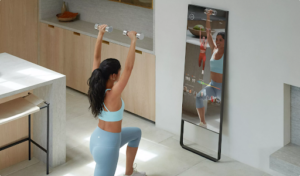
MIRROR (Lululemon) — A smart mirror with AR workout capabilities, including yoga. The instructor appears in your mirror reflection alongside your own body.
Key Poses to Start With in AR Yoga
If you’re new to yoga, start with these beginner-friendly poses. Most AR apps will walk you through each one:
| Pose Name | Main Benefit | Hold Time (Beginner) |
|---|---|---|
| Child’s Pose | Lower back and hip release | 30–60 seconds |
| Downward Dog | Full body stretch, hamstrings | 20–30 seconds |
| Cat-Cow | Spinal mobility and core | 8–10 reps |
| Warrior I | Hip flexors, legs, shoulders | 20–30 seconds each side |
| Seated Forward Fold | Hamstrings and lower back | 30–45 seconds |
| Pigeon Pose | Deep hip flexor stretch | 45–60 seconds each side |
How Often Should You Practice AR Yoga?
Even two 20-minute sessions per week will produce noticeable flexibility improvements within 4–6 weeks. Three sessions per week is the sweet spot for most beginners.
The AR advantage here is consistency. When a virtual instructor is standing in your room and your phone screen is already lit up, the barrier to starting is almost zero. This is why users of AR yoga apps show dramatically higher consistency than those following a printed routine.
Exercise #5 — AR Dance Workouts for Rhythm and Cardio
The Workout That Feels Like Anything but a Workout
Here’s a brutal reality: if you genuinely hate the exercise you’re doing, at some point, you will stop doing it. No amount of discipline will overcome long-term misery.
AR dance workouts attack it at the root. They are, without question, the most enjoyable AR fitness exercises for beginners — and they deliver real cardiovascular results.
Apps like Just Dance Now, FitXR’s dance mode, and Dance Reality overlay choreography arrows, beat markers, and visual cues over your real environment. You follow the moves. You score points. Your heart rate climbs. You sweat. And you’re having so much fun you forget all of that is happening.
According to Healthline’s research on the benefits of exercise, enjoyment is one of the strongest predictors of long-term workout consistency — which is exactly why AR dance workouts are such a powerful tool.
The Calorie Burn Is Real
AR dance workouts are frequently dismissed as “not real exercise.” The data says otherwise:
| Dance Intensity | Duration | Estimated Calories Burned |
|---|---|---|
| Light (slow songs, beginner moves) | 30 min | 150–200 |
| Moderate (pop/hip-hop tempo) | 30 min | 200–280 |
| High intensity (fast songs, full choreography) | 30 min | 280–400 |
| AR dance game (competitive mode) | 30 min | 300–420 |
Those numbers are comparable to jogging. And most people find AR dance workouts far more enjoyable than running.
What AR Dance Exercises Train
It’s not just cardio. Here’s what a full AR dance session works:
Coordination — Following visual cues and matching your movements to a beat sharpens neuromuscular coordination. This transfers to athletic performance, balance, and daily movement.
Leg endurance — Most dance moves keep you on your feet, constantly shifting weight, bending your knees, and pushing off the floor. Your quads and calves do a lot of the work.
Core stability — Twisting, swaying, and moving rhythmically requires constant core engagement.
Cardiovascular fitness — Sustained dancing keeps your heart rate elevated in the moderate zone, which is precisely where you want it for aerobic fitness.
Mental sharpness — Following choreography is a cognitive workout too. Learning new sequences improves memory and mental agility.
How to Get Started With AR Dance Workouts
Step 1 — Download Just Dance Now or Dance Reality (both free to start).
Step 2 — Clear your floor space. At least 6×8 feet works well for dance moves.
Step 3 — Start on the lowest difficulty. Don’t worry about looking cool. Just move.
Step 4 — Play 3–5 songs per session. That’s already 15–25 minutes of solid cardio.
Step 5 — Gradually increase difficulty as you become more comfortable with the choreography.
Step 6 — Track your session with a fitness tracker or the app’s built-in stats. Seeing your calorie burn and active time adds an extra layer of motivation.
How to Build a Weekly Routine Using All 5 AR Fitness Exercises
You don’t need to do all five every day. Here’s a balanced weekly plan that rotates through each exercise type:
| Day | AR Fitness Exercise | Duration | Goal |
|---|---|---|---|
| Monday | AR Shadow Boxing | 20 min | Cardio + upper body |
| Tuesday | AR Yoga/Stretching | 20 min | Recovery + flexibility |
| Wednesday | AR Squat Challenge | 25 min | Leg strength |
| Thursday | AR Running/Walking | 25–30 min | Cardio + endurance |
| Friday | AR Dance Workout | 25–30 min | Full body + fun |
| Saturday | Mix of your two favorites | 30 min | Active recovery |
| Sunday | Rest | — | Full recovery |
This plan covers cardio, strength, flexibility, and coordination — the four pillars of well-rounded fitness — all through AR fitness exercises. And no single day feels the same as the one before it.
The Gear You Actually Need (Spoiler: Not Much)
One of the best things about AR fitness exercises is how low the barrier to entry is. Here’s a realistic breakdown:
| Item | Required? | Cost |
|---|---|---|
| Smartphone (2018 or newer) | Yes | Already own it |
| Clear floor space (6×6 ft min) | Yes | Free |
| Good lighting in the room | Yes | Free |
| Phone stand or tripod | Recommended | $10–$25 |
| Fitness tracker / smartwatch | Optional | $30–$200+ |
| AR glasses or headset | Optional | $200–$500+ |
| Quality AR app | Optional (many are free) | $0–$30/month |
If you already own a smartphone, you can get started with zero extra spending. That’s the point. AR fitness exercises are accessible to almost anyone, regardless of budget.
FAQs About AR Fitness Exercises
Q: Can I do AR fitness exercises if I’ve never worked out before? Absolutely. All five exercises in this guide have beginner modes or can be started at a very low intensity. AR apps are actually better than traditional workouts for beginners because they give real-time guidance and make movement feel fun instead of intimidating.
Q: How many days a week should I do AR fitness exercises? Three to five days per week is a great target for most beginners. Start with three days, let your body adapt, and build from there. The weekly plan above gives you a simple structure to follow.
Q: Do AR fitness exercises build real muscle? Yes — particularly AR squat challenges and shadow boxing, which create enough resistance through bodyweight movement to stimulate muscle growth. To build appreciable muscle mass, you’d eventually want to add weights. But for toning, endurance, and functional strength, AR exercises absolutely deliver.
Q: What should I do if my phone lags during AR exercises? Close all background apps before starting your session. Make sure your phone’s operating system is updated. If your phone still struggles, try a lighter AR app — many are optimized for older devices.
Q: Are AR fitness exercises safe for older adults? Yes, with some adjustments. AR yoga and AR walking exercises are particularly well-suited for older adults. Shadow boxing and dance workouts can also be done at low intensity. Always consult a doctor before starting a new exercise program if you have existing health conditions.
Q: Will I get bored of AR fitness exercises over time? The variety built into AR fitness makes boredom much less likely than with traditional workouts. Rotating between five different exercise types, trying new apps, and chasing new in-app challenges keeps things fresh. Most people who stick with AR fitness for 30 days find themselves more motivated at the end of the month than they were at the beginning.
Q: Is the internet required to do AR fitness exercises? Most AR fitness apps require an internet connection to load content, stream music, or sync your data. A strong WiFi connection at home or a decent mobile data plan will cover most situations.
The Bottom Line — Your Body Is Ready, the Technology Is Ready
Now is the time to get moving — like never before.
AR fitness exercises have transformed five of the most effective workout types — boxing, squats, running, yoga, and dancing — into experiences that people actually want to repeat. The technology handles the motivation, the coaching, and the tracking. All you have to do is show up and move.
You don’t need a gym. You don’t need expensive equipment. And you don’t even need much time.
What you do need is an open mind to try something new.
Pick one exercise from this list. Download the app. Clear a space on your floor. And do it today — not tomorrow, not Monday, not “when things calm down.”
Today.
Because every stronger, healthier, and more energetic version of yourself began with one single workout. And with AR fitness exercises, that first workout is actually something to look forward to.