The idea is, you put on a headset, and all of a sudden you’re boxing in a neon-lit arena. Or you’re doing squats while a virtual coach is standing next to you, correcting your form instantaneously. This isn’t science fiction anymore. This is augmented reality (AR) fitness — and it’s possible right now.
AR fitness combines the real world and digital components. It overlays virtual images, sounds and feedback on top of your actual surroundings. You’re at home in your living room. But the experience is entirely different.
Many are avoiding the gym and searching for ways to stay fit at home. AR fitness tools fulfill that need in a way regular apps or YouTube videos never could. They turn workouts into interactive, compelling experiences that are hard to quit.
In this article, we’re going to unpack the 4 must-have AR fitness tools you need to know about. We’ll go over what they do, why they work, who they’re best for, and how they stack up. Let’s get into it.
Why AR Fitness Is Exploding Right Now
Before diving into the tools, let’s discuss why AR fitness is scaling up so rapidly.
The worldwide AR fitness market was valued at approximately $2.7 billion in 2023. It’s projected to continue its growth at a brisk pace through the end of this decade. That’s a huge increase — and for good reason.
Old-school workouts can seem like a drag. You do the same movements. You stare at the same wall. You do the same reps. Boredom sets in quickly, and boredom kills motivation.
AR fitness tools solve that problem. They gamify workouts into challenges and experiences. You stop focusing on the pain and instead turn your thoughts toward whatever destination lies ahead of you — quite literally.
Here is a short overview of what drives individuals to switch their fitness workouts to AR:
| Reason | Users Who Cited It |
|---|---|
| Boredom with conventional workouts | 67% |
| Wanting more motivation | 58% |
| Seeking home workout solutions | 54% |
| Desire for real-time feedback | 49% |
| Wanting a fun and engaging fitness experience | 72% |
(Source: Statista AR Fitness Survey, 2023)
The numbers speak for themselves. People want something better. AR fitness delivers it.
How AR Fitness Tools Actually Work
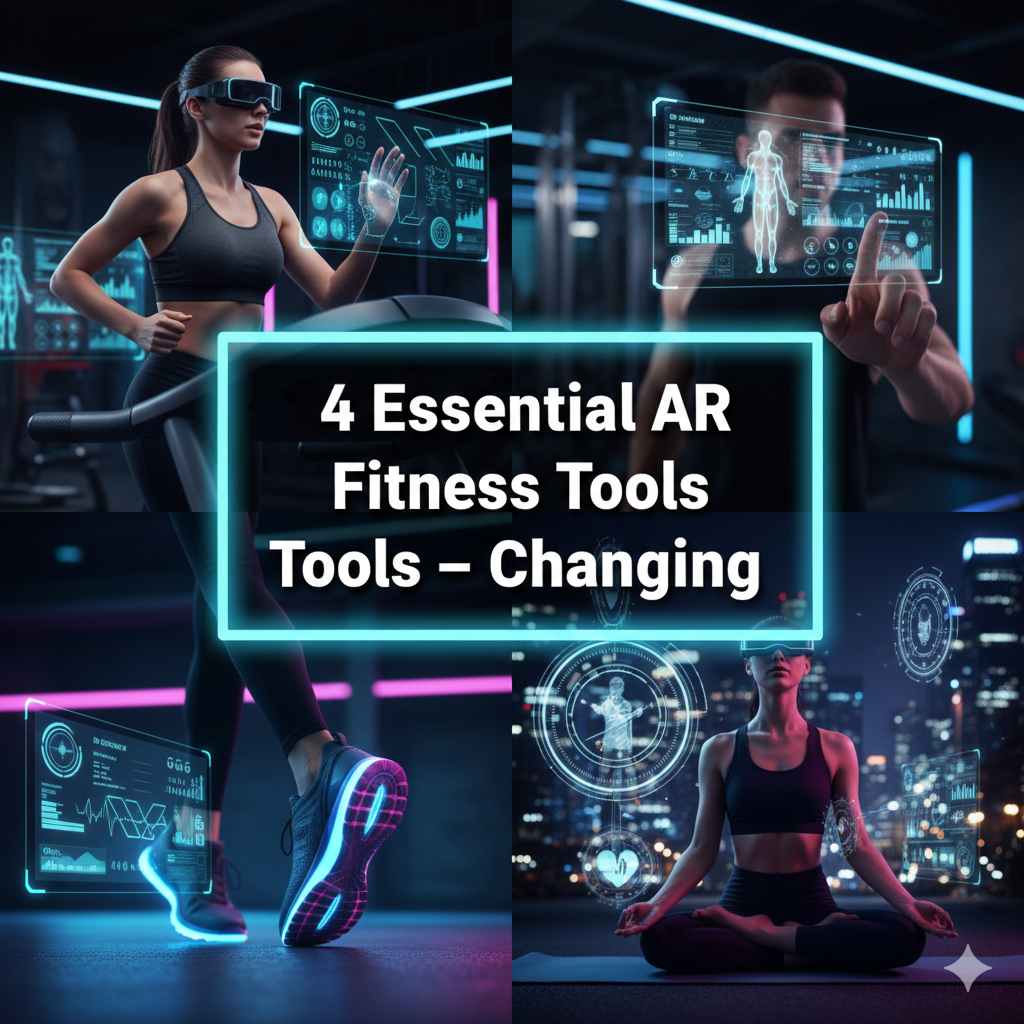
AR fitness tools utilize a combination of sensors, cameras and software to create an interactive workout environment. Some use a headset. Some use your phone’s camera. Others use smart glasses or motion-tracking wristbands.
The technology senses the position and movement of your body. Then it lays digital information — arrows, targets, coaches or virtual opponents — on your view of the real world.
This feedback loop is why AR fitness works so well. You don’t just follow instructions. You react. You adjust. You learn — all in the moment.
4 Key AR Fitness Tools
Tool #1 — AR Smart Glasses for Workout Guidance
What They Are
AR smart glasses are designed to resemble regular eyeglasses or shades, but a small display is embedded in the lens. This display gives you workout data, form tips, heart rate, calories burned and more — all while you’re in motion.
Sport-specific AR glasses have been created by brands such as Engo and Vuzix, as well as newer iterations from major tech giants. They’re lightweight, sweat-resistant and designed to stay on your face during vigorous activity.
How They Help Your Workouts
AR smart glasses let you check your stats on the fly without stopping mid-run to pull up a phone. Your pace, distance and heart rate hover directly in your line of sight. This allows you to remain in your zone without disrupting your flow.
A few high-end glasses also sync with apps to project coaching cues. A tiny arrow might appear reminding you to lift your chin. A yellow line may indicate your ideal stride path while running.
Who Should Use Them
AR smart glasses are good for:
- Athletes seeking heads-up data on the go without pausing
- HIIT workout folks who require immediate feedback on their form
- Competitors who need performance tracking
Real-World Example
Currently, the Engo 2 AR sports glasses are one of the most popular options on the market. They pair with fitness apps such as Garmin Connect and Strava. The display is minimal and easy to read even in bright sunlight. Runners love them because they feel like running with a coach who whispers updates in your ears — but through the eyes.
Pros and Cons
| Pros | Cons |
|---|---|
| Hands-free fitness data | Expensive — $300–$700 |
| Lightweight and wearable | Small field of view |
| Works with popular fitness apps | 8–12 hours battery life on average |
| Real-time coaching overlays | Takes getting used to |
Tool #2 — AR Fitness Headsets and VR-AR Hybrid Devices
What They Are
These are the heavy hitters in AR fitness. Devices such as the Meta Quest 3 and Apple Vision Pro headsets don’t merely display data. They immerse you in full fitness experiences that blend real and virtual landscapes.
Pure VR shuts the real world out entirely, while AR-based fitness headsets allow you to see your actual surroundings but overlay a whole workout universe on top of it. You could be throwing virtual punches while still seeing your couch and coffee table — so you don’t crash into them.
The Fitness Apps Behind Them
The headset is only hardware. The true magic lies in the fitness apps created for these devices. Here are some of the best AR fitness apps on these platforms:
- Supernatural — Curated exercises in gorgeous real-world scenery
- FitXR — Dance, boxing and HIIT classes in virtual studios
- Les Mills Bodycombat — Full-body combat workouts with actual instructor coaching
- Holofit — Rowing, cycling and running in virtual AR environments
These apps monitor your movement with the headset’s internal sensors. They know when you squat, punch, dodge or lift. They score you, root for you and challenge you to do better.
Why This Tool Stands Out
This is immersion like you have never seen. When you enter one of these experiences, you forget that you’re working out. Users routinely report burning 400–600 calories in a 30-minute session — figures that rival an intense gym workout.
A study in the Journal of Medical Internet Research found that users of VR and AR fitness apps adhered to their workouts 30% longer when compared with traditional methods.
Best For
- People who struggle with workout motivation
- Anyone who wants a full gym experience at home
- Gamers with fitness included in their hobby
- Anyone recovering from gym anxiety
Calorie Burn Comparison
| Activity | Avg. Calories Burned (30 min) |
|---|---|
| AR Headset Boxing App | 450–600 |
| Traditional Jogging | 280–350 |
| Yoga | 100–180 |
| Weight Training | 200–300 |
| AR Dance Fitness App | 350–500 |
These stats make a tough case for AR headset workouts.
Tool #3 — AR Fitness Apps on Smartphones
What They Are
Not everyone is in the $500 headset or $400 smart glasses range. This is where AR fitness apps on smartphones enter the scene. These all rely on your phone’s camera to generate augmented reality fitness experiences with a device you already own.
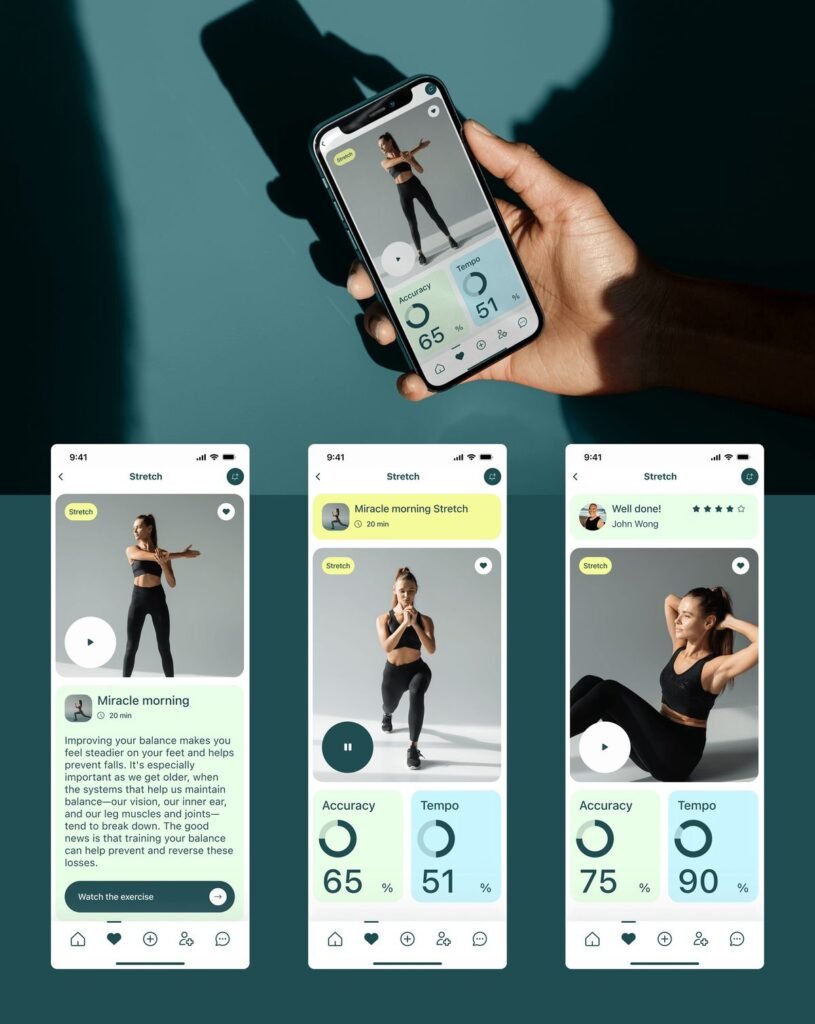
Apps like Kinetica, HomeCourt, Nike Training Club (with AR tools) and Tempo Move use the camera to track your body movements. They layer virtual guides on top and give you real-time form corrections — all on your phone screen.
How the Technology Works
Your phone’s camera captures video of your movements. Using pose estimation technology, the app’s AI interprets your body position. Then it overlays digital coaching elements directly onto the screen — like a green checkmark when your squat is deep enough, or a red warning when your back isn’t straight.
Some apps go further. They put a virtual coach right next to you on screen. You can watch yourself and a 3D guide perform the same moves side by side.
AR Fitness Apps Worth Trying
| App Name | Platform | Best Feature | Price |
|---|---|---|---|
| Kinetica | iOS/Android | AI form correction | Free / Premium |
| HomeCourt | iOS | Basketball skill AR training | Free / $9.99/mo |
| Tempo Move | iOS | 3D body tracking | Subscription |
| Freeletics | iOS/Android | Adaptive AR coaching | Free / Premium |
| PlayFitt | iOS/Android | AR fitness games | Free |
Why Smartphone AR Tools Are So Important
Accessibility matters. Millions want to get fit but don’t have the budget for high-end equipment. Smartphone AR tools make it cheaper and easier to get started. You don’t need a gym. You don’t need equipment. All you need is a phone and some floor space.
And these apps continue to get better. As phone cameras improve and AI gets more intelligent, so does the quality of body tracking and coaching feedback.
If you’re serious about improving your fitness with the latest technology, tools like these pair perfectly with expert guidance — check out AR Body Health for resources on combining AR tools with effective body health strategies.
Best For
- Newcomers who are just beginning their fitness journey
- Budget-conscious users
- People who need fitness tracking on the go
- Parents seeking fitness games for kids
Tool #4 — AR Motion-Tracking Fitness Wearables
What They Are
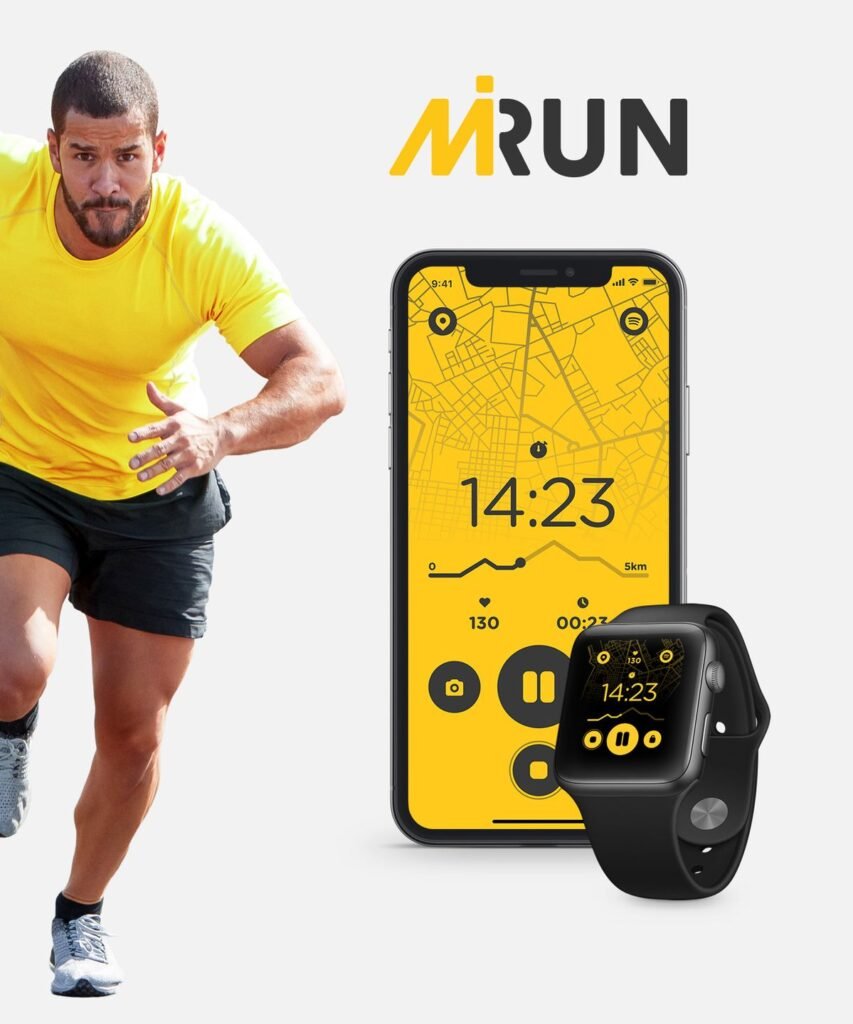
AR fitness wearables go beyond just the smartwatch. These are devices that track motion — strapped to your wrists, arms or even shoes — and stream real-time data into AR fitness platforms and apps.
Devices like the Whoop Strap, Athos Smart Clothing, Moov Now and Notch Motion Capture Suit fall into this category. They measure muscle activity, angles of movement, speed and position in space with astonishing precision.
When combined with AR platforms, this data turns visual. You can see a digital model of your body showing which muscles you are using. You see your movement path traced in 3D. You receive alerts when your form starts to drift during a long run.
What Makes Wearables Different
Glasses and headsets use cameras and visual tracking. Wearables go deeper. They use accelerometers, gyroscopes and sometimes EMG (electromyography) sensors to measure what your muscles are really doing — not just how they look from the outside.
This is life-changing for athletes and individuals who are recovering from injuries. You obtain data that no camera could ever provide.
The Connection to AR
This creates a visual and accurate experience as your wearable provides real-time data into the AR app or display. You might, for instance, do a deadlift while watching the angle of your spine appear on the screen as a colored line that turns red if you round your back. That’s precisely what high-end AR wearable systems provide.
Fitness Wearable Comparison Chart
| Device | Tracks | AR Integration | Best For | Price Range |
|---|---|---|---|---|
| Whoop Strap 4.0 | Recovery, HRV, sleep | App-based | Athletes | $30/mo |
| Moov Now | Movement quality | Coaching overlays | Beginners | $59 |
| Athos Smart Clothing | Muscle activation (EMG) | App + AR | Serious training | $150–$300 |
| Notch Suit | Full body motion capture | 3D AR visualization | Pro athletes | $500+ |
Best For
- Athletes seeking information beyond what cameras can see
- Those with injuries or in physical therapy
- Serious fitness fans monitoring improvements in performance
- Coaches who want objective data on their clients
How These 4 AR Fitness Tools Work Together
The real potential for AR fitness emerges when these tools are integrated. Picture this:
You wake up and put on your AR smart glasses for a morning jog. A Whoop Strap tracks your heart rate and recovery data. After your run, you strap on your AR headset for a 25-minute boxing workout on FitXR. In the evening, you open up your smartphone AR app to check your form on a set of push-ups.
Each tool is designed for a specific purpose. Combined, they produce a complete fitness ecosystem that addresses tracking, motivation, form correction and performance data — all enhanced by augmented reality.
AR Fitness vs. Traditional Fitness — A Side-by-Side Look
| Feature | AR Fitness Tools | Traditional Fitness |
|---|---|---|
| Motivation | High (gamified, interactive) | Varies (often low over time) |
| Form feedback | Real-time, automatic | Manual (mirror or trainer) |
| Cost | One-time or subscription | Gym fees + equipment |
| Accessibility | Home-based | Requires gym or space |
| Data tracking | Advanced, visual | Basic (manual logs) |
| Fun factor | Very high | Usually lower |
| Social features | Online challenges, leaderboards | In-person classes |
How to Get Started With AR Fitness Tools
It does not need to be daunting to get started with AR fitness. Try this simple path:
Step 1 — Start with what you already have. Install a free AR fitness app on your phone. Give it a week and see how it feels.
Step 2 — Add a basic wearable. You don’t have to spend a fortune — the Moov Now is a basic piece of equipment that will provide movement feedback at an affordable cost.
Step 3 — Consider a headset. If you like what you see and want to explore further, a mid-range headset such as the Meta Quest 3 grants access to a much larger world of AR fitness apps.
Step 4 — Build your ecosystem. When you get more serious, add AR smart glasses for outdoor workouts and advanced wearables for deeper tracking.
The secret is to start small and then grow. AR fitness is at its most effective when it feels like play — not like another job.
Frequently Asked Questions About AR Fitness Tools
Q: Do I need expensive equipment to start AR fitness? No. All you need to begin is your smartphone. Several free AR fitness apps use your phone’s camera to track your movement and give coaching feedback as you go.
Q: Are AR fitness tools safe for beginners? Yes. Most AR fitness tools cater to beginners. They take you through movements slowly and correct form in real time, which actually makes them safer than working out without feedback.
Q: How many calories can I burn with AR fitness tools? It depends on the tool and the workout. A 30-minute AR headset boxing session can burn 450–600 calories. Smartphone AR workouts vary more but usually equate to a moderate traditional workout.
Q: Can AR fitness tools replace a personal trainer? They can do most of what a trainer does — form correction, rep counting, coaching cues. But a real trainer can also help assess injuries, offer emotional motivation and adjust plans based on detailed observation. AR tools are a fantastic complement — but not a total substitute.
Q: Which age group benefits most from AR fitness tools? Every age group enjoys AR fitness tools. Gamification is a hit with teens and young adults. Users ages 30–50 love the data and convenience. The gentle guidance and form correction features benefit older adults.
Q: Are there AR fitness tools for kids? Yes. Certain AR games on phone platforms and apps like PlayFitt are designed with younger users in mind. Instead of structured workouts, they make movement fun through games.
Q: Will AR fitness tools keep improving? Absolutely. As artificial intelligence, camera technology and wearable sensors improve, so too will AR fitness tools. Over the next few years, expect more accurate tracking, more realistic coaching avatars and even more immersive environments.
The Future of AR Fitness Is Already Here
AR fitness is not a fad. It’s a simpler, smarter way of thinking about working out. The tools we have now — smart glasses, headsets, mobile apps and motion-tracking wearables — are already sophisticated. And they’re only getting better.
The 4 essential AR fitness tools covered in this article cater to every type of user and every kind of goal. Whether you’re a novice seeking inspiration, an athlete hunting down performance data or simply someone who wants to make exercise fun again, there’s an AR tool made for your needs.
The best workout is the one you actually do. AR fitness tools help you show up, push hard and love every rep.
Your next workout might just turn out to be a game. All you have to do is start.