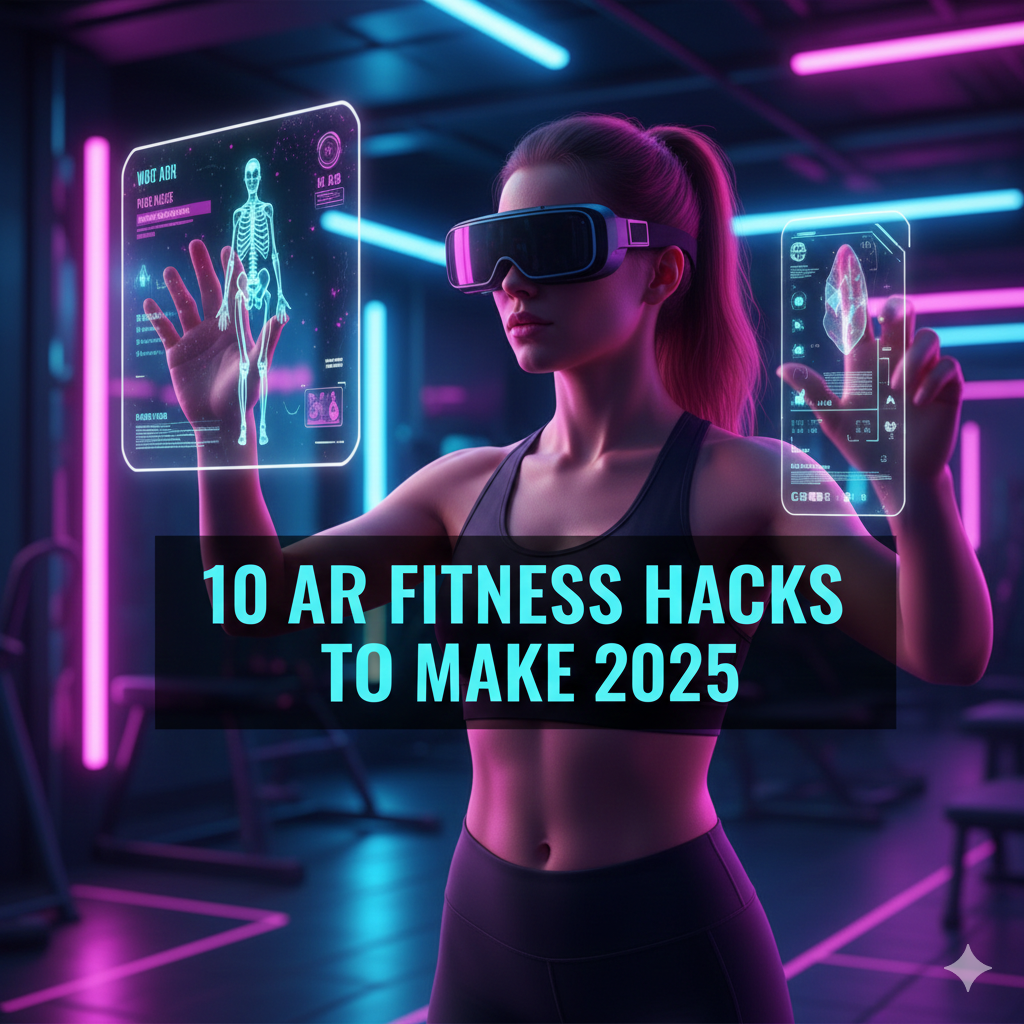
Just imagine: You put on a pair of glasses or open an app — and your living room instantly becomes a boxing ring. A virtual coach stands before you, adjusting your form in real time. Your heart rate hovers in your periphery. Every rep matters, every move is logged.
That’s not a sci-fi movie. That’s AR fitness, and it’s happening right now.
Augmented reality (AR) is combining the digital and physical worlds. Whereas virtual reality immerses you in a different space entirely, AR overlays digital content onto your real-world environment. And for fitness? That’s a game-changer.
Whether you are a novice trying to remain consistent or an athlete overcoming plateaus, AR fitness tips can help you train smarter, not just harder. This guide lays out 10 practical, proven ways you can make AR work for your workouts — with real examples, easily digestible explanations, and tips you can apply today.
The Recent Explosion of AR Fitness — Why Is It Happening?
Before getting into the tips, it helps to understand why AR fitness is exploding in popularity.
People drop out of traditional workouts because they get bored, they feel lost without a coach, or they don’t see results fast enough. AR addresses each of these three issues simultaneously.
It gamifies workouts. It provides real-time feedback like a personal trainer. And it records your progress in such clear ways that you can see yourself improving.
| Traditional Workout | AR-Enhanced Workout |
|---|---|
| Static environment | Dynamic, interactive space |
| Delayed feedback | Real-time coaching and correction |
| Easy to lose motivation | Game-like rewards keep you going |
| Manual tracking necessary | Automatic data recorded |
| Gym enclosure needed | Works anywhere |
The fitness tech market is ballooning, and AR is one of the top contributors. Tech like this has already been made available to millions by apps such as Supernatural, FitXR, and Nike’s AR features. And now that AR glasses are becoming cheaper, this is just the tip of the iceberg.
Tip 1: Try Some AR Apps Before You Buy Any Hardware
You don’t require costly AR glasses to begin using AR fitness. Your smartphone is already strong enough.
Applications like Homecourt rely on your phone’s camera to track your body movements and provide you with real-time feedback. Others, such as Mirror and Tempo, use cameras and screens to superimpose coaching cues on your body while you are exercising.
How to Choose the Best AR Fitness App
Before downloading anything, ask yourself three questions:
- What type of exercise do I like? (Cardio, strength, yoga, dance?)
- Do I want a structured program, or something more flexible?
- Do I want to compete, or do I like training alone?
Once you know your style, search specifically for AR apps in that niche. Read real user reviews — not just the score, but what people say about the quality of coaching and accuracy of body tracking.
Pro Tip: Many AR fitness apps have free trials. Use them. Do not pay for something until you’ve spent at least seven days with it.
Tip 2: Use AR for Instant Form Correction
Poor form is one of the leading causes of people getting injured or plateauing. A personal trainer can see a wonky squat or hunched deadlift in an instant. AR can do the same — without the hourly rate.
Apps like Kaia Health and Kemtai use your phone’s camera, coupled with pose-detection technology, to observe your movements. They measure what you’re doing against correct form, and then sound an alarm when something’s off.
The Characteristics of Good AR Form Feedback
When AR form correction really shines, it will:
- Overlay on screen the shape or skeletal outline of your body
- Identify joints that are not aligned
- Provide audio suggestions such as “bend your knees more” or “keep your back straight”
- Score your rep, letting you know how well you performed it
This level of feedback is typically reserved only for those who can afford a personal trainer. AR makes it accessible for all.
Tip 3: Gamify Your Workout
Here’s a secret fitness coaches already know: people do better when they have fun. Gamification — providing a workout with game-like elements — can radically change how long and how hard you train.

AR fitness apps take this a step further than any regular fitness app. They don’t just award you points. They create entire worlds around your workout.
Supernatural (built for Meta Quest headsets) places you in gorgeous locations — canyon walls, ocean cliffs, snowy mountains — and invites you to hit targets flying at your face in time with music. You are so into the game you don’t even realize you’re sweating.
FitXR transforms your living room into a boxing gym, dance studio, or HIIT class. Competitors appear beside you. Scores get tracked. Leaderboards inspire you to perform better.
Why Gamified AR Fitness Actually Works
| Gamification Element | Fitness Benefit |
|---|---|
| Points and scores | Motivates you to push harder each session |
| Leaderboards | Creates healthy competition |
| Unlockable content | Gives you a reason to keep coming back |
| Story or world-building | Makes the workout feel like an adventure |
| Real-time challenges | Prevents boredom and mental fatigue |
If sweating in place for half an hour feels like a thankless chore, gamified AR fitness might finally be the thing that gets you hooked on exercise.
Tip 4: Set Visual Goals You Can Actually See
One of the most powerful things AR can do is make your goals literally visible.
What if your AR fitness platform lets you set a target — 100 squats in a week — and then visualizes your progress in real time as you do the work? Watching a glowing bar fill up every time you complete a good rep could be very motivating. Watching a virtual trophy come together in front of your eyes could be even more so.
This isn’t just boosterish psychobabble. Study after study in behavioral psychology shows that visible progress is one of the biggest forces for keeping people following through. You’re much more likely to finish a task when you can see how close you are to the finish line.
How to Set Smarter AR Fitness Goals
Apply the SMART framework and make it visual:
- Specific — “Complete 30 minutes of AR boxing three times a week”
- Measurable — Track it on your AR fitness app’s dashboard
- Achievable — Start with something you know you can hit
- Relevant — Tie it to a broader goal
- Time-bound — Give yourself a 30-day challenge
When your AR app lets you see your daily or weekly progress in real time, those SMART goals become something you can almost reach out and touch.
Tip 5: Use AR Running Apps to Push Your Pace
Apps like Zombies, Run! add a story onto your real-life run. You are a survivor in a zombie apocalypse, scrounging for supplies and avoiding hordes. Your speed affects the story. If zombies are catching up, you must sprint. It sounds silly. It absolutely works.
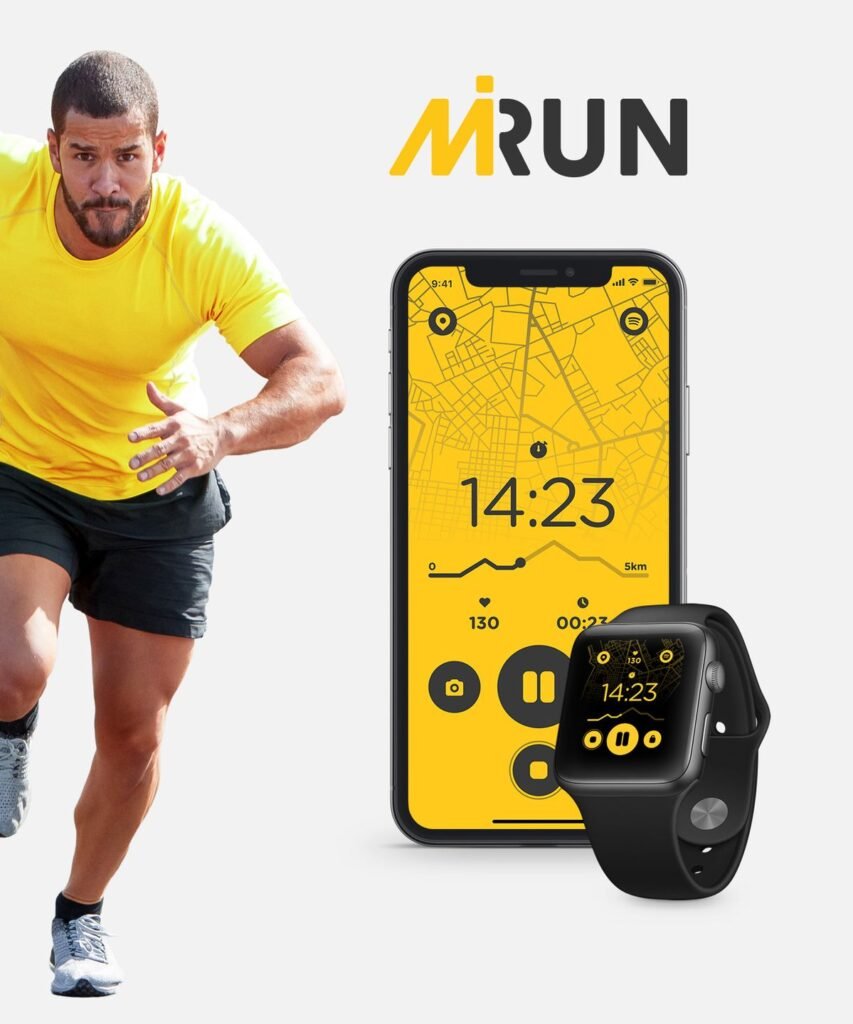
More serious runners use Strava’s AR features or Garmin’s coaching overlays to view pace targets, heart rate zones, and elevation data as they’re moving.
Top AR Running Tools for All Fitness Levels
Beginner runners:
- Zombies, Run! — story-driven, low pressure
- Nike Run Club with guided runs — voice coaching superimposed on your route
Intermediate runners:
- Strava with segment tracking — compete against your own previous times
- Garmin Connect with dynamic coaching — data-driven insights
Advanced runners:
- Stryd with power-based coaching — real-time running efficiency measurement
- Coros AR integrations — for race simulation and pacing strategy
Tip 6: Do AR Yoga and Stretching on Recovery Days
Recovery is as important as the workout itself. But many people skip it because it’s boring, or they don’t feel confident doing it correctly.
AR yoga apps project a virtual instructor into your space. They can see you (via your camera), and they react in real time to how you pose. Some apps display a ghost of the correct pose over your own, so you can literally see where you need to adjust.
Alo Moves and Down Dog have begun incorporating AR features that lay alignment guides over your body. You’ll see lines indicating where your hips need to be, how your spine should stack, or how far your stretch should extend.
For a deeper dive into recovery strategies and body wellness, AR Body Health offers great resources to help you train sustainably and stay injury-free.
AR Recovery Day Routine (30 Minutes)
- 5 minutes — AR-guided breathing and body scan
- 10 minutes — Dynamic stretching with pose overlay
- 10 minutes — Yoga flow with live alignment cueing
- 5 minutes — Guided foam rolling with pressure point mapping
That kind of measured recovery, facilitated and made precise by AR, minimizes your injury risk and ensures you keep moving consistently.
Tip 7: Take Advantage of AR Heart Rate and Biometric Overlays
Understanding what is going on inside your body during a workout changes everything.
AR fitness setups increasingly tethered to smartwatches or chest straps can display your heart rate, calories burned, and even estimated VO2 max right in your field of vision. You don’t have to glance at your wrist or stop and pull out your phone.
When this data comes up in front of you as you train, it allows for smarter instant decisions. Back off if your heart rate is too high. If you’ve spent 20 minutes in a fat-burning zone, push harder and change zones.
Heart Rate Zones Explained Simply
| Zone | Heart Rate % | What It Feels Like | Best For |
|---|---|---|---|
| Zone 1 | 50–60% | Light activity, easy breathing | Warm-up, recovery |
| Zone 2 | 60–70% | Comfortable, conversational | Fat burning, endurance |
| Zone 3 | 70–80% | Moderate effort, slightly breathless | Aerobic fitness |
| Zone 4 | 80–90% | Hard, talking is difficult | Speed and performance |
| Zone 5 | 90–100% | Maximum effort, very short bursts | Peak power |
AR overlays allow you to remain in the correct zone without needing to check a device constantly. That means better focus, better results, and smarter training overall.
Tip 8: Join AR Fitness Communities and Group Classes
Working out solo gets old fast. One AR fitness tip that people often miss is to get social.

A growing number of AR fitness platforms now hold live group classes in which real people from across the globe join the same virtual space. Their avatars appear next to you. You can compete on leaderboards. Some apps even allow you to high-five other users after a difficult set.
FitXR and Supernatural both have thriving communities built around shared challenges and group milestones. If other people are counting on you to show up, you actually show up.
How to Make the Most of AR Group Fitness
- Pre-book your classes like proper appointments
- Join community forums or Discord servers for your app
- Join weekly challenges to keep yourself accountable
- Follow users you admire fitness-wise — it develops healthy competition
- Share your own progress to motivate others and stay inspired
Community is one of the most underrated fitness tools in the world. AR finally makes community support available from the comfort of your own living room.
Tip 9: Establish a Regular AR Exercise Routine
The world’s best AR fitness app isn’t going to do you any good if you only open it once a month.
In all situations, consistency trumps intensity. Two moderate AR workouts per week, every single week, will always yield better long-term results than one intense session followed by a two-week gap.
Use AR apps that send smart reminders, track your weekly streak, or automatically adjust your schedule when you miss a session. Apps like Tempo and Apple Fitness+ are improving at adapting your schedule to how you’ve been performing.
According to the American Heart Association, adults should aim for at least 150 minutes of moderate-intensity aerobic activity per week — a goal that a consistent AR fitness schedule can help you hit with ease.
Sample Weekly AR Fitness Schedule
| Day | Workout Type | AR Tool | Duration |
|---|---|---|---|
| Monday | AR Boxing / HIIT | FitXR | 30 min |
| Tuesday | AR Yoga / Recovery | Down Dog | 30 min |
| Wednesday | AR Running | Zombies, Run! | 40 min |
| Thursday | Rest or light walk | Optional AR step tracking | — |
| Friday | AR Strength training | Tempo | 35 min |
| Saturday | AR Group Class | Supernatural | 45 min |
| Sunday | Full rest | — | — |
Adapt this to your fitness level and life schedule. The important thing is to choose a pattern and stick with it.
Tip 10: Monitor Long-Term Progress Through AR Data Dashboards
Data tracking is one of the most underutilized features of AR fitness platforms.
Every rep, every session, every calorie burned — it’s all tracked. Over time, this data tells a story. You’ll see which workouts spike your heart rate the most. You’ll notice when your form scores started improving. You’ll spot patterns in your energy levels depending on when you train.
AR platforms such as Whoop, Garmin, and Apple Fitness+ display this information in clean dashboards that make trends clear. Some AR setups even give you a 3D timeline of your progress that you can walk through.
AR Fitness Metrics Worth Tracking
- Weekly active minutes — Are you achieving your movement goals?
- Average heart rate per session — Are you pushing yourself hard enough?
- Form score — Has your technique improved over time?
- Recovery data — Are you getting enough sleep and rest?
- Streak count — How consistent have you been?
Taking just 10 minutes each week to review this data can far enhance your training. You’ll notice problems sooner and celebrate victories you might have otherwise missed.
What Gear You Really Need (And What You Can Skip)
You don’t need to spend thousands of dollars to get started with AR fitness. Here’s a realistic breakdown:
| Gear | Price Range | Do You Need It? |
|---|---|---|
| Smartphone (any recent model) | Already own it | Yes — essential |
| AR fitness app subscription | $10–$40/month | Yes — start here |
| Smartwatch or fitness tracker | $100–$400 | Useful, not required |
| Meta Quest headset | $300–$500 | Optional, but adds much value |
| AR glasses (like Ray-Ban Meta) | $300–$700 | Long-term investment |
| Heart rate chest strap | $50–$100 | Great for serious training |
Start with your phone and one decent app. Upgrade from there as you get more into it.
The Most Common Mistakes People Make With AR Fitness
Even with amazing tools, people still make preventable mistakes. Watch out for these:
Overtraining because the game is too fun. AR workouts are engaging, which makes it easy to do too much too soon. Start slow.
Ignoring real-world safety. When you’re focused on an AR experience, you may run into furniture or walls. Clear your space before every session.
Relying only on the app. AR feedback is helpful, but nothing compares to occasionally checking in with a real coach or physical therapist in person — particularly if you’re rehabbing from an injury.
Picking the most fun-looking app instead of the most functional one. Fancy graphics are meaningless if the workout doesn’t reflect your goals.
FAQs About AR Fitness
What does AR mean in fitness? AR stands for augmented reality. In fitness, it refers to digital components — coaching cues, data overlays, or virtual environments — that sit above your actual surroundings for a more enriching workout experience.
Will I need special glasses to do AR fitness? No. Most AR fitness experiences work via your smartphone’s camera. Some offer deeper experiences using AR headsets such as Meta Quest, but they’re not necessary to get started.
Is AR fitness actually effective for weight loss? Yes, when done consistently. AR fitness is more enjoyable, which means people do it longer. It is consistency that causes fat loss and overall fitness improvements to take place over time.
Is AR fitness safe for children and teenagers? Yes, several AR fitness apps cater to all ages. Simply ensure the workout intensity is appropriate for the user’s fitness level. Younger children are generally not best served using headsets for extended periods.
How much does AR fitness cost per month? Pricing for most AR fitness apps runs $10 to $40 a month. Some have free versions with reduced features. Hardware such as headsets is a one-time purchase.
Is AR fitness better than a gym? It depends on your goals. Where AR fitness shines is motivation, consistency, and accessibility. Traditional gyms provide heavier equipment and face-to-face community. The ideal approach is usually a mix of both.
Will AR fitness damage my eyes due to screen time? Using AR headsets for extended periods requires regular breaks every 20–30 minutes. Smartphone-based AR fitness doesn’t carry significant eye strain risk beyond normal screen time.
Wrapping It All Up
AR fitness is not a passing trend. It’s filling a central role in the way people train — and for good reason.
It makes workouts fun. It provides you coaching that previously cost hundreds an hour. It tracks your data in ways that make you smarter about how you move. And it brings community into places that used to feel isolating.
These 10 AR fitness tips give you a clear roadmap, whether you’re loading your first app or you want to build a full top-to-bottom AR training system. Start simple. Stay consistent. Allow the technology to do what it’s made for — improve you.
The future of the gym is wherever you are. All you need to do is turn up.